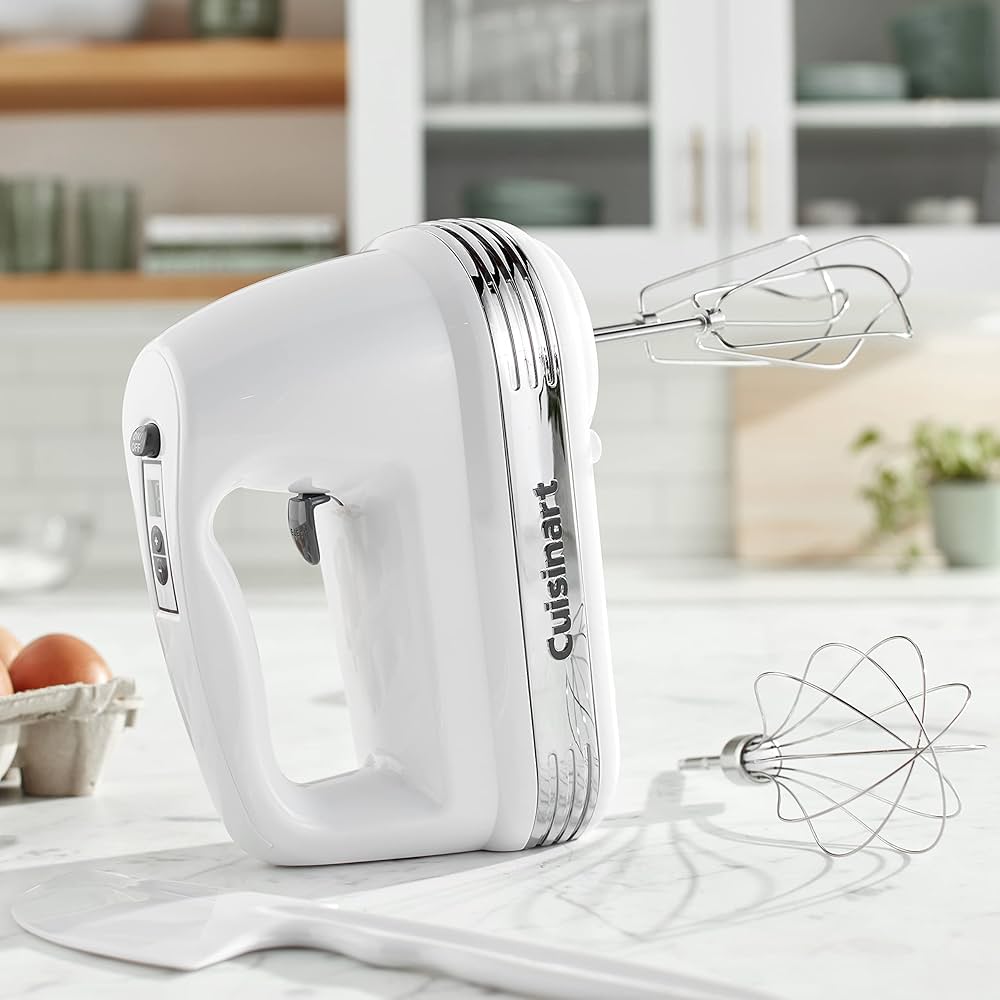
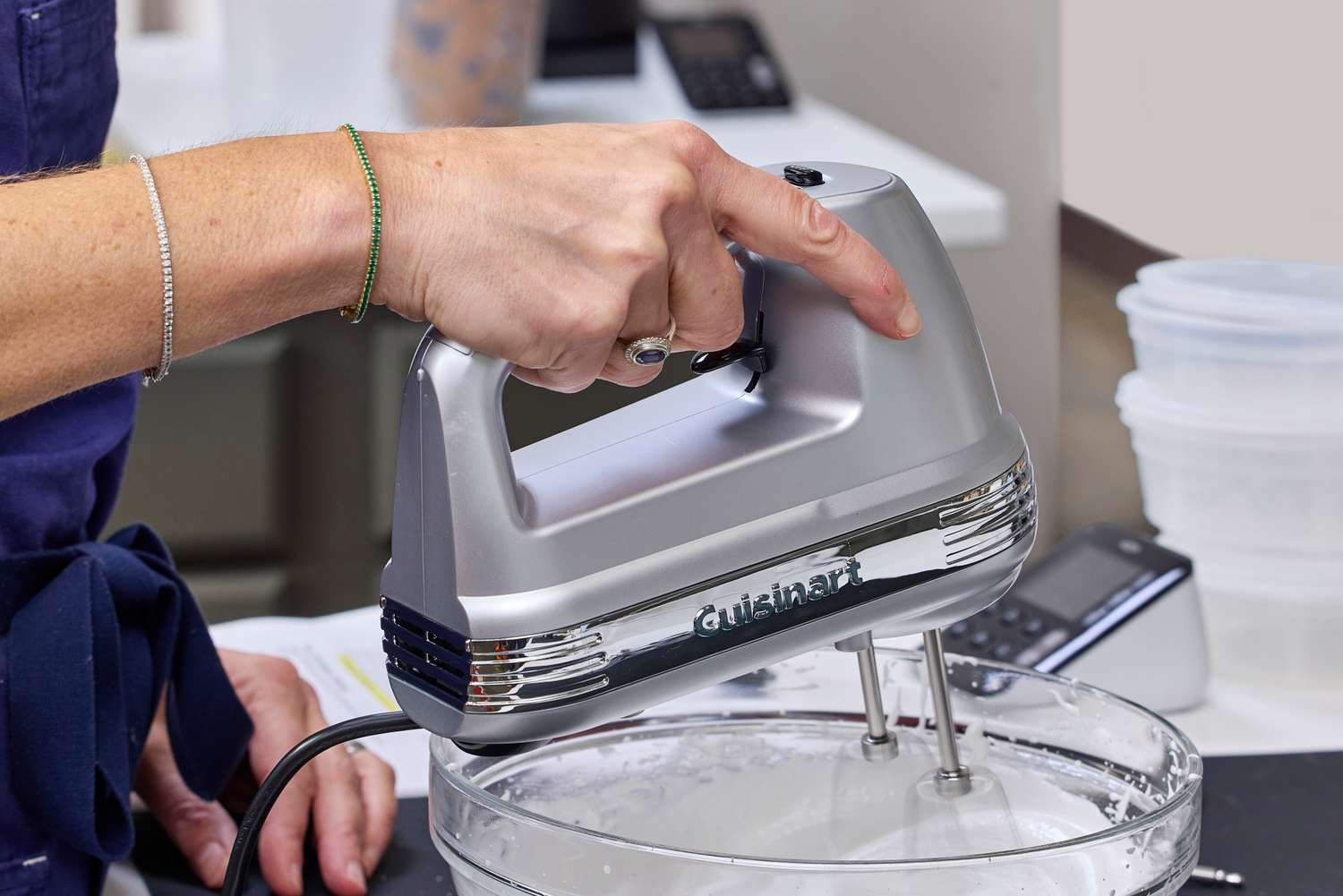
If you have been comparing stand mixers lately, there is a good chance you have ended up looking at the same question a lot of home bakers ask: KitchenAid vs Cuisinart stand mixer. On the surface, they seem to compete in the same space. Both brands offer tilt-head stand mixers for everyday baking, both include the usual core attachments, and both are aimed at people who want something more capable than hand mixing.
But once you start looking a little closer, the differences become more interesting. KitchenAid has the stronger brand reputation and a very established attachment ecosystem. Cuisinart often looks more appealing on paper if you compare bowl size, features, or price. That is why this comparison can be harder than it first seems.
I spent time digging through product specs, user feedback, and the usual patterns that show up when people live with a mixer for a while rather than just unbox it. In this comparison, I am using four examples to keep things practical: the KitchenAid Artisan Series 5 Quart, the KitchenAid Classic Series 4.5 Quart, the Cuisinart SM-50GR Precision Master, and the Cuisinart SMD-50CRM Precision Pro 5.5-Quart Digital Stand Mixer.
The short version is that KitchenAid still tends to feel like the safer long-term choice for many households, especially if you care about broad accessory support and a proven design. Cuisinart, on the other hand, can look very attractive if you want more features for the money and you are mostly focused on standard home baking tasks.
Seeing the key differences side by side can make it much easier to decide which mixer actually fits your needs. The table below highlights the most important features.

Detailed side-by-side comparison
Once you put the four example models next to each other, the pattern becomes easier to see. KitchenAid leans toward proven simplicity and long-term confidence. Cuisinart leans toward feature value and larger-capacity appeal.
| Feature | KitchenAid Artisan Series 5 Quart Tilt Head Stand Mixer | KitchenAid Classic Series 4.5 Quart Tilt-Head Stand Mixer | Cuisinart SM-50GR Precision Master | Cuisinart SMD-50CRM Precision Pro 5.5-Quart Digital Stand Mixer |
|---|---|---|---|---|
|
Everyday Baking Fit
How well the mixer suits regular home baking |
Excellent all-around fit | Best for lighter or smaller-batch baking | Very good for general baking | Very good for general baking with more modern controls |
|
Batch Capacity
How much room you get for larger recipes |
5 quart | 4.5 quart | 5.5 quart | 5.5 quart |
|
Customer Rating
Average review score |
4.7 out of 5 | 4.7 out of 5 | 4.7 out of 5 | 4.6 out of 5 |
|
Global Ratings
Total number of customer ratings |
23,707 ratings | 11,760 ratings | 414 ratings | 10,003 ratings |
|
Long-Term Confidence
How established and trusted the model feels over time |
Strong | Strong | Good | Good |
|
Value for Money
How competitive the feature set feels for the price |
Good | Good for brand-focused buyers | Very good | Very good |
|
Accessory Support
Optional add-ons and versatility beyond mixing |
Excellent | Excellent | More limited | More limited |
|
Best Buyer Type
Who each mixer makes the most sense for |
Regular home bakers who want the safest all-around pick | Occasional bakers who want a simpler KitchenAid entry point | Value-focused buyers who still want a full stand mixer | Shoppers who prefer bigger capacity and more modern features |
KitchenAid stands out not just for its attachment ecosystem and long-term reputation, but also for the much larger volume of customer feedback behind its ratings. Cuisinart still makes a strong value case, but the review count difference makes KitchenAid feel more established for buyers who care about long-term confidence.
Why this comparison matters more than it seems
The reason people keep coming back to KitchenAid vs Cuisinart mixer comparisons is that these brands appeal to slightly different buying instincts. KitchenAid tends to win people over with familiarity, consistency, and the sense that they are buying into a platform they can keep for years. Cuisinart tends to catch attention with value, generous bowl capacity, and feature sets that sometimes seem more competitive for the price.
That does not automatically make one better than the other. It really depends on what kind of baker you are. If you bake cookies, cake batter, whipped cream, frosting, and the occasional enriched dough, both brands can cover that territory. The real differences start to show in the feel of the machine, long-term confidence, accessory flexibility, and how much importance you place on a mixer being pleasant to use week after week.
KitchenAid vs Cuisinart Stand Mixer Price Comparison
Price is obviously a big part of the KitchenAid vs Cuisinart stand mixer decision, and this is one area where the comparison becomes a little more interesting than people expect. Based on the prices here, the gap is not always as wide as shoppers assume, especially once you start comparing specific models rather than just brand names.
| Product | Best For | Regular Price | Key Feature | Rating | Check Price |
|---|---|---|---|---|---|
| KitchenAid Artisan Series 5 Quart Tilt Head Stand Mixer | Best Overall | $349–$499 | Balanced 5-quart capacity with strong everyday versatility | ★★★★★ | Check Price on Amazon |
| KitchenAid Classic Series 4.5 Quart Tilt-Head Stand Mixer | Best for Simplicity | $399 | Classic tilt-head design for smaller everyday batches | ★★★★☆ | Check Price on Amazon |
| Cuisinart SM-50GR Precision Master | Best Value Pick | $369 | 5.5-quart bowl with strong feature-to-price appeal | ★★★★☆ | Check Price on Amazon |
| Cuisinart SMD-50CRM Precision Pro 5.5-Quart Digital Stand Mixer | Best Premium Features | $379 | Digital controls with timer and modern interface | ★★★★☆ | Check Price on Amazon |
At the regular, non-sale prices listed here, the KitchenAid Artisan Series 5 Quart sits around $349 to $499 depending on the color, the KitchenAid Classic Series 4.5 Quart is around $399, the Cuisinart SM-50GR Precision Master is around $369, and the Cuisinart SMD-50CRM Precision Pro 5.5-Quart Digital Stand Mixer is around $379.
That matters because this comparison is not always as simple as saying Cuisinart is cheaper and KitchenAid is more expensive. In real shopping conditions, the KitchenAid Artisan can sometimes land surprisingly close to the Cuisinart models, especially when certain colors are discounted. The KitchenAid Classic, meanwhile, does not always look like the obvious value choice once you compare actual selling prices side by side.
One thing I would strongly keep in mind is that these are regular prices, not sale prices. Stand mixer pricing moves around a lot on Amazon, and color variations can change the value equation more than people realize. Sometimes a less popular Artisan color drops enough that you can buy the KitchenAid Artisan for a much lower price than expected, which makes it a much stronger deal than it appears at full price.
Because of that, I think the smartest move is to add the models you are considering to your Amazon cart or wishlist and watch them for a bit. Amazon often shows price changes or deal alerts, and that can make a real difference here. If you are patient, there are times when the Artisan becomes much easier to justify, especially if you catch the right color at the right time.
So from a price standpoint, I would not make the decision too quickly based only on the normal sticker price. At full price, Cuisinart still makes a very real value argument. But when the right KitchenAid Artisan goes on sale, the gap can shrink enough that KitchenAid starts to look like the smarter long-term buy.
KitchenAid generally feels more refined in daily use
One thing that stands out with KitchenAid is how familiar and straightforward the user experience tends to be. The Artisan and Classic models are not trying to do anything flashy. They are simple, mechanical, and easy to understand immediately. For a lot of home cooks, that is actually a big advantage.
The KitchenAid Artisan Series 5 Quart is usually the more appealing of the two KitchenAid models here because it gives you a little more bowl space and feels like the better all-around choice for regular baking. It is a very typical home baker mixer in the best sense. It is comfortable for cookie dough, cake mixes, buttercream, mashed potatoes, and ordinary bread recipes in moderate quantities.
The KitchenAid Classic Series 4.5 Quart is the simpler, more budget-conscious option. It is still a recognizable KitchenAid experience, but it makes the most sense for smaller households or lighter baking routines. If someone bakes every now and then and mostly wants a dependable mixer for basic recipes, the Classic can still be enough. But compared with the Artisan, it feels more limited once you start making larger batches or tougher doughs more often.
What KitchenAid does especially well is usability. The controls are simple, the design is familiar, and there is a reason so many people keep these mixers around for years. Even when a Cuisinart model looks stronger on a spec sheet, KitchenAid often still feels like the more settled and proven choice in real kitchens.
If you are deciding between those two KitchenAid models specifically, it is worth looking a little closer at the Artisan and Classic side by side, because the gap between them matters more in everyday baking than it may seem at first.
Cuisinart often gives you more on paper for the money
This is where Cuisinart becomes interesting. If you compare product listings without brand history getting in the way, some Cuisinart stand mixers look very competitive. The Cuisinart SM-50GR Precision Master gives you a roomy 5.5-quart bowl and is often considered one of the more obvious alternatives for people who want KitchenAid-style functionality without paying KitchenAid pricing.
The Cuisinart SMD-50CRM Precision Pro 5.5-Quart Digital Stand Mixer pushes a bit further into the feature-focused side of the category. It has a more modern presentation, digital controls, and a design that may appeal to shoppers who want their appliance to feel newer or more upgraded.
In everyday baking, Cuisinart stand mixers can absolutely handle common jobs well. Batter, cookie dough, whipped cream, and ordinary mixing tasks are not a problem for the kind of user these products target. For many people, that is enough. They are not trying to run a bakery. They just want a stand mixer that feels capable and saves time.
Where some buyers hesitate is not necessarily the core mixing ability. It is more about long-term confidence, the overall polish of the user experience, and whether the machine feels as established as KitchenAid. That difference may not matter to every buyer, but it does come up repeatedly whenever people compare the two brands seriously.
KitchenAid Artisan vs Cuisinart Precision Master is the most useful comparison
If I had to narrow this whole discussion down to one comparison that matters most, it would be KitchenAid Artisan vs Cuisinart Precision Master. These are the two models that most naturally end up on the same shopping list.
The KitchenAid Artisan usually feels like the more proven and balanced pick. It has the stronger reputation, the broader accessory support, and a design that many home bakers already trust. It is often the one people buy when they want fewer doubts and do not mind paying a bit more for that confidence.
The Cuisinart Precision Master is attractive because it offers a lot of what casual and intermediate bakers want without feeling stripped down. You still get a full-size stand mixer experience, and for some households it may deliver enough performance that spending more on KitchenAid simply does not feel necessary.
If your question is purely about value, Cuisinart has a real argument. If your question is about long-term ownership and the safest all-around bet, KitchenAid still tends to have the edge.
The Downsides I Would Not Ignore
No stand mixer in this group is perfect, and I think this is exactly where a more honest comparison helps. All four of these models can handle everyday baking, but they each come with trade-offs that matter once you stop looking at product photos and start thinking about long-term use in a real kitchen.
KitchenAid Artisan Series 5 Quart Tilt-Head Stand Mixer
The KitchenAid Artisan is probably the easiest one here to recommend, but that does not mean it is above criticism. It weighs about 22.8 pounds, so it is not the kind of appliance most people will want to move in and out of a cabinet all the time. If you have limited counter space, that becomes a real drawback pretty quickly. It also runs on a 325-watt motor, which is perfectly normal for this model, but it means some buyers may expect more just because of the price and reputation. In other words, part of what you are paying for here is not just raw specs, but the KitchenAid name, the design, and the broader attachment ecosystem. The 5-quart bowl is a strong all-around size, but that still does not automatically make it the best choice for every baker, especially if someone mainly does small, occasional batches.
KitchenAid Classic Series 4.5 Quart Tilt-Head Stand Mixer
The Classic has a lot of the same strengths as the Artisan, but its weaknesses are a little harder to ignore because it gives you less room to grow. The 4.5-quart bowl is fine for standard recipes, but it is clearly the smallest of the four mixers in this comparison, so it can feel more limiting if you regularly bake for a family or like making larger batches. KitchenAid positions it as a mixer for standard recipes, and that feels accurate, but it also means this model can start to feel like the safer entry point rather than the more satisfying long-term choice. It still has the 10-speed tilt-head design and access to optional hub attachments, which is useful, but I think the bigger issue is value: once buyers get close to Artisan pricing, the Classic can start to look like the model people choose because it says KitchenAid rather than because it is the best fit.
Cuisinart SM-50GR Precision Master
On paper, the Cuisinart SM-50GR is very appealing. It gives you a 5.5-quart bowl, 12 speeds, and a 500-watt motor, which makes it look strong in a side-by-side comparison. But this is also the kind of mixer that reminds me why specs do not tell the whole story. The bigger bowl and higher wattage sound impressive, yet those things alone do not guarantee a better everyday experience. One practical issue is that the product summary shown publicly is a little messy, including an obviously unreliable item-weight listing, which does not inspire the same kind of polished confidence you usually get with KitchenAid listings. More importantly, this model often makes the strongest case on value rather than on refinement. That is not a fatal flaw, but it does suggest the SM-50GR is the type of mixer people choose when they want more capacity and features for the money, not necessarily the one they feel most emotionally settled about after years of ownership.
Cuisinart SMD-50CRM Precision Pro 5.5-Quart Digital Stand Mixer
This is the one I would be most cautious about. The SMD-50CRM looks modern and feature-rich, with a 5.5-quart bowl, 12 speeds, LED digital controls, a countdown timer with auto-off, and preprogrammed settings. It also uses die-cast metal construction and includes the expected attachments plus a splash guard. On paper, that all sounds impressive. But personally, this is where I start to wonder whether the mixer is getting more complicated than it really needs to be. Digital controls can be attractive in a product listing, but a stand mixer is one of those appliances where simple mechanical controls often age better and feel less fussy in day-to-day use. For me, this model has the biggest risk of sounding better on paper than it feels in a real kitchen. I can easily imagine some buyers liking the modern interface, but I can also imagine others deciding they would rather have a straightforward lever or dial than extra programming and an LED display on a mixer.
My Personal Take
If I had to be blunt, the model I like the least out of these four is the Cuisinart SMD-50CRM Precision Pro. That does not mean it is bad. It just feels like the one most likely to impress shoppers with features that matter less than they seem to. In a stand mixer, I personally value long-term usability, predictability, and a design that feels simple enough to live with for years. The digital controls, timer, and preprogrammed functions may appeal to some buyers, but to me they make this model feel a little too eager to look advanced in a category where simple usually ages better. If I were spending my own money, I would rather buy a mixer that feels mechanically straightforward and proven than one that tries to modernize a tool that did not really need that much modernization in the first place.
How they compare in real kitchen tasks
For cake batter and cookies
Both brands are very comfortable here. This is the easiest part of the category. If most of your baking is cakes, cupcakes, cookies, and basic frostings, either KitchenAid or Cuisinart can work well. In this kind of use, the decision often comes down more to budget, design preference, and whether you care about the attachment ecosystem.
For bread dough
This is where buyers tend to become more cautious. Not everyone buying a stand mixer is planning to knead dense dough every weekend, but plenty of people want that option. For occasional bread dough, the four mixers in this comparison can all be workable within reasonable batch sizes. Still, KitchenAid tends to inspire a little more trust here, especially the Artisan, because it feels like the more established heavy everyday machine for home use.
The Cuisinart models can still handle dough, but if your baking routine leans heavily toward bread rather than cakes and cookies, I would probably be more comfortable putting my money toward the stronger long-term reputation of KitchenAid.
If bread is a much bigger part of your baking routine, it also helps to look at mixers that are specifically better suited to regular dough work rather than general all-purpose baking.
For ease of use
KitchenAid feels more classic and intuitive. Cuisinart can offer more features, but extra features do not always make the experience better. Some buyers really like digital controls. Others would rather have a plain mechanical lever that is simple and predictable. Personally, I think this is one of those small details that matters more over time than it does on the product page.
| Product | Best For | Key Feature | Rating | Check Price |
|---|---|---|---|---|
| KitchenAid Artisan Series 5 Quart Tilt Head Stand Mixer | Best Overall | Balanced 5-quart capacity with strong everyday versatility | ★★★★★ | Check Price on Amazon |
| KitchenAid Classic Series 4.5 Quart Tilt-Head Stand Mixer | Best for Simplicity | Classic tilt-head design for smaller everyday batches | ★★★★☆ | Check Price on Amazon |
| Cuisinart SM-50GR Precision Master | Best Value Pick | 5.5-quart bowl with strong feature-to-price appeal | ★★★★☆ | Check Price on Amazon |
| Cuisinart SMD-50CRM Precision Pro 5.5-Quart Digital Stand Mixer | Best Premium Features | Digital controls with timer and modern interface | ★★★★☆ | Check Price on Amazon |
KitchenAid vs Cuisinart Stand Mixer Build Quality and Durability
Build quality is one of the most important parts of the KitchenAid vs Cuisinart stand mixer comparison, because this is where long-term satisfaction often starts to separate from first impressions. A stand mixer can look impressive on a product page, but what really matters is how solid it feels after months of lifting the head, locking the bowl into place, changing attachments, and working through thicker mixtures like cookie dough or bread dough.
KitchenAid still tends to feel stronger in this area, and I do not think that is just brand reputation talking. Part of it comes from how established the design feels in everyday use. The controls are simple, the overall construction feels familiar, and there is a reason many buyers see KitchenAid as a mixer they can keep for years rather than just a convenient upgrade for the moment. That sense of long-term confidence matters, especially for people who bake often and want a machine that feels dependable every time they use it.
Cuisinart stand mixers are not cheaply made just because they are often positioned as the better value. The more honest point is that they can sometimes feel stronger on paper than they do emotionally in long-term ownership. Bigger bowl capacity, more features, or a lower price can absolutely make them attractive, but that does not always create the same settled feeling people get from KitchenAid. For some buyers, that difference will not matter at all. For others, especially those who use a mixer regularly, it matters more than the spec sheet suggests.
I also think durability has to be judged in context. If someone mostly makes cake batter, brownies, whipped cream, or the occasional batch of cookies, either brand may hold up perfectly well for their needs. But if the mixer is going to be used often, left on the counter, and asked to handle heavier doughs on a regular basis, the small differences in confidence, stability, and overall feel become easier to notice. That is where KitchenAid usually starts to make more sense as the safer long-term buy.
So while Cuisinart can still be the smarter purchase for a budget-conscious shopper, KitchenAid generally feels like the less uncertain investment for buyers who care most about lasting usefulness, proven design, and a mixer that still feels worth owning after the excitement of the initial purchase wears off.
Who should buy Cuisinart?
- If you want a full-size stand mixer and are trying to get more for your money
- If bowl capacity matters to you
- If your baking is mostly cakes, cookies, frostings, and standard dough tasks
- If you do not care as much about brand prestige or a huge attachment ecosystem
The Cuisinart SM-50GR Precision Master is probably the most appealing choice for shoppers who want a strong KitchenAid alternative without moving too far away from the classic stand mixer experience. The SMD-50CRM Precision Pro is better for buyers who like digital controls and a slightly more modern feel.
Who may want to skip both?
If you make dense bread dough constantly, bake in very large quantities, or want a truly heavy-duty machine, you may eventually want to look beyond this group and consider more purpose-built models. And if you only bake a few times a year, a stand mixer in general may be more appliance than you really need.
That is one thing worth being honest about. Stand mixers are wonderful when they fit your habits, but they are not magic. They take up space, and they make the most sense when you know you will actually use them regularly.
Final thoughts
In the end, I still think the most honest answer to the KitchenAid vs Cuisinart stand mixer question comes down to what kind of trade-off you are most comfortable living with. KitchenAid feels like the steadier, more established choice. Cuisinart often looks more appealing on paper, especially if you care about bowl size, features, and value. But those advantages do not always translate into a better long-term ownership experience.
If I were choosing for the average home baker and wanted the option that feels the least risky over time, I would still lean toward the KitchenAid Artisan Series 5 Quart. It is not the cheapest option here, and I do think part of the price goes toward brand confidence, but it also feels like the most balanced and easiest to trust in everyday use.
If I wanted to spend less while still getting a roomy, capable mixer for standard home baking, the Cuisinart SM-50GR Precision Master would be the Cuisinart model I would take most seriously. It makes the strongest value argument in this group without feeling overly complicated.
The one I would be most hesitant to buy is the Cuisinart SMD-50CRM Precision Pro. It has plenty of features, but it is also the model that feels most likely to impress people on a product page more than it does in a real kitchen. Personally, I would rather have a mixer that feels simple, proven, and easy to live with than one that tries to modernize the experience with digital extras I do not think most bakers really need.
So if your priority is long-term confidence, KitchenAid still makes more sense to me. If your priority is value and you are comfortable giving up some of that settled, proven feel, Cuisinart can still be a smart buy.