The Cuisinart Power Advantage Plus Hand Mixer is one of those tools that doesn’t really try to impress you right away. It’s not flashy. It doesn’t scream “premium.” And honestly, that might be part of the reason people keep buying it.
The full name—Cuisinart Power Advantage Plus 9-Speed Hand Mixer—sounds a bit more ambitious than the product actually feels in use. Nine speeds, multiple attachments, storage case. On paper, it looks like a complete setup. But after spending time with it, and digging through how people actually use it in their kitchens, it feels more like a dependable middle-ground option than anything else.
Why I Ended Up With This Mixer
I wasn’t looking for some aspirational countertop trophy. I’ve used enough hand mixers over the years to know that most of them are fine until they’re suddenly not. A couple older Hamilton Beach models got me through plenty of weeknight baking. I’ve also used a KitchenAid hand mixer that felt smoother and a little more polished, and an older Black+Decker that was honestly better than it had any right to be for the price. So this wasn’t a case of me “discovering” hand mixers. I already knew what the category looked like.
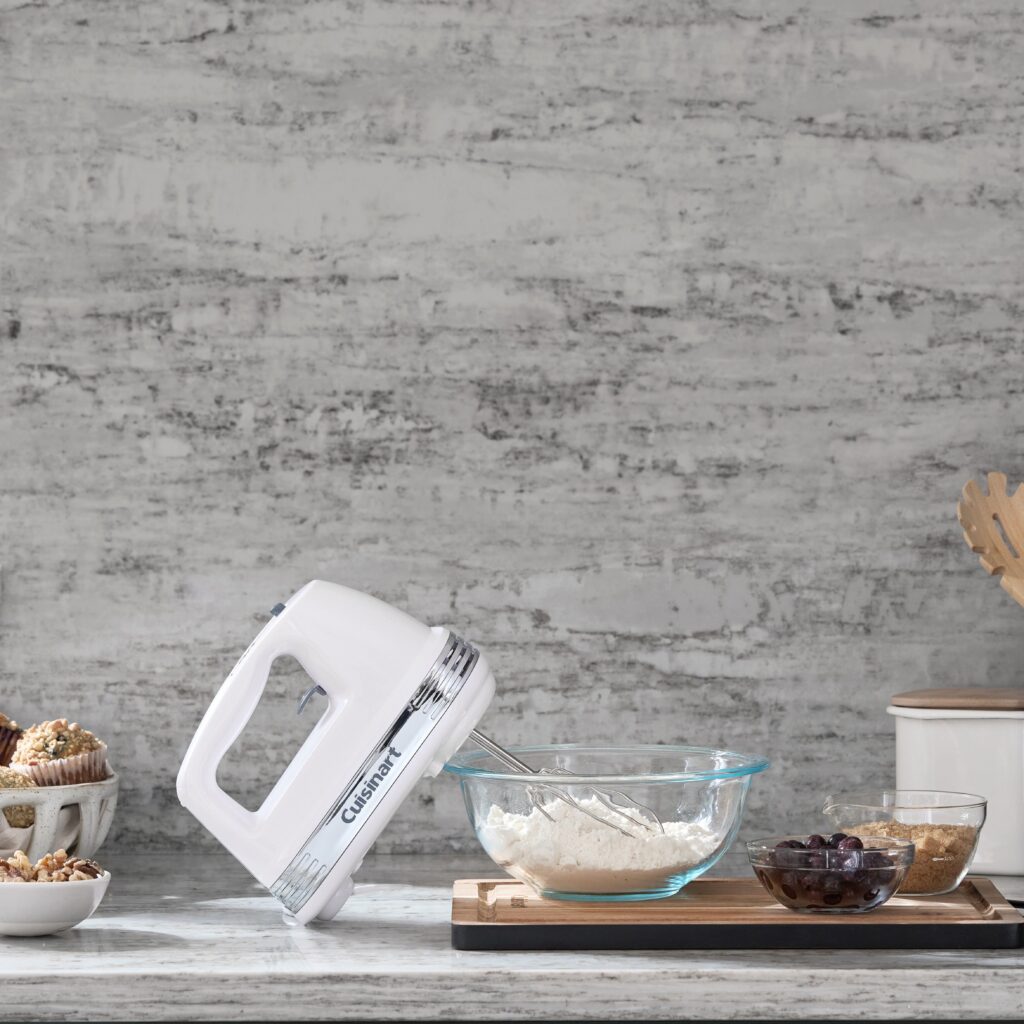
Cuisinart Power Advantage Plus 9-Speed Hand Mixer
The bigger issue was that I had reached that familiar point where I was tired of working around little annoyances. One mixer started too fast and made a mess with dry ingredients. Another was loud in that sharp, high-pitched way that makes you want to finish the job quickly just to turn it off. One of them did perfectly well for cake batter but always felt a little flimsy with thicker mixtures, like it wanted me to lower my expectations.
And yes, I had a stand mixer in the kitchen too. Useful, obviously. But not for everything. There are days when hauling out a stand mixer for whipped cream or brownie batter feels a bit ridiculous, like bringing a rolling suitcase for an overnight trip. You can do it. You just start questioning yourself halfway through cleanup.
So I wasn’t chasing “the best hand mixer” in some dramatic sense. I wanted one that felt like the right kind of middle ground: easier than the stand mixer, more confident than the cheaper hand mixers I’d used, and not so expensive that I’d resent it every time I pulled it out.
That’s more or less how I landed on the Cuisinart Power Advantage Plus Hand Mixer. It kept showing up in the way practical products do. Not with a lot of fanfare. Not with people acting like it would transform their baking life. More like, “this one works, this one makes sense, this one is worth a look.” I tend to trust that kind of reputation more than the breathless kind.
Also—and this is maybe the more personal part—I was in the mood for a kitchen tool that felt sensible without feeling boring. I didn’t want the cheapest option again just because it was there. I’ve done that before, and it usually turns into replacing the same tool twice. This felt like a more deliberate upgrade. Not flashy, not especially romantic, just a choice that seemed grounded enough to live with for a while.
First Impressions (And the Small Stuff You Notice Quickly)
 The first thing I noticed was the weight. It’s lighter than I expected. That can go either way depending on what you’re used to. If you like something that feels solid and heavy, this might feel a little underwhelming. But if you’ve ever had your wrist get tired halfway through mixing something thicker, the lighter weight starts to make sense pretty quickly.
The plastic body doesn’t feel cheap, but it also doesn’t feel premium. It lands somewhere in the middle. You’re not worried about it breaking, but you’re also not admiring it the way you might with a more expensive mixer.
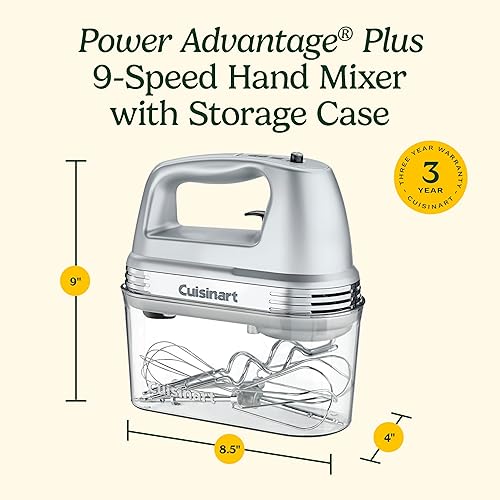
The storage case, though—that ended up mattering more than I expected. I didn’t think I cared about that kind of thing, but after a week or so, I realized I wasn’t digging through drawers looking for beaters anymore. Everything just stayed in one place. It’s not exciting, but it makes the whole experience a little less annoying.
Using It in Real Cooking (Not Just a Quick Test)
I didn’t do anything fancy to test this mixer. I just used it the way I normally cook.
Pancake batter on a Sunday morning. Cake batter a few days later. Frosting, mashed potatoes, whipped cream. The usual stuff that doesn’t justify pulling out a stand mixer.
For those tasks, it works well. Not in a “wow, this is amazing” kind of way. More like, “yeah, this is doing exactly what I need.”
The lower speeds are actually usable, which is something I don’t take for granted anymore. Some mixers say they have low speeds, but they still kick up flour the second you turn them on. This one is better about that. You can start slow, get things combined, then increase speed without making a mess.
That said, the jump between speeds isn’t always that noticeable. You’ve got nine settings, but in reality, you’ll probably settle into three or four that feel useful and ignore the rest.
The Motor: Good Enough, But Not Impressive
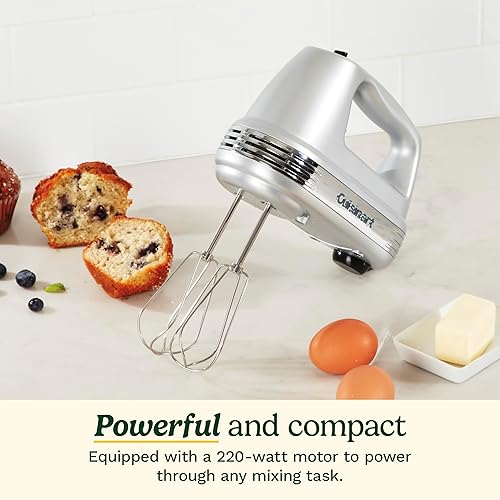
The motor is rated at 220 watts, which sounds fine on paper. And for lighter tasks, it is fine. Cake batter, whipped cream, frosting—no issues there.
But once you move into thicker mixtures, things change a bit.
Cookie dough is where I started noticing it. It can handle it, but you can feel the strain. Not in a dramatic way, but enough that you’re aware of it. The mixer slows down slightly, your wrist feels the resistance, and you start thinking about whether you should have just used a stand mixer instead.
Bread dough? I wouldn’t recommend it. You can try it with the dough hooks, but it doesn’t feel like something the mixer actually wants to do. It’s more of a “just because you can doesn’t mean you should” situation.
The Controls… Take Some Getting Used To
This is one area where opinions are all over the place, and I get why.
The speed controls use a push-button system instead of a sliding switch. It works, but it’s not the most intuitive thing in the world. If you stop the mixer and want to go back to a higher speed, you have to tap through the levels again.
That doesn’t sound like a big deal, but when you’re actually cooking—stopping to scrape the bowl, then starting again—it becomes noticeable.
It’s not bad. It’s just not as smooth as it could be.


Attachments: More Useful Than Expected (Mostly)
You get a decent set of attachments with this mixer. Beaters, whisk, dough hooks, and even a spatula.
The beaters are what you’ll use most of the time, and they do their job well. The whisk is fine for lighter tasks, but if you’re expecting it to replace a proper whisk for something like meringue, you might be disappointed.
The dough hooks are… okay. They work for softer doughs, but like I mentioned earlier, this isn’t a mixer built for heavy-duty kneading.
The spatula feels like a bonus more than a necessity. It’s useful, but not something that changes your experience with the mixer.
Why It Still Holds a 4.6-Star Reputation Online
 A 4.6-star average usually doesn’t happen because a product is flawless. It happens because enough people feel like it solves the problem they actually bought it for. That seems to be the case here.
Most of the positive feedback circles around a few very practical things: the mixer feels strong enough for everyday baking, the speed range gives people decent control, and the snap-on storage case makes it easier to live with than a lot of hand mixers that leave attachments floating around in random drawers.
There’s also a pattern in how people describe the power. Some call it sturdy, some call it substantial, some just say it feels like a real upgrade from the cheaper mixers they burned through before. That kind of language matters more than a spec sheet, honestly. It suggests people are noticing the same thing in everyday use: this mixer feels capable enough to justify itself in a normal home kitchen.
Another reason the rating stays high is that it seems to hit a sweet spot between features and familiarity. You get multiple speeds, useful attachments, and storage that feels thought through, but it still behaves like a normal hand mixer. People do not usually need a learning curve or a whole new routine to use it, and that helps a lot with long-term satisfaction.
I also think some of the goodwill comes from the fact that many buyers are replacing older mixers, sometimes after years of use, and this one feels like a meaningful step up without becoming overly expensive or overcomplicated. It reads less like an impulse buy and more like a “finally bought a decent one” purchase. That mindset tends to produce stronger ratings when the product mostly delivers.
That said, the rating is not high because everyone agrees on every detail. The weaker points show up too. Durability concerns come up often enough to be worth noting, especially around switches, internal gears, and a few quality-control frustrations. Some people also find it louder than expected, and a few never fully warm up to the startup behavior or control layout.
So the 4.6-star reputation makes sense to me in a pretty grounded way. Most buyers seem happy because the mixer is useful, powerful enough for common kitchen tasks, easy to store, and noticeably better than the throwaway models many people are used to. The complaints are real, but for most users, they do not seem to outweigh the basic feeling that this is a solid, helpful tool to have around.
The Kind of Details I Notice After a Few Uses
What usually decides whether I keep liking a kitchen tool is not the headline feature. It is the smaller stuff that starts to matter once the novelty wears off. With mixers and mixing accessories, I end up paying attention to things that probably sound minor until you actually live with them: whether the handle feels comfortable after a few minutes, whether the bowl shape makes scraping easier or more annoying, whether attachments fit the way they should, whether the finish still looks decent after repeated use, and whether cleanup feels simple or just tolerable.
That is probably why I tend to be a little picky about tools in this category. A product can look great in photos and still be slightly irritating in real life. Sometimes it is the way a cord falls across the counter. Sometimes it is a storage case that seems smart until you try to fit everything back in. Sometimes it is the material itself—too thin, too slick, too flimsy, too awkward to grip when your hands are messy.
I find that the best kitchen tools usually do not win you over with one dramatic moment. They win more quietly. They feel balanced. They clean up without a fight. They do not create extra friction in the middle of cooking. And once I notice that I am no longer thinking about the tool itself, that is usually a good sign.
That is the lens I bring to products like this. I am less interested in whether something sounds impressive in a product description, and more interested in whether it still feels useful on an ordinary baking day, when the counter is already dusty with flour and you just want the tool to do its job without turning into another small annoyance.
Where This Mixer Feels Right at Home
After a few weeks of regular use, it became pretty clear where this mixer shines.
- Quick baking tasks
- Small to medium batches
- Recipes where control matters more than power
- Situations where you don’t want to deal with a stand mixer
If that sounds like most of your cooking, then this mixer makes a lot of sense.
Where It Starts to Fall Short
There are limits, and they show up pretty quickly if you push it.
- Thick cookie dough starts to feel like a chore
- Bread dough is not really its thing
- The highest speed isn’t as strong as some people expect
- The controls can feel a little awkward over time
None of these are dealbreakers on their own, but together they paint a clear picture: this is not a high-performance mixer.
How It Compares to Other Options
This is where things get interesting.
Compared to cheaper mixers, the Cuisinart Power Advantage Plus clearly feels like an upgrade. You get better control, more attachments, and a smoother overall experience.
Compared to something like the KitchenAid 9-speed hand mixer, though, the gap shows up in refinement. The KitchenAid tends to feel smoother and more controlled, especially at lower speeds. It also feels a bit more solid in the hand.
But it also costs more.
So the real question becomes: do those differences matter enough to you to justify the extra money?
Where This Mixer Fits Best
I think this mixer makes the most sense for the kind of cook who ends up baking in bursts. Maybe not every single day, but often enough that a cheap hand mixer starts to feel a little flimsy and a stand mixer still feels like too much trouble for smaller jobs.
It suits the person who wants to make brownies on a random Tuesday, whip cream for a holiday dessert, or throw together cake batter without turning the kitchen into a whole production. If that sounds like your cooking style, the Cuisinart usually feels pretty comfortable to live with.
- Casual but consistent bakers: people who make cookies, cakes, frostings, mashed potatoes, and the usual lineup of kitchen basics
- Anyone ready to move past the cheapest mixers: not because those are always terrible, but because they usually start to feel annoying faster
- Cooks who care about convenience: lighter weight, simple storage, easy cleanup, and enough control to avoid splattering flour all over the counter
- Shoppers trying to stay sensible: people who want a mixer that feels dependable without creeping too far into premium pricing
It’s not really a “dream appliance.” It’s more of a useful kitchen regular. And honestly, for a lot of households, that’s the better thing to be.
Where It Starts to Feel Like the Wrong Tool
This is the part where expectations matter. If you mostly need a hand mixer for lighter baking and everyday kitchen tasks, the Cuisinart feels reasonable. If you expect it to muscle through everything just because it has nine speeds, that’s where the mood can change a bit.
It starts to feel less convincing with dense doughs, bigger batches, and the kind of mixing jobs that make your wrist work almost as hard as the machine. That doesn’t make it bad. It just means it has a lane, and you notice pretty quickly when you’ve drifted outside it.
- Frequent bread bakers: if dough is a regular part of your week, you’ll probably want something with more confidence and more staying power
- People who make heavier batters a lot: thick cookie dough and dense mixtures are where this mixer starts feeling more average than capable
- Anyone chasing a premium feel: it works well enough, but it doesn’t have that extra polish that makes a kitchen tool feel especially satisfying to use
So no, I wouldn’t call it a bad buy. I’d just say it’s the kind of mixer that rewards realistic expectations. If your cooking habits match what it does well, it feels like a smart purchase. If not, the compromises are not exactly subtle.
What Stuck With Me After Using It for a While
After using the Cuisinart Power Advantage Plus 9-Speed Hand Mixer for a few weeks, the biggest thing I noticed was how easy it was to live with.
It’s not exciting. It’s not particularly powerful. But it’s consistent.
And that matters more than you might think.
I didn’t find myself avoiding it. I didn’t feel frustrated using it. It just kind of became part of the routine, which is probably the best thing you can say about a tool like this.
Is the Cuisinart Power Advantage Plus Hand Mixer Worth It?
The Cuisinart Power Advantage Plus Hand Mixer makes the most sense for people who want a mixer that feels like a real upgrade from the cheap, forgettable models, but still stops short of premium pricing. It lands in that middle space a lot of home cooks actually shop in: not the cheapest thing on the shelf, not the one trying to impress you with a luxury badge either.
For everyday baking, it usually does exactly what most people need. It handles cake batter, cookie dough, whipped cream, frosting, and mashed potatoes well enough that you stop thinking about the mixer and just keep cooking. That may not sound glamorous, but honestly, that is part of the appeal. A good hand mixer should make itself useful, not make itself the main event.
The weak spots are still there. The controls are not my favorite, and once you move into heavier mixtures, the limits start showing up pretty quickly. So no, this is not the hand mixer I would choose for frequent bread dough or for someone who wants that extra-smooth, premium feel every single time they cook.
But if what you really want is a Cuisinart Power Advantage Plus Hand Mixer that feels practical, capable, and easy to live with in a normal kitchen, this one earns its place pretty well. It is the kind of mixer that fits into real life more than fantasy-kitchen life, and for a lot of people, that is the smarter buy.
