If you’ve been looking for a reliable hand mixer that doesn’t feel overbuilt or overpriced, the Cuisinart Power Advantage 7-Speed Hand Mixer probably showed up pretty quickly.
It sits in that middle ground—more refined than the cheapest options, but still far from premium territory. And that’s usually where things get interesting. Products in this range tend to either quietly work well for years… or slowly annoy you over time.
This review takes a closer look at how this mixer actually holds up in real kitchens, based on design details, everyday usability, and what people tend to notice after repeated use.
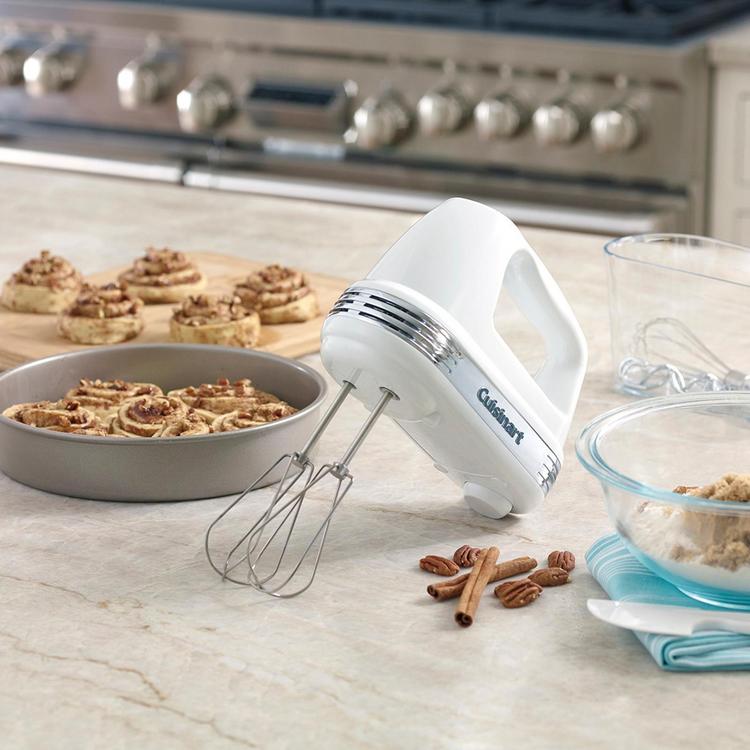
First Impressions and Design Feel
The Cuisinart Power Advantage has a noticeably more solid feel than many entry-level hand mixers. It’s not heavy in an inconvenient way, but it doesn’t feel flimsy either. The body has a clean, slightly rounded design that fits comfortably in hand, and the controls are simple enough that you don’t have to think much about them.
One small detail that stands out is the balance. Some hand mixers feel front-heavy, especially when you’re working with thicker mixtures. This one distributes weight a bit more evenly, which makes longer mixing sessions less tiring.
It’s not flashy, but it doesn’t feel cheap either. That alone puts it ahead of a lot of budget models.
How It Performs in Everyday Mixing
In normal use, this mixer tends to feel steady and predictable. It doesn’t surge aggressively when you turn it on, which is something many people notice right away. Lower speeds are actually usable, which matters more than it sounds—especially when you’re starting with dry ingredients.
For basic tasks, it handles things comfortably:
- Cake batter mixes evenly without much effort
- Cookie dough works fine as long as it’s not overly stiff
- Whipped cream and frosting come together quickly
Where it starts to feel limited is with heavier dough. It can handle some thicker mixtures, but you can tell it’s working harder. It’s not really designed for frequent bread-making or dense doughs, and pushing it in that direction regularly will likely shorten its lifespan.
For most home kitchens, though, that’s not a dealbreaker. It just means knowing where the line is.
Speed Control: More Useful Than It Looks
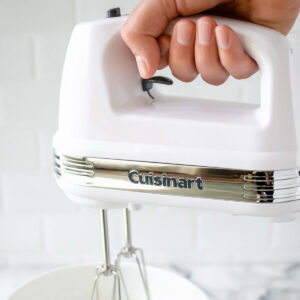 The 7-speed setup might sound like a standard feature, but the way the speeds are spaced actually makes a difference. Lower speeds are gentle enough to avoid splashing flour everywhere, while higher speeds give enough power to finish mixes quickly.
Some mixers technically offer multiple speeds but feel jumpy between them. This one feels more gradual, which gives you a bit more control, especially when you’re switching between mixing stages.
It’s not a dramatic feature, but it’s one of those small things that improves the overall experience.
Attachments and Everyday Usability
The mixer comes with standard beaters and a few additional attachments depending on the version. Nothing unusual there, but the quality is decent for the price range.
One thing people tend to notice is how easy it is to attach and remove them. That sounds minor, but if you’ve ever struggled with stuck beaters, you know how annoying it can be.
Cleaning is also straightforward. The attachments wash easily, and the body doesn’t have too many awkward crevices where batter gets trapped.
Where It Starts to Feel Limited
This isn’t a mixer that tries to do everything, and you can feel that once you move beyond basic recipes.
Some of the more common limitations show up in situations like:
- Thicker doughs that require more torque
- Long mixing sessions where the motor starts to warm up
- Larger batches where consistency becomes harder to maintain
None of these are especially unusual for a hand mixer in this range, but they do shape what this model is really suited for. It works best as a dependable everyday mixer, not as a heavy-duty tool for frequent dense mixing.
Side-by-Side Comparison
Looking at similar models side by side helps put the Cuisinart in better context. The table below compares it with two other well-known hand mixers that shoppers often consider in the same category.
| Feature | Cuisinart Power Advantage 7-Speed Model Reviewed | KitchenAid 7-Speed Hand Mixer | Hamilton Beach Professional Hand Mixer |
|---|---|---|---|
|
Design
Overall build quality, balance, and how comfortable the mixer feels during use |
Balanced, slightly heavier feel with solid construction | More polished finish and premium feel | Chunkier design with a more utilitarian feel |
|
Speed Control
How smooth and usable the speed settings feel in real mixing situations |
Smooth transitions with usable low speeds | Very refined speed control | Strong range, though it can feel more aggressive in use |
|
Power Handling
How well the mixer deals with thicker mixtures and heavier dough |
Handles moderate loads, struggles with heavy dough | More consistent under heavier loads | Better suited for thicker mixtures and tougher mixing jobs |
|
Main Trade-Off
What you’re giving up relative to the price and category |
Not built for heavy-duty use | Higher price for incremental improvements | More powerful, but bulkier and less refined in feel |
How It Compares to Cuisinart’s 5-Speed and 9-Speed Models
One of the more interesting questions with this mixer isn’t how it compares to other brands—it’s how it compares to Cuisinart’s own lineup. The 5-speed, 7-speed, and 9-speed versions all look similar at a glance, but they don’t feel the same once you actually use them.
The differences come down less to raw specs and more to how much control and headroom you get as your baking gets more demanding.
| Feature | Cuisinart 5-Speed | Cuisinart Power Advantage 7-Speed Model Reviewed | Cuisinart 9-Speed |
|---|---|---|---|
| Control & Speed Range | Basic control with limited adjustment between speeds | Balanced range with usable low speeds and smooth transitions | Wider range with finer control across more speed levels |
| Power Feel | Lighter-duty, best for simple mixing tasks | Moderate and consistent for most everyday use | Stronger overall feel, handles thicker mixtures more confidently |
| Ease of Use | Simplest to operate, but also most limited | Easy to control, comfortable for regular use | Slightly more complex, but offers more flexibility |
| Best Use Case | Occasional baking and light recipes | Everyday baking with a good balance of control and power | Frequent baking and more demanding mixing tasks |
| Main Trade-Off | Limited versatility and less control | Not designed for heavy-duty or continuous use | More expensive and slightly overkill for casual users |
The 5-speed version is the simplest of the three. It works fine for very basic mixing—cake mixes, light batters, and occasional use—but you start to feel the limitations pretty quickly. There’s less control between speeds, and it doesn’t give you much room to adapt as recipes get more demanding.
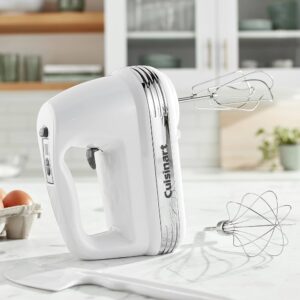 The 7-speed model sits in the middle in a way that actually makes sense for most kitchens. You get enough speed variation to handle different tasks comfortably, without the mixer feeling overly complicated or overly aggressive. This is probably why so many users describe it as “easy to use” or “just right” for everyday baking.
The 9-speed version, on the other hand, is where things start to feel more capable. With more speed levels and a slightly stronger performance profile, it handles thicker mixtures more confidently and gives you finer control when switching between stages. Some testing even shows that higher-end versions in this line can power through heavier dough and whip egg whites more effectively than lower-tier models.
So the decision between them is less about which one is “better” and more about how far you plan to push it. If you mostly bake casually, the 7-speed feels like a comfortable middle ground. If you only mix occasionally, the 5-speed is enough. And if you want more control and a bit more performance headroom, the 9-speed starts to make more sense.
Who This Mixer Makes Sense For
This mixer tends to fit best in kitchens where baking is occasional or moderate, not constant.
It works well if you:
- Bake a few times a week at most
- Mostly make cakes, cookies, or light doughs
- Want something that feels more solid than budget options
- Prefer a simple, easy-to-use design
It may not be the best fit if you:
- Make bread or dense dough regularly
- Need a mixer for long, heavy sessions
- Want something that feels closer to a stand mixer in power
Pros and Cons
What It Gets Right
- Usable low speeds: one of the clearest positives in the reviews is that speed 1 actually feels low enough to start mixing without making a mess.
- Strong everyday performance: it handles cake batter, whipped cream, cookie dough, and other common kitchen tasks well for most users.
- Thoughtful design details: reviewers often mention the storage case, secure beaters, easy eject button, and cord position as small things that make it nicer to use.
- Comfortable in hand: many buyers describe it as solid without feeling overly heavy, which matters if you use a hand mixer often.
- Quieter and smoother than cheaper mixers: several reviews suggest it feels more controlled and less messy than lower-priced alternatives.
Where It Falls Short
- Not everyone agrees on the power: while many find it strong enough, some reviewers still felt it was underpowered for whipping egg whites or more demanding mixing jobs.
- Dough performance is mixed: some users say it handles heavier dough better than expected, while others were not impressed with the dough hooks.
- A few parts raise questions: there are occasional comments about the whisk feeling light, attachment fit issues, or the trigger switch not feeling especially heavy-duty.
- Storage case is helpful but not perfect: some people like having everything together, while others found packing the cord and attachments a little fussy.
- Not quite a heavy-duty upgrade: this still works best as a strong everyday hand mixer, not as a replacement for a more powerful stand mixer or a truly heavy-use tool.
What Stands Out in Real Use
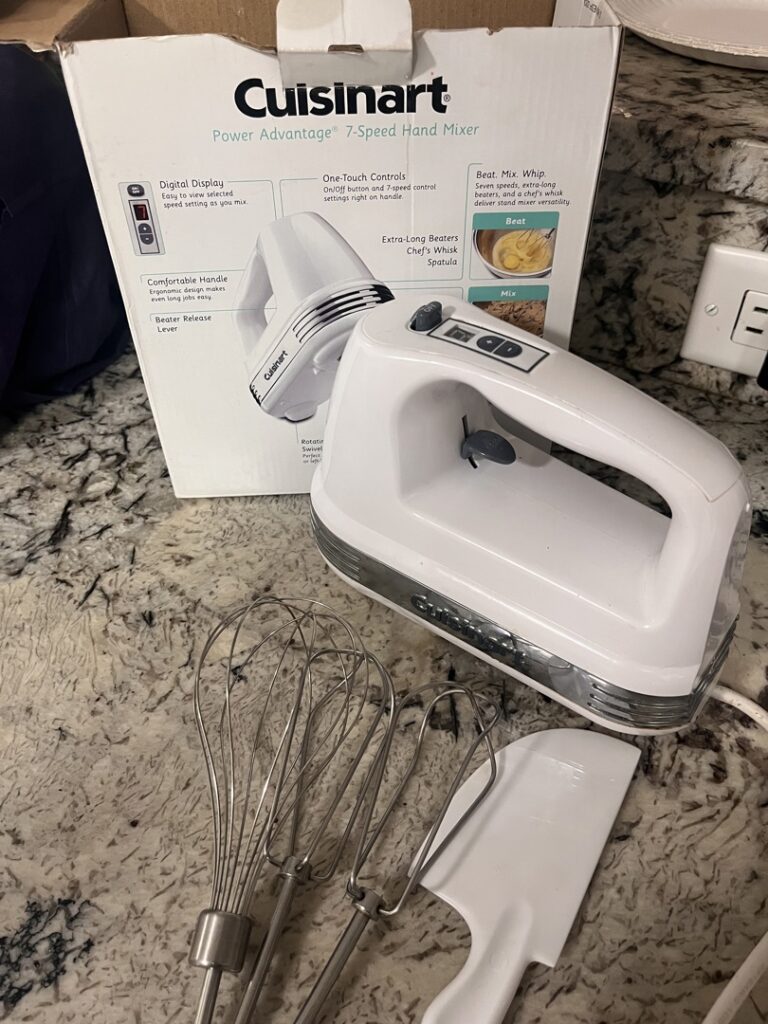 Reading through the reviews, the most convincing thing about the Cuisinart Power Advantage 7-Speed Hand Mixer is not that it does something flashy. It is that people keep describing it as easy to trust in ordinary kitchen use. That may sound like faint praise, but for a hand mixer, it matters a lot.
Several reviewers mention the same cluster of strengths: the lower speeds are actually usable, the mixer runs more smoothly than cheaper models, and it does not immediately throw flour or cream across the kitchen the moment you turn it on. That sounds basic, but it is clearly not a given in this category. A few people even bought this model after returning or donating other mixers that felt too fast on low, too weak at high speed, or simply too messy to enjoy using.
There is also a noticeable pattern in how people talk about power. Some describe it as surprisingly strong for a hand mixer, especially for cookie dough, whipped cream, and everyday baking. Others specifically say it outperformed other mixers they had owned, including models that struggled with cream or heavier batters. At the same time, the reviews are not perfectly one-sided. A smaller group felt it was underpowered for more demanding tasks like whipping egg whites or pushing into thicker mixes. That split matters because it suggests the mixer performs best when expectations stay grounded: strong for a hand mixer, yes, but not unlimited.
What probably helps most is that the design seems to reduce little annoyances rather than introduce new ones. Buyers repeatedly mention secure beaters, a practical speed slider, quieter operation, a comfortable weight, and thoughtful details like the storage case and cord management. Even the beater eject button gets mentioned more than once, which tells you something about how often small design frustrations shape the experience of using kitchen tools. This mixer seems to win people over not by feeling luxurious, but by feeling sorted out.
If there is a fair way to sum it up, it is this: the Cuisinart tends to appeal most to people who are tired of hand mixers that feel either cheap or clumsy. It is not perfect, and a few reviews do point to weaker spots such as a lighter whisk, occasional attachment issues, or mixed opinions about power at the edges of its range. But the broader pattern is clear. People like it because it feels controlled, capable, and easier to live with than a lot of mixers sitting around the same price point.
Final Thoughts
The Cuisinart Power Advantage 7-Speed Hand Mixer makes the most sense when you stop expecting it to be everything at once. It is not the cheapest hand mixer you can buy, and it is not the most powerful one either. What it does offer is a more balanced experience—enough power for most everyday baking, enough control to feel easy to manage, and enough thoughtful design to make repeated use less annoying.
That balance is really the point. A lot of hand mixers look fine on paper, then become frustrating once you actually start using them. They splatter too easily, feel awkward in the hand, or seem underpowered the moment the batter gets thicker. This Cuisinart tends to avoid a lot of those smaller frustrations, and that may be the biggest reason it stands out. It feels like a mixer designed for regular home use, not just for checking boxes on a product page.
It also sits in a part of the market that many people actually need more than they realize: not heavy-duty, not ultra-basic, just dependable. For home cooks who bake often enough to care about smooth speed control, decent power, and a mixer that feels sorted out, this one lands in a very reasonable place.
That said, it is still worth being honest about what it is not. If you need something for frequent heavy dough, more ambitious mixing, or the strongest performance you can get from a hand mixer, you may want to keep looking. But if what you want is a mixer that feels capable, controlled, and easy to live with, this one has a lot going for it.
If you want to compare it with other strong options before deciding, take a look at this guide to the best hand mixer reviews.
