If you spend enough time browsing stand mixers on Amazon, one model tends to show up again and again: the Kitchen in the Box stand mixer.
On the surface, it checks a lot of boxes. It has thousands of reviews, a solid rating, and a price point that makes it feel easy to justify compared to more expensive alternatives. It looks like one of those “safe” purchases.
But once you start reading through actual Kitchen in the Box stand mixer customer reviews, the picture becomes less straightforward. The feedback isn’t consistently positive or negative—it’s split in a way that feels surprisingly honest.
This isn’t a product that wins people over universally. Instead, it seems to work very well for a certain type of user, while leaving others wondering why it’s so highly rated in the first place.
That contrast is what makes it interesting—and also what makes it worth looking at more carefully, especially if you’re comparing it with other options. If you’re still exploring alternatives, you can also check out this guide to the best stand mixers for a broader perspective.
First Impressions: Small, Affordable, and Easy to Underestimate
One of the most common first reactions from buyers is simple:
“It’s smaller than I expected.”
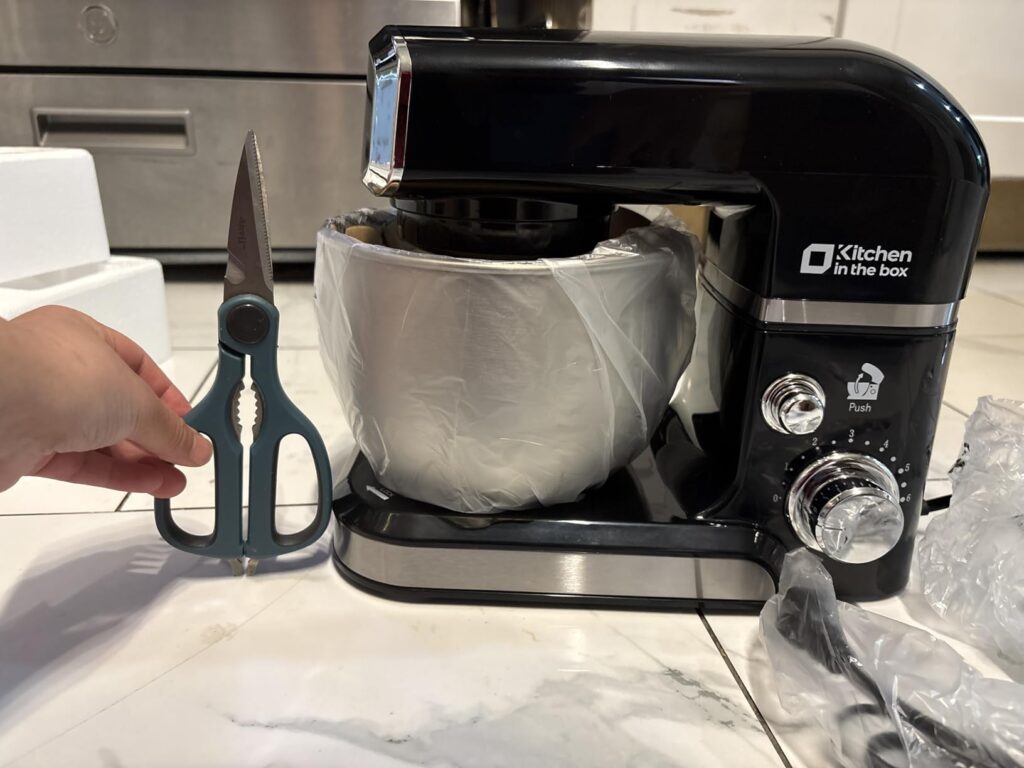
Real size of Kitchen in the box stand mixer
This comes up repeatedly across reviews, and it tends to shape the entire experience from that point forward.
For some buyers, the smaller size is exactly what they wanted. For others, it feels like a limitation they didn’t fully anticipate. There are even cases where people return it almost immediately because it doesn’t match their expectations for capacity.
Although the mixer is marketed as a 3.2-quart model, several users point out that the practical, usable capacity feels noticeably lower once you start mixing real ingredients—especially if you want to avoid spills or overfilling the bowl.
So right from the beginning, there’s a subtle disconnect. What looks like a standard stand mixer online turns out to behave more like a compact, small-batch tool in everyday use.
What People Actually End Up Liking
Even with all the limitations, there’s a reason this mixer continues to get positive feedback. The people who like it are not ignoring its flaws—they’re simply using it in a way that fits what it was designed to do.
It Fits Into Real Kitchens, Not Ideal Ones
One of the most consistent themes across reviews is how easy this mixer is to live with day to day. It’s small, lightweight, and doesn’t demand a permanent spot in the kitchen. For people living in apartments or working with limited counter space, that matters more than raw performance.
Instead of having to plan around a bulky appliance, this is something people can leave out, move easily, or store without much effort. That kind of convenience shows up repeatedly in positive reviews, especially from users who previously avoided stand mixers because they felt too large or too heavy to deal with regularly.
There’s also a practical side to this. Some buyers specifically mention that larger mixers are difficult to lift or reposition, while this one feels manageable. That alone changes how often they actually use it.
It Handles Everyday Tasks Without Much Trouble

Looks cute but problem is the lowest speed is too high and liquid goes splattering all over the place
For basic mixing, the performance is usually good enough to meet expectations. The mixer does what most casual users need it to do: combine ingredients without requiring much effort. Reviews frequently mention simple use cases—cake batter, cookies, frosting, mashed potatoes—and in those situations, the machine tends to perform reliably.
The key detail here is that most satisfied users are not pushing it. They are using it for routine, low-resistance mixing where consistency matters more than power. In that context, the mixer feels helpful rather than limiting.
Some reviewers describe it in a very straightforward way: it works well for everyday recipes, as long as you don’t treat it like a heavy-duty machine.
It Lowers the Barrier to Owning a Stand Mixer
A large portion of buyers are not experienced bakers. Many are trying a stand mixer for the first time, replacing a hand mixer, or simply looking for something more convenient without committing to a higher price point.
That context shapes how the product is received. When expectations are modest, the mixer often feels like a smart purchase. It provides enough functionality to make baking easier without requiring a significant investment.
Some reviews even compare it to more expensive mixers, but usually in a practical sense rather than a direct competition. It is seen as a budget-friendly alternative, not a substitute for premium performance.
It Makes More Sense for Smaller Households
The size, which becomes a limitation for some users, is actually a benefit for others. Many positive reviews come from people cooking for one or two people, or small families who rarely need large batches.
For those users, the smaller bowl feels appropriate rather than restrictive. It matches the scale of their cooking, reduces waste, and keeps the process simple. In that scenario, a larger mixer would not just be unnecessary—it would be inconvenient.
That is why the product often gets strong feedback from casual home cooks, even while receiving criticism from more experienced or high-volume users. It is not trying to serve both groups equally well, and the reviews reflect that divide.
The Size Feels Manageable Until You Actually Start Using It
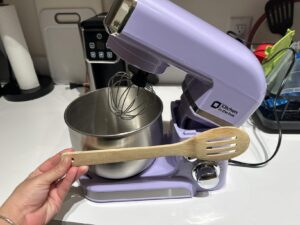 On paper, the smaller bowl may not seem like a major issue. In practice, though, many customers say the size changes how they cook and bake. It is not just about making slightly less. It often means adjusting the entire way you use the mixer. People mention cutting recipes down, avoiding double batches, and being more careful than expected just to keep ingredients from spilling out.
Several reviews also point out that the cramped space under the mixer head makes it awkward to add ingredients while the machine is running. That becomes frustrating quickly, especially for recipes that require gradual additions. For buyers expecting something that behaves like a standard stand mixer, this is where the difference becomes obvious. It may be compact, but it is compact in a way that affects workflow, not just storage.
It Can Handle Batter Better Than Dough
The biggest gap between expectation and reality usually shows up with dough. For lighter jobs—cake batter, frosting, cookies, whipped mixtures—the mixer is often described as perfectly acceptable. But once the texture becomes heavier, the tone of reviews changes. Buyers describe the motor sounding strained, the body shaking during use, and the machine feeling as if it is working at its limit. Some say it can manage dough in small amounts; others say that is exactly when problems begin.
That distinction matters because many shoppers buy a stand mixer hoping it will save effort on bread, pizza dough, or other thicker mixtures. This one sometimes can, but not with much margin for error. If the batch is too large or the dough too stiff, the mixer stops feeling helpful and starts feeling fragile. That is why several reviewers describe it as fine for occasional baking, but not something they would trust for regular heavy mixing.
Durability Is Hard to Predict
One of the more complicated parts of the review pattern is durability. Some customers say they use the mixer often and have had no serious issues. Others report the opposite: motors failing within months, attachments becoming difficult to remove, or coating on parts starting to wear off. The inconsistency is part of what makes the product harder to judge. It is not that every unit fails quickly, but there are enough complaints to suggest that long-term reliability is not one of its strongest selling points.
That does not necessarily make it a bad purchase. It just changes what kind of purchase it is. This feels less like an appliance you buy once and use for years, and more like something people buy because it is affordable, accessible, and good enough for now. For some households, that is perfectly acceptable. For others, it ends up feeling like a short-term compromise.
The Frustration Is Often in the Small Details
Not every complaint is dramatic. In fact, a lot of dissatisfaction comes from repeated small annoyances. Reviews mention flour or liquid splashing out, even at lower settings. Others say the lowest speed still feels too aggressive, especially when starting dry ingredients. Some buyers also note that mixture can cling to the sides or bottom of the bowl, which means stopping the machine to scrape things down by hand.
None of these issues alone would necessarily ruin the experience. But together, they create a pattern: the mixer often works, but it rarely feels effortless. That is an important distinction. The disappointment in many reviews does not come from total failure. It comes from the sense that the machine needs more babysitting than people expected. And once that feeling sets in, the low price starts to look less like a bargain and more like an explanation.
The Fairest Way to Understand This Mixer
After going through a wide range of Kitchen in the Box stand mixer customer reviews, the clearest conclusion is not that this is an amazing mixer or a terrible one. It is that this mixer only makes sense under certain conditions. Its value depends heavily on who is buying it, how often they bake, and what kind of recipes they expect it to handle.
That is why the reviews can feel so contradictory. One person calls it perfect, while another says it was a waste of money. In many cases, both are telling the truth from their own point of view. For a buyer making simple batters in a small kitchen a few times a month, this mixer can feel practical, affordable, and easy to live with. But for someone expecting the performance, capacity, and consistency of a full-size stand mixer, the limitations show up very quickly.
So the most honest way to frame it is this: the Kitchen in the Box stand mixer is not a broadly impressive appliance. It is a narrowly useful one. It tends to work best when you are making small batches, baking occasionally, and prioritizing footprint and affordability over strength and long-term durability. It tends to disappoint when baking becomes frequent, when dough enters the picture, or when you expect it to perform with the ease of a more powerful machine.
Why It Still Attracts So Many Reviews
Once you see it that way, its popularity starts to make more sense. The mixer keeps getting attention not because it is the best option in the category, but because it fits a part of the market that larger, more expensive mixers do not really serve well.
1. It Makes the Category Feel Reachable
For many buyers, this is not a cheaper alternative to a premium stand mixer. It is the only reason they enter the category at all. A full-size stand mixer can feel too expensive, too bulky, or simply too serious for someone who only bakes once in a while. This model lowers that barrier. It gives people a way to try a stand mixer without committing to the cost, size, or weight of a bigger machine.
That matters more than it may seem. In practical terms, this product is often competing less with high-end mixers and more with hand mixers, manual mixing, or the decision not to buy anything at all. That puts it in a very different lane from the start.
2. It Fits the Reality of How Many People Actually Bake
A lot of product discussions are shaped by ideal use cases, but most home kitchens do not operate that way. Most people are not kneading bread every weekend or making large holiday batches year-round. They are mixing pancake batter, cake mix, cookies, mashed potatoes, frosting, or the occasional loaf. For that kind of casual, inconsistent use, many reviews suggest the mixer is good enough to feel worthwhile.
That “good enough” factor is more powerful than it sounds. For light home use, convenience often matters more than performance ceilings. If a mixer is easy to store, easy to lift, and capable of handling ordinary kitchen tasks, many buyers will judge it positively even if it struggles outside that comfort zone.
3. Lower Expectations Change the Review Experience
Price does more than attract buyers. It also shapes how buyers judge the product once they receive it. When people spend under $100 on a stand mixer, most are not expecting premium materials, long-term heavy-duty performance, or flawless engineering. They are hoping for something functional, manageable, and reasonably reliable. When the mixer meets that basic threshold, even imperfectly, it often earns a favorable review.
That helps explain why a product can receive both valid criticism and strong ratings at the same time. Buyers may openly acknowledge the small bowl, the limited power, or the design frustrations and still feel satisfied overall because the product delivered roughly what they expected for the money.
4. Review Volume Becomes Its Own Selling Point
There is also a simple marketplace effect at work here. Once a product collects thousands of reviews, it starts to look established. Even if the feedback is mixed, the sheer volume creates a sense of familiarity and lowers the perceived risk of trying it. People often interpret a heavily reviewed product as a proven one, even when the details of those reviews are more nuanced. That momentum can keep feeding itself: more visibility leads to more purchases, and more purchases lead to even more reviews.
In that sense, the mixer’s popularity is not only about performance. It is also about positioning. It is affordable, visible, approachable, and easy to justify for buyers who want a stand mixer but are not ready for a major purchase. And for a product like this, that may be more important than being exceptional.
So… Is It Worth Buying?
That really comes down to how you plan to use it.
If you want a stand mixer that is:
- compact enough for a small kitchen,
- reasonably priced,
- and suitable for light or occasional baking,
then this mixer will probably feel like a practical choice. In that case, it makes sense why so many customers are happy with it.
But if you need something with:
- stronger mixing power,
- better long-term durability,
- or enough capacity for larger batches,
then this model may feel too limited for your needs.
Final Thoughts
The Kitchen in the Box stand mixer is not really designed to compete with premium stand mixers.
What it does offer is a more approachable option for people who want something smaller, cheaper, and easier to keep in a compact kitchen.
That is probably the real reason it continues to attract so many buyers. It fills a gap for casual home bakers who want convenience more than heavy-duty performance.
If you want a deeper breakdown of its pros, limitations, and real user feedback, read the full review here: Kitchen in the Box Stand Mixer Review.
