If you’re looking for a simple, no-frills mixer for everyday baking, the Cuisinart Power Advantage 5-Speed Hand Mixer often comes up as a practical option. It’s not the most powerful or feature-rich model, but it’s designed to handle the kind of tasks most home kitchens actually need.
Still, the Cuisinart 5-Speed Hand Mixer has stuck around for a reason. It appeals to people who want a mixer that feels straightforward, reasonably well made, and easy to live with in a normal kitchen.
That kind of product can be harder to judge than it seems. A basic mixer can be perfectly fine if it does the small things well. It can also become annoying very quickly if the low speed is too aggressive, the handle feels awkward, or the attachments start to feel flimsy after a few months. With a hand mixer, those little details tend to matter more than the headline features.
This one feels like Cuisinart trying to hit a practical middle ground. It keeps the design simple, avoids overdoing the controls, and leans on brand familiarity without turning the mixer into something overly expensive. The real question is whether that simplicity ends up feeling helpful or limiting once you start baking with it regularly.


Quick Verdict
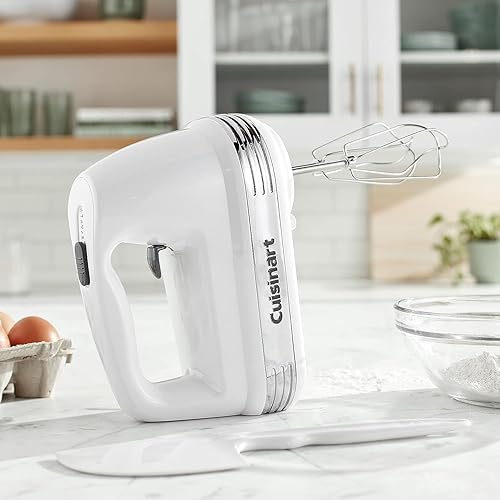
The Cuisinart Power Advantage 5-Speed Hand Mixer is a solid choice for light to moderate baking. It handles everyday tasks like cake batter, whipped cream, and frosting without much trouble, but it can feel limited if you regularly work with thicker dough or want more precise speed control.
If you want something simple, compact, and easy to use, it makes sense. If you bake often or need more flexibility, moving up to a 7-speed or 9-speed model will likely feel like a better long-term decision.
Why This Mixer Appeals to a Certain Kind of Buyer
Some kitchen tools are bought because they are exciting. This one is more often bought because it feels sensible. The people who gravitate toward a 5-speed hand mixer are usually not looking for a countertop showpiece. They want something compact, easy to store, and strong enough for ordinary baking jobs without taking over the kitchen.
That matters because the expectations around a mixer like this are a little different. Buyers are usually thinking about cake batter, brownie mix, frosting, mashed potatoes, cookie dough that is not too stiff, and the kind of weeknight or weekend baking that does not justify pulling out a stand mixer. In that context, the Cuisinart Power Advantage 5-Speed Hand Mixer has a fairly clear job to do.
It is not trying to replace a larger mixer. It is trying to be the one you grab first because it is quick, familiar, and does not make a simple recipe feel like a project.
Design and First Impressions
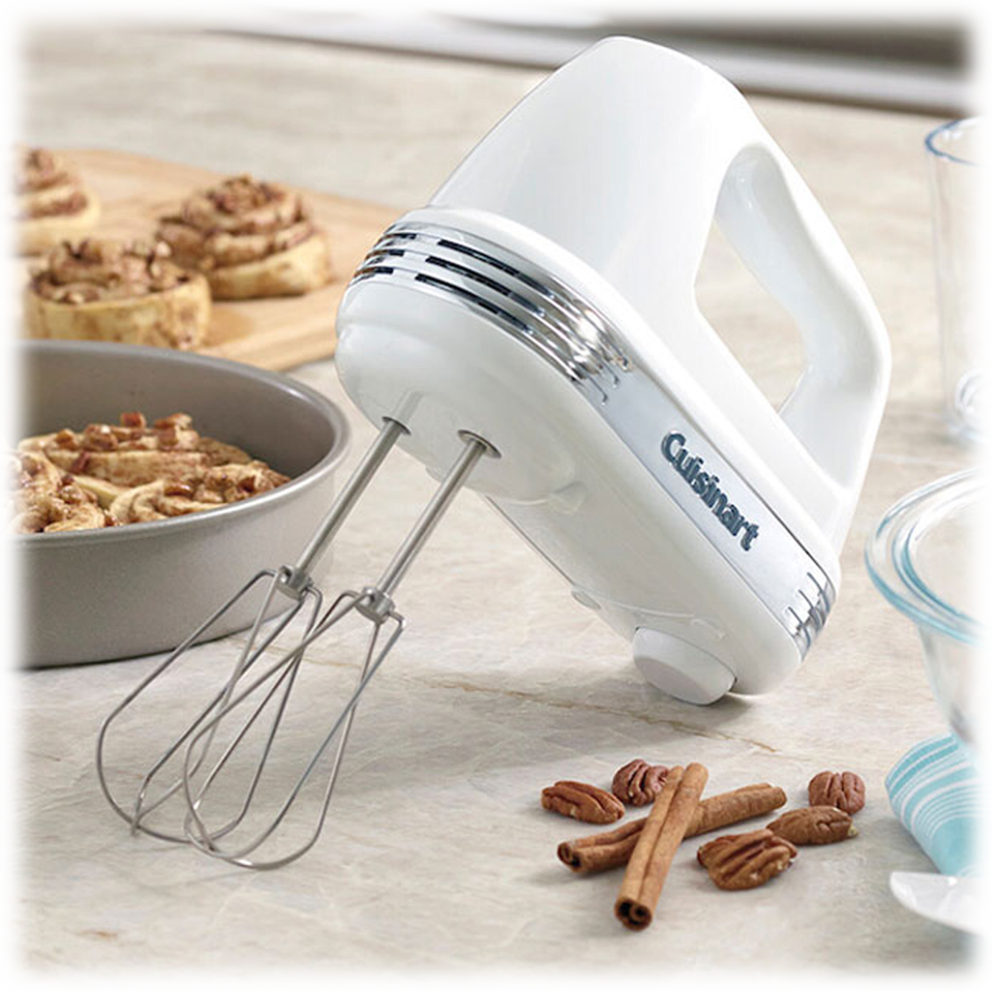 One of the more appealing things about this mixer is that it looks and feels uncomplicated in a good way. The body shape is familiar, the controls are easy to understand, and it does not have the kind of design gimmicks that tend to age badly. Marissa would probably say this is the sort of mixer that makes its case through ease of use rather than personality.
The size is part of the appeal. It is compact enough to tuck into a cabinet or deep drawer without much trouble, which is something people tend to appreciate more over time. Countertop appliances have a way of becoming clutter if they ask for too much space, and hand mixers that store easily often get used more often for that reason alone.
The handle shape is fairly comfortable, and that matters more than it gets credit for. If a mixer feels unbalanced or too bulky in the hand, you notice it right away when working through a thicker batter. This one is not especially elegant, but it tends to feel manageable, which is what a lot of home cooks want.
What Everyday Use Actually Feels Like
The best way to think about this mixer is that it is built for repetition. Not heavy-duty repetition, but the kind that happens in a real home kitchen: mixing pancake batter on a Saturday morning, whipping cream for dessert, making frosting for cupcakes, beating softened butter and sugar, or pulling together mashed potatoes at dinner.
For those tasks, the mixer is usually right in its comfort zone. The motor does not have to prove anything dramatic. It just needs to feel steady, predictable, and easy to control. That is where the Cuisinart 5-speed tends to do reasonably well.
A 5-speed setup is enough for a lot of people, provided the speeds are spaced well. That part is more important than the number itself. Plenty of mixers throw around extra speed levels without making the control feel more useful. A simpler speed range can work perfectly well if the lowest speed does not fling ingredients around and the upper end still has enough strength to finish the job without dragging.
That said, this is also where the limits of a 5-speed model begin to show. A mixer with fewer speed steps usually gives you less room to fine-tune the process, especially when you are moving between delicate mixing and thicker batter. If you bake often enough to notice those differences, you may eventually start wanting more flexibility.
Where the Simplicity Starts to Feel Like a Trade-Off
The same simplicity that makes this mixer approachable can also make it feel a little basic once your recipes become more demanding. A 5-speed hand mixer can absolutely cover the basics, but there is a point where it stops feeling flexible and starts feeling stripped down.
You are most likely to notice that in a few situations:
- Thicker cookie dough that pushes the motor harder than expected
- Recipes where gentler, more incremental speed control would help
- Longer mixing sessions where hand comfort starts to matter more
- Tasks that need more power or finesse than a simple hand mixer can comfortably give
This does not make the mixer bad. It just defines its lane. It works best when you treat it like an everyday helper rather than a kitchen workhorse. If your baking is occasional or moderate, that may be perfectly fine. If you bake frequently or like making denser doughs, the trade-off becomes easier to feel.
What This Mixer Usually Gets Right
 A lot of hand mixers live or die by the tiny frustrations they create. That is why the more positive impressions of this one tend to revolve around convenience and control rather than raw power.
What it tends to do well:
- It stays easy to store. This matters more than many product pages admit. A compact mixer is simply easier to keep in rotation.
- It feels approachable. There is not much of a learning curve here. That is a plus for beginner bakers and also for people who just want a tool that behaves the way they expect.
- It handles normal mixing tasks without drama. Batter, frosting, whipped mixtures, and ordinary kitchen prep are where it tends to make the most sense.
- It does not feel overly complicated. Some people genuinely prefer a mixer that gets to the point instead of turning simple kitchen work into a settings menu.
There is also something to be said for the fact that Cuisinart generally knows how to make kitchen appliances feel a little more composed than the cheapest end of the market. That does not always mean dramatically better performance, but it often means fewer rough edges in everyday use.
Common Complaints and What They Usually Mean
The weaker points here are fairly predictable. If someone ends up disappointed with this mixer, it is usually not because it completely fails at what it was built for. It is more often because they wanted it to stretch further than it really can.
Most of the likely complaints fall into a few categories:
- It can feel underpowered for heavier work. That is probably the most obvious limitation. A 5-speed hand mixer is not the ideal tool for frequent thick dough or more ambitious mixing.
- There is less speed flexibility. If you have used a better hand mixer before, or if you are picky about control, the smaller speed range may feel noticeable.
- It risks being outgrown. For occasional use, the simplicity is appealing. For regular bakers, it may eventually start to feel like a stepping stone rather than a long-term favorite.
That last point is probably the most important. This is the kind of mixer that makes sense for a lot of kitchens right now, but not necessarily forever. Some buyers will be perfectly happy keeping it for years. Others will end up wanting a 7-speed or 9-speed model once they start baking more often.
Pros and Cons
Pros
- Compact and easy to store
- Simple, approachable control layout
- Works well for basic baking and everyday mixing
- Feels more dependable than many ultra-budget hand mixers
- Good fit for occasional bakers and smaller kitchens
Cons
- Less control than higher-speed models
- Can feel limited with thicker batters and heavier dough
- Not the best choice for people who bake frequently
- May feel too basic if you are used to a more refined hand mixer
Cuisinart Power Advantage 5-Speed Hand Mixer vs KitchenAid 5-Speed Hand Mixer
Seeing two similar mixers side by side usually makes the differences easier to understand than reading a list of features. The table below compares the Cuisinart Power Advantage 5-Speed Hand Mixer with the KitchenAid 5-Speed Hand Mixer in the areas that tend to matter most in real kitchen use.
| Feature | Cuisinart Power Advantage 5-Speed Hand Mixer Model Reviewed | KitchenAid 5-Speed Hand Mixer |
|---|---|---|
|
Design
How the mixer feels in the hand, stores in the kitchen, and fits into everyday use |
Compact, straightforward, and easy to store | More polished look and slightly more premium feel |
|
Speed Control
How much flexibility you get when moving from gentle mixing to thicker batters |
Simple 5-speed setup that covers the basics | Often feels a bit more refined in control and pacing |
|
Power Feel
How confidently the mixer handles everyday batters and tougher mixtures |
Reliable for normal kitchen tasks, but not meant for heavy-duty work | Usually feels slightly stronger and more composed under strain |
|
Best For
The kind of home cook each model tends to suit best |
Budget-conscious buyers who want a practical everyday mixer | Buyers willing to pay more for a somewhat more refined experience |
|
Main Trade-Off
What you are giving up relative to the price and category |
Less flexibility and less headroom as recipes get more demanding | Higher price for improvements that may feel modest to casual users |
The comparison is a little more subtle than it first appears. The KitchenAid 5-Speed Hand Mixer tends to win on polish. It usually feels like the slightly nicer tool in the hand, and some buyers will prefer that immediately. The Cuisinart, though, often makes a strong case by being practical and easier to justify. If you are mainly looking for a dependable hand mixer for everyday jobs, the gap may not feel dramatic enough to justify paying more.
That is often where Cuisinart does well. It gives people enough of what they want without asking them to pay for a brand aura they may not really need.
If You’re Deciding Between Cuisinart Models
One thing that comes up pretty often with this mixer is whether it’s worth sticking with the 5-speed version, or moving up within the same lineup. Cuisinart has a habit of offering multiple versions that look similar at first glance, but feel quite different once you actually start using them.
If you’re deciding between models, it’s worth comparing this mixer to the Cuisinart Power Advantage 7-Speed Hand Mixer, the difference isn’t just “two extra speeds.” The 7-speed version is built with a stronger motor and more gradual control, which makes it easier to handle thicker batters and transition between mixing stages more smoothly. It’s still a compact hand mixer, but it feels more flexible in day-to-day use—especially if you bake more than occasionally.
Then there’s the step up to the Power Advantage Plus (9-speed), which is where the lineup starts to feel noticeably more capable. Mixers in this tier typically come with higher wattage (around 220 watts) and more refined speed adjustments, which helps when working with dense cookie dough or whipping egg whites to stiff peaks. In testing, models in this range tend to handle heavier mixing tasks more confidently, though they can also feel louder and a bit more aggressive in use.
The way to think about it is pretty simple. The 5-speed version works best when you want something basic, compact, and easy to grab for quick recipes. The 7-speed adds control and a bit more breathing room as your baking gets more frequent. And the 9-speed is where you start getting closer to “do almost everything” territory for a hand mixer—at the cost of a little more noise and complexity.
So if you already feel like you might outgrow a simpler mixer, it’s usually worth looking at those higher models early. But if your baking stays in the everyday range, this one still makes sense exactly because it keeps things simple.
What Real Customers Keep Pointing Out
If you read through enough customer reviews, a clearer and more nuanced picture of this mixer starts to form. It’s not just “good” or “bad”—it’s a mix of strengths that people genuinely appreciate, alongside a few recurring frustrations that show up again and again.
One of the most consistent positives is how powerful it feels for a 5-speed hand mixer. Many users mention that it handles everyday tasks easily—things like cookie dough, mashed potatoes, whipped cream, and even some thicker batters. A few even describe it as a noticeable upgrade from older or cheaper mixers that struggled with basic mixing.
That said, the power comes with a trade-off. A surprisingly common complaint is that the lowest speed doesn’t feel very “low”. Multiple reviewers point out that speed 1 can still be strong enough to cause splattering if you’re not careful, especially with dry ingredients or lighter mixtures. Some users adjust to this by starting with the beaters fully submerged, but others find it frustrating enough to mention it as a key downside.
Another pattern that shows up is how people describe the mixer as “simple but effective.” Many buyers actually like the stripped-down approach. It comes with fewer attachments, fewer extras, and fewer things to manage, which for some users is exactly the appeal. If you are not interested in dough hooks, storage cases, or extra accessories, the basic setup can feel more practical than limiting.
Durability, however, is where the feedback becomes more mixed. Some long-term users report their mixers still working years later with regular use, which suggests that the core design can hold up over time. At the same time, there are also reviews mentioning issues like worn gears or the mixer failing after a shorter period. This inconsistency is important—it doesn’t mean the mixer is unreliable across the board, but it does suggest that it may not feel like a long-term investment for everyone.
Finally, there are a few smaller details that people notice more than you might expect. Things like easy-to-clean beaters, a cord that adjusts for left- or right-handed use, and the ability to rest the mixer on a bowl all come up as practical benefits. On the other hand, minor annoyances—like attachments that can feel slightly awkward to insert or remove—also show up in some reviews.
Put together, the feedback paints a fairly honest picture. This is a mixer that feels strong, simple, and effective for everyday use, but also one that requires a bit of adjustment, especially when it comes to speed control. For many people, that balance works. For others, it’s exactly where the limitations start to show.
Who This Mixer Makes Sense For
This mixer is easiest to recommend to someone who knows they want a hand mixer and is not trying to stretch it into something else.
It makes sense if you:
- Bake occasionally or a few times a month
- Want a compact mixer that stores easily
- Mostly make batter, frosting, whipped mixtures, and ordinary cookie dough
- Prefer a simpler tool over one with more features than you will use
- Want a recognizable brand without jumping too far up in price
Who May Want to Skip It
There are also plenty of people who would probably be happier starting somewhere else.
- Frequent bakers who want more control may prefer the Cuisinart 7-speed or 9-speed models.
- People making heavier dough often should probably look toward a stronger hand mixer or even a stand mixer.
- Anyone who already knows they get annoyed by limited speed options may outgrow this one quickly.
This is one of those products that feels better the more honest you are about your habits. If you mostly bake simple things and want a mixer that stays out of the way, it fits. If you are already halfway to wanting something more capable, it may be smarter to skip the intermediate step.
Best For
- Casual or occasional bakers
- People who want a compact, easy-to-store mixer
- Simple recipes like batter, frosting, and whipped mixtures
Not Ideal For
- Frequent bakers working with thick dough
- Users who want precise speed control
- Anyone looking for a long-term, heavy-duty mixer
Is the Cuisinart 5-Speed Hand Mixer Worth It?
For most casual bakers, the answer is yes — as long as expectations match what this mixer is designed to do.
It performs well for basic recipes and everyday use, but it’s not built for heavy-duty mixing or advanced baking tasks. Think of it as a reliable everyday tool rather than a long-term upgrade for serious baking.
Final Thoughts
The Cuisinart Power Advantage 5-Speed Hand Mixer is not exciting in the way some kitchen appliances try to be. What it offers is simpler than that. It gives you a usable, familiar, reasonably well-made mixer that fits neatly into ordinary home cooking.
That may not sound glamorous, but it is actually a pretty solid compliment. A lot of kitchen tools overpromise and then become irritating in small, persistent ways. This one feels more grounded. It has limits, yes, but most of them are the honest kind. It is limited because it is a 5-speed hand mixer meant for practical everyday use, not because it is pretending to be something it is not.
If your baking is light to moderate and you want something straightforward, the Cuisinart 5-Speed Hand Mixer is easy to understand and fairly easy to live with. If you need more finesse or more power, it is probably worth moving up rather than asking this one to do too much.
