The Hamilton Beach Professional hand mixer is not the kind of tool you buy because it looks good sitting on your counter. It’s not trying to win any design awards. It’s a little bulky, a little serious-looking, and honestly… kind of plain.
But that’s also part of the appeal.
This is the Hamilton Beach 7-Speed hand mixer, the one with the DC motor that keeps getting mentioned in reviews. And the reason people talk about it isn’t because it’s elegant. It’s because it handles tougher mixing jobs better than most hand mixers in this price range.
That’s a very specific kind of praise. And it turns out, it matters more than you might expect.
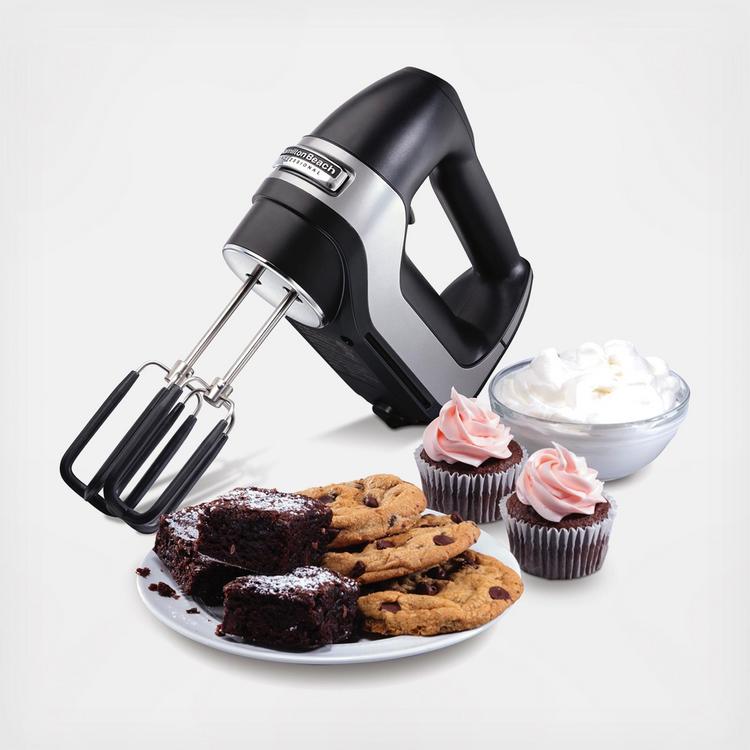
Why I Even Considered This Hamilton Beach Professional hand mixer
I didn’t approach this mixer as someone casually browsing for an upgrade. After years in professional kitchens and teaching environments, I’ve used more mixers than I can count—everything from heavy-duty commercial units to the kind of hand mixers people pick up at a big-box store and hope will last a few years.
What I’ve learned over time is that most hand mixers fail in very predictable ways. Not immediately, but gradually. The motor starts to lose confidence. It struggles a little more with each batch. The sound changes before the performance does. And once you notice it, you can’t really ignore it anymore.
That’s where I was with the mixer I had been using. It still worked, technically. But it no longer felt dependable. In a professional setting, that’s usually the point where something gets replaced without much discussion. At home, people tend to push it a little longer—but the problem doesn’t improve with time.
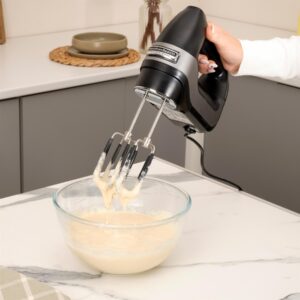
Hamilton Beach Professional hand mixer 7 speed
Over the years, I’ve worked with a range of hand mixers at different price levels. Some of the more affordable Hamilton Beach models are perfectly serviceable for light work, especially in home kitchens. I’ve also used KitchenAid hand mixers that feel noticeably smoother and more refined, especially when it comes to control at lower speeds. They’re well-designed tools. But from a practical standpoint, I don’t always see the need to pay for refinement if the performance doesn’t extend meaningfully into more demanding tasks.
That’s usually the dividing line for me. Not how a mixer performs with whipped cream or cake batter—those are easy tests. The real question is what happens when the mixture starts resisting. Cookie dough, thicker batters, even something as simple as properly textured mashed potatoes. In those situations, many hand mixers begin to show their limitations.
This Hamilton Beach Professional model came to my attention because it was being described differently. Not as a polished tool, not as a premium option, but as something built with more emphasis on torque and consistency under load. That caught my attention immediately. In professional kitchens, those are the characteristics that matter most over time.
I wasn’t looking for something more attractive or more comfortable in a superficial sense. I was looking for something that would maintain performance when the work became less forgiving. That’s a much narrower requirement, but it tends to separate tools that last from tools that get replaced.
So the decision to try this mixer was fairly straightforward. It wasn’t about chasing features or aesthetics. It was about seeing whether a hand mixer in this category could handle real mixing tasks with a bit more authority—and without needing to be handled too carefully.


First Impressions: Built With Function in Mind
The first thing I noticed when I picked it up was the balance. Not heavy, but not insubstantial either. It has enough weight to feel stable in the hand, which is something I pay attention to. A mixer that is too light often feels less controlled once it meets resistance.
The design is clearly practical. There’s no attempt to make it visually distinctive or particularly refined. In a professional setting, that wouldn’t matter at all. In a home kitchen, some people may care more about how a tool looks, but for me, that has always been secondary to how it performs.
What matters more is whether the tool feels predictable. Whether it behaves the way you expect it to. This one gives that impression fairly quickly. It doesn’t feel fragile, and it doesn’t feel like it needs to be handled gently.
The snap-on storage case is also worth mentioning. In training kitchens, organization matters because tools are constantly being used and put away. At home, the same principle applies, just on a smaller scale. Having a straightforward way to store attachments without losing them or damaging them is a practical advantage, even if it seems minor at first.
Overall, my first impression was that this mixer was built with function as the priority. Not appearance, not branding, not even user comfort in the broadest sense—but the ability to perform consistently in real mixing situations. That’s not something every hand mixer in this price range is designed to do.
What It’s Like to Use in Real Cooking
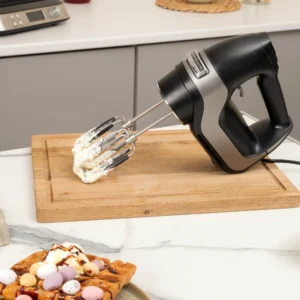
Hamilton Beach Professional 7-Speed Digital Electric Hand Mixer
I didn’t do a “formal test.” I just used it the way I cook.
Brownie batter. Mashed potatoes. Cookie dough. A quick frosting. Nothing fancy, but enough variety to see how it behaves.
For lighter tasks, it’s… fine. That’s the honest answer. It mixes batter the way most mixers do. It whips cream. It handles frosting without drama. If that’s all you ever do, you probably won’t notice anything particularly special here.
But then you move into something thicker, and that’s where it starts to feel different.
Cookie dough is usually the moment where hand mixers start to show their personality. Some slow down. Some get loud in a stressed-out kind of way. Some just feel like they’re barely holding on.
This one pushes through more confidently.
Not effortlessly. You still feel resistance. But it doesn’t hesitate the same way. The motor keeps going instead of dipping and recovering over and over again.
Mashed potatoes were another small test. Again, nothing dramatic, but enough to feel the difference. It stayed more consistent, and I didn’t feel like I had to “help it along” as much.
The DC Motor: Probably the Real Reason This Exists
This is the main thing Hamilton Beach is leaning on here—the DC motor.
I’m not going to pretend most people think about motor types when buying a hand mixer. But in practice, it does seem to change how this one behaves.
The mixer feels like it holds its speed better when the mixture gets thicker. It doesn’t surge as much. It doesn’t dip as dramatically. It just keeps moving.
That doesn’t mean it’s suddenly a stand mixer replacement. It’s still a hand mixer. But it feels like one that has a bit more patience with heavier work.
Seven Speeds… Which Is Honestly Enough
Some mixers advertise nine speeds, ten speeds, even more. It sounds impressive, but in real life, most of those settings blur together.
With this one, you get seven speeds. And they feel more distinct.
I didn’t find myself clicking around trying to find “just the right one.” You pick a speed, it behaves predictably, and you move on.
The slow start is decent too. Not perfect, but good enough to avoid throwing flour everywhere if you’re paying even a little attention.
Attachments: Better Than Expected, But Still Limited
You get SoftScrape beaters, a whisk, and dough hooks.
The SoftScrape beaters are actually kind of interesting. They’re supposed to reduce the need to scrape the bowl constantly, and while they don’t eliminate it, they do help a bit. Batter clings less, and mixing feels a little more efficient.
The dough hooks are usable, which is more than I can say for a lot of hand mixers. But let’s be realistic—this is not for serious bread making. It’s more like, “I can get away with this once in a while.”
The whisk is… fine. It works. It’s not something I’d rely on for delicate or precision tasks, but for basic mixing, it does the job.
Where It Actually Stands Out
After using it for a while, the pattern is pretty clear.
This mixer is not trying to be the nicest one. It’s trying to be the one that doesn’t give up when things get a little harder.
- Thicker cookie dough
- Dense batters
- Mashed potatoes
- Small dough batches (within reason)
If those show up in your cooking even occasionally, this mixer starts to make more sense.
Where Hamilton Beach Professional hand mixer Still Falls Short
It’s not all upside.
The design feels a bit utilitarian. If you care about aesthetics, this might not be your favorite tool to look at every day.
It can get loud, especially under load. Not painfully loud, but noticeable enough that you’ll probably turn it off quickly when you’re done.
And while it handles thicker mixtures better than most, it still has limits. Push it too far, and you’ll feel it.
Also, and this is a smaller thing, it doesn’t have that smooth, polished feel you get from higher-end mixers. It feels more mechanical. More direct. Some people will like that. Some won’t.
Seeing the difference between these two mixers side by side makes the decision a lot easier. The Hamilton Beach Professional 7-Speed is the one to look at if you want more control and a stronger, more confident feel with thicker mixtures. The Hamilton Beach 6-Speed is the simpler choice for everyday baking jobs that do not ask quite as much from a hand mixer.
| Feature | Hamilton Beach Professional 7-Speed Hand Mixer Model Reviewed | Hamilton Beach 6-Speed Electric Hand Mixer | Cuisinart Power Advantage Plus 9-Speed Hand Mixer |
|---|---|---|---|
|
Design
A quick visual look at each mixer’s overall shape, storage setup, and general feel in a real kitchen. |
 |
 |
 |
|
Motor Feel
Not just wattage or specs, but how each mixer feels once the mixture starts pushing back. |
More confident under load, especially with thicker batters and heavier mixing jobs | Plenty capable for light to moderate tasks, but starts to feel more ordinary once mixtures get dense | Feels steady for everyday baking, though not especially forceful with heavier work |
|
Speed Settings
More speeds can help with control, but only if the differences feel useful while mixing. |
7 speeds | 6 speeds | 9 speeds |
|
Slow Start Control
This matters most when you are working with flour, powdered sugar, or anything likely to fly out of the bowl. |
Very controlled start, one of its strongest everyday advantages | Good slow start for a more affordable mixer, especially compared to basic entry-level models | Decent control, though it feels a little less calm and predictable than the Professional model |
|
Attachments
What comes in the box and how flexible each mixer feels for different kitchen tasks. |
SoftScrape beaters, whisk, dough hooks, snap-on storage case | Easy Clean beaters, whisk, dough hooks, snap-on storage case | Beaters, whisk, dough hooks, spatula, storage case |
|
Best Everyday Strength
The thing each mixer seems to do especially well once you stop reading the box and start actually using it. |
Handles thicker mixtures with more confidence than most hand mixers in this range | Simple, useful, and easy to live with for everyday cakes, frosting, and lighter batters | Feels like a practical all-around mixer for regular home baking |
|
Storage Setup
Whether the included storage system actually makes life easier after cleanup. |
Useful, though the snap-on case can feel a little fiddly at times | Straightforward and convenient for keeping everything together | Storage case is tidy and easy to appreciate in smaller kitchens |
|
Who It Fits Best
The kind of home cook each mixer makes the most sense for. |
Someone who wants a hand mixer that can deal with thicker mixtures without feeling overwhelmed | Someone who wants a simpler, lower-cost mixer for everyday baking and light kitchen work | Someone who wants versatility, more speed options, and a balanced middle-ground feel |
|
Main Trade-Off
What you are giving up in exchange for the price and feature set. |
Less refined feel, and some small design quirks that show up over time | Not as capable once batters get heavier or more demanding | Useful and flexible, but not quite as confident as the Professional model with denser mixtures |
What Actually Stuck With Me After Using It (The Good, the Annoying, and the Unexpected)
After a few weeks of using this mixer in a normal kitchen rhythm—not testing, not overthinking it, just cooking—you start to notice what stays with you. Not the features printed on the box, but the small reactions you have while using it. The moments where you think, “okay, that was easier than expected,” or the opposite.
And with this one, the experience ends up being a bit… uneven in an interesting way. Some things genuinely stand out. Others feel like they could have been just a little more thought through.
What It Gets Surprisingly Right
- It doesn’t flinch as quickly as most hand mixers: There’s a certain moment with hand mixers—you hit thicker dough, and the machine either hesitates or starts complaining. This one doesn’t jump straight into that panic mode. It holds its ground a bit longer. You still feel resistance, but it feels like the mixer is working with you instead of asking you to back off immediately.
- The slow start actually changes how you cook: This sounds small, but it shifts your habits. You don’t brace yourself before turning it on. You don’t cover the bowl with your hand like you’re expecting impact. It just eases in. That alone made me less careful in a good way—less tense, less prepared for mess.
- It feels calm, even when it’s doing more work: Some mixers get louder and sharper as they work harder. This one gets louder, sure, but not in that frantic way. It feels more controlled. That changes the overall experience more than I expected.
- The beaters are quieter in a very specific way: The coated beaters don’t clang against the bowl the same way metal ones do. It’s a softer contact. You don’t notice it immediately, but after a few uses, going back to a traditional beater feels harsher than you remember.
- It encourages you to push a little further: I found myself attempting slightly thicker mixtures without immediately switching tools. Not because it’s a powerhouse—but because it feels like it might handle it. That subtle confidence is actually useful.
What Starts to Wear on You Over Time
- It doesn’t always sit nicely when you pause: This sounds minor, but it’s one of those repeated annoyances. You stop mid-mix, set it down, and it doesn’t quite balance the way you want. Sometimes it leans. Sometimes you end up resting it awkwardly on the bowl. It’s not a dealbreaker, just… persistent.
- The storage case is both helpful and slightly irritating: It’s a good idea. Everything stays together. But it’s not always smooth to open or snap back into place. On a busy cooking day, that friction becomes noticeable. You start deciding whether it’s worth using the case every time.
- The controls aren’t second nature: They work fine. But they don’t disappear into the background the way really intuitive controls do. Every now and then, you have to think about what your thumb is doing, and that breaks the flow a bit.
- It can still make a mess if you push it: The slow start helps a lot, but once you increase speed—especially with lighter mixtures—you’re back in familiar territory. Not terrible, just not magically clean either.
- It feels more “mechanical” than refined: This is harder to explain, but you notice it after a while. It doesn’t have that smooth, almost invisible feel of more premium mixers. You’re always aware that you’re holding a tool. Some people like that. Some don’t.
- Small quality inconsistencies pop up here and there: Nothing major in my case, but enough feedback exists about things like alignment, finish, or packaging quirks that it feels like quality control isn’t perfectly consistent across every unit.
What I kept coming back to is this: the strengths feel intentional. The weaknesses feel like side effects of that focus.
It’s built to handle more work than most hand mixers in this range, and you feel that. But in exchange, you get a few rough edges—literally and figuratively.
And depending on how you cook, that trade-off either makes complete sense… or slowly starts to bother you.
Who This Mixer Ends Up Making Sense For
Some mixers are built for people who mostly want a neat little helper for cake batter twice a month. This is not really that mixer.
This one makes more sense for the cook who has a habit of asking a little too much from a hand mixer and then acting surprised when most of them tap out. The kind of person who says, “it’s just a quick batch,” and then ends up mixing a stiff brownie batter, mashed potatoes for a crowd, or cookie dough that probably deserved a stand mixer.
That’s really where this Hamilton Beach Professional hand mixer earns its keep. Not in the easy jobs. Most mixers can survive whipped cream and pancake batter. The difference shows up when the mixture starts pushing back and you don’t want the motor to sound offended.
- Home bakers who regularly make thicker batters: not once a year, but often enough to know when a mixer is bluffing
- People who want more muscle without committing to a stand mixer: maybe because of cost, maybe because of space, maybe because dragging out a stand mixer for every little thing gets old fast
- Cooks who are tired of “good enough” mixers: the ones that feel fine until they hit resistance, then suddenly sound fragile and start smelling warm
- Anyone who values function over polish: if you care more about whether it gets through the job than whether it feels luxurious in your hand, this one starts to make more sense
I’d put it this way: this mixer is for people who don’t need a delicate kitchen accessory. They need something that feels a little more willing. A little less precious. A little more ready to deal with real food instead of idealized test-kitchen fluff.
Who Will Probably Get Along With It Less
There’s another kind of buyer, though, and I don’t think this mixer is really trying to charm them.
If most of your cooking is lighter, easier work—whipped cream, boxed cake mix, soft frostings, the occasional muffin batter—you may not feel much benefit from what this model does better. In that kind of use, the extra backbone is there, but it may not matter enough to justify the trade-offs.
And there are trade-offs.
This mixer does not have that smooth, polished, almost easygoing feel some higher-end hand mixers do. It feels more workmanlike. More mechanical. Some people will read that as sturdy. Other people will read it as rough around the edges, and honestly, both reactions are fair.
- People who mostly do light mixing: you may not use enough of its strength to really appreciate what you paid for
- Buyers who care a lot about refinement: if you want a mixer that feels sleek, elegant, and a little more graceful in the hand, this may not be your favorite
- Anyone sensitive to design quirks: the balance, storage setup, and general feel are practical, but not especially graceful
- Cooks who want quiet comfort above all else: it is not obnoxious, but it is not the softest, most discreet presence in the kitchen either
So no, I wouldn’t call it universally likable. It has a point of view. It knows what kind of work it wants to be good at, and that means some people will immediately click with it while others will wonder what all the fuss is about.
What Stayed With Me More Than Any Single Feature
What stayed with me wasn’t the storage case, or the coated beaters, or even the slow start, useful as those things are. It was the general attitude of the mixer.
It has a kind of stubbornness to it.
Not elegance. Not charm. Stubbornness.
It feels like a tool that expects to be used for something a little heavier than average and doesn’t seem especially interested in apologizing for it. I kept noticing that when mixtures got thicker, it didn’t suddenly turn hesitant or fragile. It just kept working.
And that matters because a lot of hand mixers feel designed backward. They seem built first to hit a certain price, then dressed up with features afterward. This one feels more like somebody started with the idea that it should actually handle some work, and only then worried about the rest.
That doesn’t make it beautiful. It doesn’t make it perfect. But it does give it more character than most mixers in this category, and frankly, more usefulness too.
My Take After Living With It for a While
The Hamilton Beach Professional hand mixer feels like it was made for people who have been mildly annoyed by hand mixers for years and finally got tired of pretending that all of them are basically the same.
They’re not.
Some are smoother. Some are prettier. Some are lighter in the hand and easier to like immediately. But this one has a different strength: it feels more willing when the job gets less convenient.
And that, for the right cook, is worth more than a polished finish or a friendlier first impression.
I wouldn’t recommend it as the obvious choice for everyone. That would be lazy. But if your cooking regularly drifts into that awkward middle zone—too thick for a weak hand mixer, not important enough to justify hauling out a stand mixer—this one starts to look like a very sensible answer.
Not glamorous. Not especially charming. Just more capable than it first appears, which is probably a better quality in a kitchen tool anyway.
