KitchenDict

Reviews kitchen tools and appliances to help you choose the best products for your home kitchen. Discover expert comparisons, buying guides, and honest recommendations.

  • Stand Mixer
    • Best Stand Mixer Under $200 (2026 Guide)
    • Best Stand Mixer Vegetable Slicer Attachments
    • Best Kitchen Stand mixer review 2024
    • Hand Mixer
      • Best Hand Mixer 2024 Reviews
  • Kitchen Tools
    • Best Vegetable Chopper with Container (2026 Guide)
    • Best Stainless Steel Garlic Press (2026 Guide)
  • Other Kitchen Appliances
    • Blender
    • Toaster Oven
    • Air Fryer
      • Best Air Fryer for Small Kitchen
  • Buying Guides

Hamilton Beach vs Cuisinart Stand Mixer: Budget Choice or Premium Upgrade?

March 10, 2026 by admin

Stand mixers can make baking much easier, especially if you regularly prepare cookies, cakes, or bread dough. Two models that often come up for home kitchens are the Hamilton Beach Electric Stand Mixer (4 Quart) and the Cuisinart SM-50R Stand Mixer (5.5 Quart).Both mixers offer similar core functions: multiple speed settings, standard mixing attachments, and a tilt-head design. However, they target slightly different users. The Hamilton Beach model focuses on simplicity and affordability, while the Cuisinart mixer is designed for larger batches and more frequent baking.

In this comparison, we’ll look at the key differences in bowl size, speed control, attachments, and overall usability to help you decide which mixer makes more sense for your kitchen.

Hamilton Beach vs Cuisinart Stand Mixer: Key Differences

Comparing the main specifications side by side can quickly show how these two stand mixers differ in capacity, features, and overall value.

Feature Hamilton Beach Electric Stand Mixer (4 Qt) Cuisinart Stand Mixer SM-50R (5.5 Qt)
Approx. Price
$100–$130 $220–$300
Bowl Capacity 4 Quart stainless steel bowl 5.5 Quart stainless steel bowl
Speed Settings 7 speeds 12 speeds
Included Attachments Dough hook, flat beater, whisk, splash guard Chef’s whisk, mixing paddle, dough hook, splash guard with pour spout
Mixer Design Tilt-head design Tilt-back head design
Best For Occasional baking and smaller kitchens Frequent baking and larger recipes
Dough Mixing Suitable for light to moderate dough Handles heavier dough more comfortably
Build Quality Plastic housing with stainless steel bowl More solid metal construction
Overall Value Affordable everyday option Stronger performance

Tip: If you mainly bake cakes, cookies, or whipped recipes occasionally, the Hamilton Beach mixer usually provides enough performance. If you bake more frequently or often work with bread dough, the larger Cuisinart mixer may feel more capable.

Hamilton Beach Electric Stand Mixer Overview

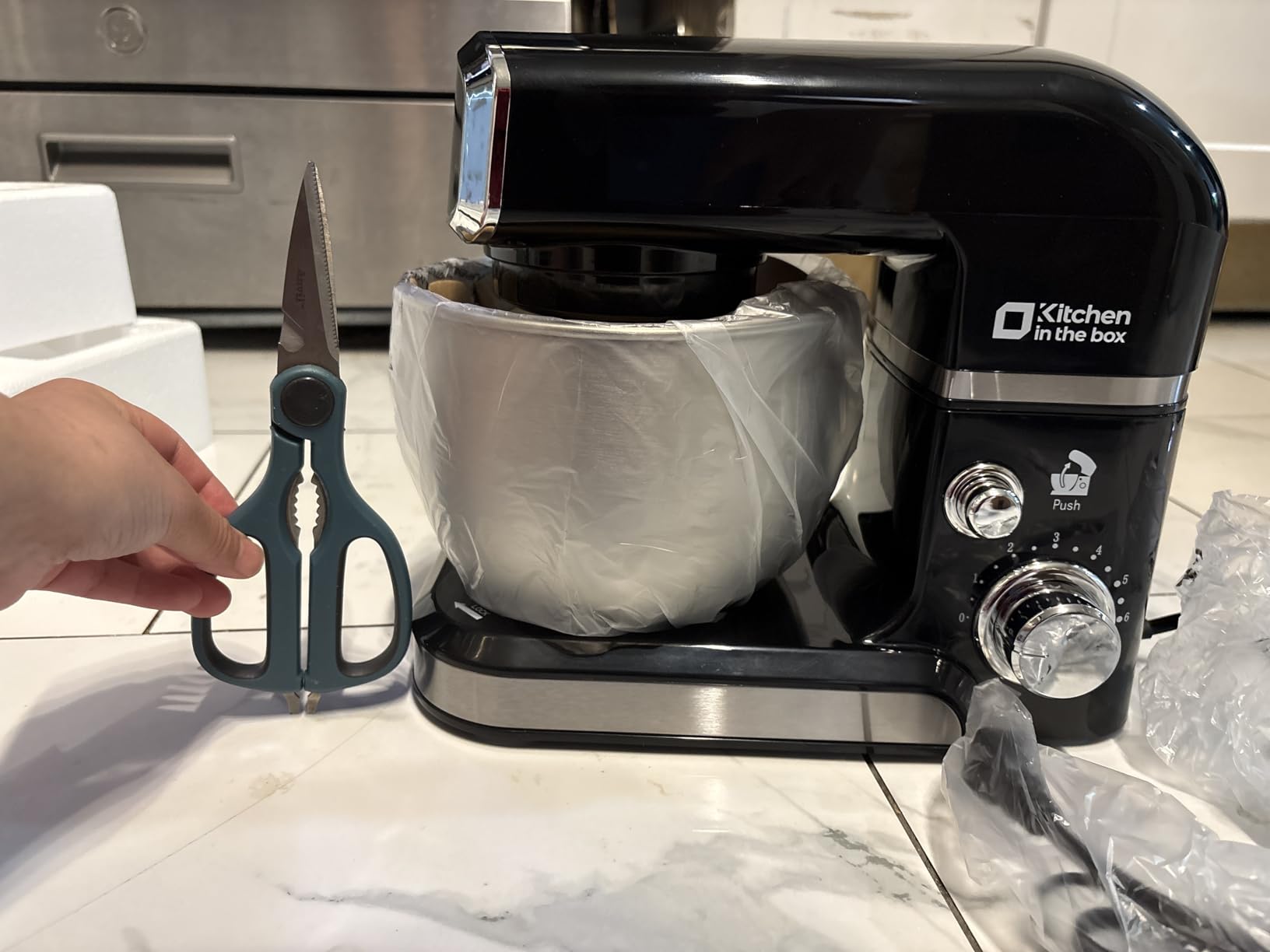
The Hamilton Beach 4 Quart Stand Mixer sits firmly in the budget category of stand mixers. It’s designed mainly for casual home bakers who want something easier than a hand mixer but don’t want to spend the kind of money typically required for premium mixers.

On paper, the mixer covers the basics well. It includes the standard attachments most recipes require: a flat beater for batters, a dough hook for bread dough, and a whisk for lighter tasks like whipping cream or egg whites. For occasional baking, that setup is usually enough.

Hamilton Beach Electric Stand Mixer, 4 Quarts, Dough Hook, Flat Beater Attachments, Splash Guard 7 Speeds with Whisk, Easy-Carry Top Handle, Black Hamilton Beach Electric Stand Mixer, 4 Quarts, Dough Hook, Flat Beater Attachments, Splash Guard 7 Speeds with Whisk, Easy-Carry Top Handle, Black Hamilton Beach vs Cuisinart Stand Mixer

The 4-quart stainless steel bowl is suitable for small to medium batches. Cookie dough, cake batter, brownies, and pancake mixes are generally well within its comfort zone. The mixer also offers seven speed settings, which gives enough range for typical mixing tasks without making the controls complicated.

That said, this is still a budget mixer, and it shows in a few areas. The housing is mostly plastic, and while it keeps the mixer lightweight, it doesn’t feel as solid as higher-end machines. Some users also report that the mixer can move slightly on the counter when working with thicker dough, especially if the batch is large.

Performance-wise, the mixer handles everyday recipes reasonably well, but it’s not designed for heavy-duty baking. If you regularly make dense bread dough or very large batches, the motor can start to struggle compared with more powerful mixers.

What works well

  • Very accessible price point compared with most stand mixers
  • Good for everyday recipes like cookies, cakes, and simple batters
  • Compact and lightweight, which helps in smaller kitchens
  • Includes the essential attachments needed for typical baking
  • Simple controls that beginners can understand quickly

Common complaints to be aware of

  • The 4-quart bowl can feel limiting for larger baking batches
  • Not the best choice for frequent bread dough or heavy mixing
  • The plastic housing makes it feel less durable than premium mixers
  • Some users mention that the mixer can shift slightly during thicker mixes
  • The motor is adequate for casual baking but not designed for intensive use

Cuisinart SM-50R Stand Mixer Overview

The Cuisinart SM-50R Stand Mixer is positioned a step above entry-level stand mixers. It’s designed for home bakers who want more capacity and stronger performance than budget models without necessarily jumping to the price range of premium mixers like KitchenAid.

The most noticeable upgrade is the 5.5-quart stainless steel bowl. Compared with smaller 4-quart mixers, the extra capacity makes a real difference when mixing large cookie batches, double cake recipes, or bread dough. For families or people who bake regularly, the larger bowl often feels much more practical.

This mixer also offers 12 speed settings, which is more than what many budget mixers provide. The extra speed control can be useful when you want to start slowly to avoid splashing ingredients, then gradually increase the speed for whipping or kneading.

Cuisinart Stand Mixer, 12 Speed, 5.5 Quart Stainless Steel Bowl, Chef’s Whisk, Mixing Paddle, Dough Hook, Splash Guard w/ Pour Spout, White Linen, SM-50, Manual Cuisinart Stand Mixer, 12 Speed, 5.5 Quart Stainless Steel Bowl, Chef’s Whisk, Mixing Paddle, Dough Hook, Splash Guard w/ Pour Spout, White Linen, SM-50, Manual Cuisinart Stand Mixer, 12 Speed, 5.5 Quart Stainless Steel Bowl, Chef’s Whisk, Mixing Paddle, Dough Hook, Splash Guard w/ Pour Spout, White Linen, SM-50, Manual

In terms of construction, the SM-50R feels noticeably sturdier than most entry-level mixers. The housing is heavier and more solid, and the mixer tends to stay stable on the counter even when working with thicker dough.

However, the mixer isn’t perfect. While it’s stronger than many budget options, it still sits in the mid-range category rather than the heavy-duty tier. Some users mention that very stiff bread dough can still push the motor harder than expected, and the mixer itself is fairly heavy to move around the kitchen.

Overall, the Cuisinart SM-50R offers a balance between price, capacity, and performance, making it a solid option for people who bake more often and want something a bit more capable than an entry-level mixer.

What works well

  • Large 5.5-quart bowl that works well for bigger recipes
  • 12 speed settings allow finer mixing control
  • More stable and durable construction than many budget mixers
  • Handles heavier dough better than smaller entry-level models
  • Feels closer to a traditional stand mixer experience

Common complaints to be aware of

  • Higher price compared with basic stand mixers
  • The mixer is heavier and takes up more counter space
  • Still not as powerful as premium mixers designed for heavy bread baking
  • Some users feel the speed dial can be slightly sensitive
  • Attachments and accessories can be more expensive

Mixing Performance: How Do They Compare in Real Use?

Specifications like bowl size and number of speeds can look impressive on paper, but what most people really want to know is how these mixers perform in everyday recipes. In real kitchen use, the difference between the Hamilton Beach mixer and the Cuisinart SM-50R usually shows up when mixing thicker batters or heavier dough.

For lighter recipes such as cake batter, pancake mixes, or whipped cream, both mixers perform well. The Hamilton Beach mixer has enough power for these tasks, and its seven speed settings provide adequate control for gradually mixing ingredients without making a mess.

When it comes to cookie dough, the two mixers still handle the job reasonably well, although the Cuisinart mixer tends to feel a bit more stable during thicker mixes. The larger bowl also gives ingredients more space to move, which can make mixing slightly more efficient for larger batches.

The biggest difference appears when working with bread dough or dense mixtures. The Hamilton Beach mixer can handle smaller dough batches, but it may start to strain if the dough becomes very stiff or if the batch size is large. Some users notice more vibration or movement on the counter during heavier mixing.

The Cuisinart SM-50R generally performs more comfortably in these situations. Its heavier construction and larger bowl help the mixer stay more stable while kneading thicker dough. It’s not a commercial-level bread machine, but it tends to handle regular bread baking better than smaller budget mixers.

In practical terms, both mixers are capable for typical home baking. The Hamilton Beach model works well for everyday recipes and occasional dough, while the Cuisinart mixer feels more confident when recipes become larger or more demanding.

Build Quality and Durability

Build quality is one of the areas where the difference between these two mixers becomes more noticeable. While both models are designed for home kitchens, they sit in different parts of the stand mixer market.

The Hamilton Beach Electric Stand Mixer uses a lighter construction with a plastic outer housing and a stainless steel bowl. This keeps the mixer relatively easy to move and helps keep the price low. For occasional baking tasks like cake batter, cookie dough, or whipped cream, the overall build usually feels adequate.

However, the lighter design also means the mixer doesn’t feel as solid as more expensive models. When mixing thicker dough, some users report that the mixer can vibrate slightly or shift on the counter if the batch is large. This doesn’t necessarily make it unusable, but it does highlight that the machine is built more for casual baking rather than heavy-duty mixing.

The Cuisinart SM-50R, by comparison, has a noticeably sturdier feel. The housing is heavier and the overall construction is closer to what people expect from a traditional stand mixer. The extra weight helps the mixer stay more stable during thicker mixing tasks like bread dough or dense cookie dough.

That said, the Cuisinart mixer is still considered a mid-range machine rather than a commercial-grade one. While it handles heavier mixing better than most entry-level mixers, very stiff dough can still push the motor and attachments harder than premium stand mixers designed specifically for frequent bread baking.

In everyday use, the difference mainly comes down to stability and long-term durability. The Hamilton Beach mixer works well for lighter tasks and occasional baking, while the Cuisinart mixer generally feels more robust if you plan to use it more frequently.

Which Mixer Actually Makes More Sense?

When comparing the Hamilton Beach 4 Quart mixer with the Cuisinart SM-50R, the decision usually comes down to how often you bake and how demanding your recipes are. Both mixers can handle everyday kitchen tasks, but they serve slightly different types of users.

If baking is something you do occasionally — for example weekend cookies, simple cake batters, brownies, or pancake mixes — the Hamilton Beach mixer often makes the most practical sense. It covers the basic mixing tasks most households need without requiring the higher price of a larger stand mixer. For casual baking, many people simply don’t need the extra capacity or power that more expensive mixers offer.

However, the situation changes if baking is a regular hobby. If you frequently make bread dough, large cookie batches, or double recipes, the Cuisinart SM-50R starts to feel like the more comfortable option. The larger 5.5-quart bowl provides more working space, and the sturdier construction helps the mixer stay more stable when handling thicker mixtures.

Another factor is long-term use. For someone who bakes once or twice a month, the Hamilton Beach mixer can easily cover those needs. But for home bakers who use a mixer every week, the stronger build and larger capacity of the Cuisinart model may feel like a better long-term investment.

Final Verdict

Both mixers can work well in a home kitchen, but they clearly target different levels of baking activity.

The Hamilton Beach Electric Stand Mixer is a solid entry-level choice. It keeps the price low while still providing the essential features most casual bakers need for cakes, cookies, and everyday recipes.

The Cuisinart SM-50R Stand Mixer, on the other hand, offers a noticeable step up in capacity and overall build quality. For people who bake frequently or work with larger batches, the upgrade can feel worthwhile.

In simple terms: if you want a budget-friendly mixer for occasional baking, the Hamilton Beach model is usually enough. If baking is something you do regularly and you prefer a mixer that feels more capable over time, the Cuisinart SM-50R is likely the better fit.

KitchenDict is your trusted guide to kitchen tools and appliances.
We publish independent reviews, comparisons, and buying guides to help you choose the best products for your home kitchen.

About | Contact | Privacy Policy | Affiliate Disclosure

© 2026 KitchenDict. All rights reserved.