If you have been searching for VIVOHOME stand mixer reviews, you have probably noticed the same thing I did: this brand has a surprisingly wide range of mixers, and the models can look very similar at first. There are standard tilt-head mixers, larger-capacity versions, and several multi-function machines that bundle in attachments like a meat grinder, blender, pasta maker, or slicer.
That sounds appealing on paper, especially if you are trying to get a lot of features without paying KitchenAid-level prices. But once I spent time comparing the VIVOHOME lineup more carefully, the picture felt a little more mixed. Some of these mixers look like decent value for casual baking. Others seem more attractive in theory than they probably are in everyday kitchen use.
My view is pretty simple: VIVOHOME makes mixers that can make sense for budget-conscious home bakers, but this is not a lineup I would approach with blind confidence. The main appeal here is feature-to-price value. The trade-off is that long-term confidence, overall refinement, and consistency across models do not feel as strong as they do with more established mixer brands.

VIVOHOME Stand Mixer, 660W 10 Speed 6 Quart Tilt-Head
Two different types of VIVOHOME mixers are worth separating first
Before looking at the full comparison table, I think it helps to separate the current VIVOHOME lineup into two broad groups. Even though all of these products are sold as stand mixers, they are not really trying to do the exact same job.
The first group is the more traditional stand mixer style. These are the simpler models built mainly for standard baking tasks like mixing cake batter, whipping cream, making frosting, and handling basic dough work. In this lineup, that includes the regular 4.75-quart, 6-quart, 7.5-quart, and fermentation-focused stand mixers. If someone mainly wants a mixer for everyday home baking, this is usually the more straightforward category to look at first.

VIVOHOME 9 in 1 Multifunctional Stand Mixer with Fermentation, 6 Speed 7.5 Quart
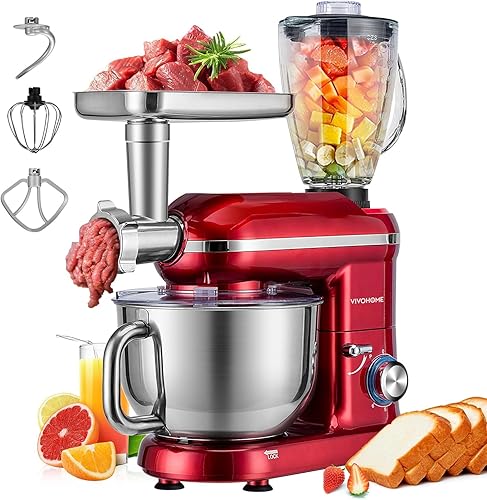
The second group is the multifunction or “x-in-1” style. These models still work as stand mixers, but they also add extra attachments such as a blender, meat grinder, pasta maker, vegetable slicer, or cookie-making tools. On paper, they offer more versatility and can look like a better value. The trade-off is that they are also trying to do more than one job, which naturally raises the question of whether you are getting a better all-around kitchen system or just a longer feature list.
That distinction matters because the best choice depends a lot on what kind of buyer you are. Some people just want a reliable mixer for baking and do not need extra complexity. Others like the idea of getting several functions in one machine. So before judging the individual models, it makes sense to compare them within that broader context first.
To make that easier to sort through, I put the key models side by side below.
| Product | Best For | Key Feature | Rating | Check Price |
|---|---|---|---|---|
| VIVOHOME 6 Qt 10-Speed Stand Mixer | Best Overall Pick | Balanced size, speed range, and price | ★★★★☆ | Check Price on Amazon |
| VIVOHOME 7.5 Qt 6-Speed Stand Mixer | Best Value Capacity | Larger bowl for a lower price | ★★★★☆ | Check Price on Amazon |
| VIVOHOME 4.75 Qt 8-Speed Stand Mixer | Best for Smaller Kitchens | Smaller footprint and lower price | ★★★★☆ | Check Price on Amazon |
| VIVOHOME 6 Qt Mixer with Fermentation | Most Interesting Feature Set | One-touch presets plus fermentation mode | ★★★★☆ | Check Price on Amazon |
| VIVOHOME 3-in-1 Stand Mixer | Best Basic Multi-Function | Mixer plus blender and meat grinder | ★★★★☆ | Check Price on Amazon |
| VIVOHOME 6-in-1 Stand Mixer | Best for Feature Hunters | 8.5 qt bowl with pasta maker and more | ★★★★☆ | Check Price on Amazon |
| VIVOHOME 9-in-1 Multifunctional Mixer | Most Ambitious Option | Fermentation, timer, grinder, blender, slicer, pasta, cookie maker | ★★★★☆ | Check Price on Amazon |
What stands out about the VIVOHOME mixer range
One thing I do give VIVOHOME credit for is variety. A lot of budget brands sell one or two mixers and call it a day. VIVOHOME seems to be aiming for several different buyers at once. There is a more traditional 6-quart model for everyday baking, a larger 7.5-quart version for people who want more bowl space, a smaller 4.75-quart option for lighter home use, and newer feature-heavy machines that try to stand out with presets, fermentation functions, or bundled attachments.
That flexibility is part of the appeal. If your budget is limited, it is easy to look at these prices and feel like you are getting a lot for the money. The regular stand mixers sit in a range that many first-time buyers can justify. Even the more elaborate multi-function models still come in below what some premium standalone mixers cost before attachments are added.
But there is another side to that. In my experience, once a budget appliance starts promising too many jobs at once, I become more cautious, not less. A stand mixer already has to do several things well: mix evenly, stay stable, handle dough without straining too much, and feel easy enough to use that you do not avoid pulling it out. When a machine also tries to be a blender, grinder, pasta machine, slicer, and cookie press, I start wondering whether the design is truly strong in each role or just broad on paper.
A quick look at the VIVOHOME brand
VIVOHOME is not a stand mixer specialist with a long kitchen-appliance history. It is better understood as a broader home-products brand that sells items across multiple categories, including kitchen appliances, home essentials, and tools. Publicly, Vivohome Inc. has been associated with San Francisco, California, but VIVOHOME products are manufactured in China.
That broader product mix is worth keeping in mind. Beyond stand mixers, the brand also sells a wide range of home and utility products rather than focusing only on baking equipment. To me, that makes VIVOHOME feel more like a modern value-oriented brand with a large catalog than a legacy mixer company with deep roots in this category.
My overall take on VIVOHOME stand mixer reviews
After comparing the lineup, I think VIVOHOME sits in that familiar budget-appliance space where the value proposition is easy to understand, but the long-term confidence level is harder to pin down. These mixers look most appealing for casual home bakers who want decent capacity, the usual basic attachments, and a lower entry cost.
For occasional cookies, cake batter, whipped cream, frosting, lighter bread dough, and weekend baking projects, several of these models probably make reasonable sense. For serious bread baking, very frequent use, or buyers who care a lot about polish, noise control, refined speed control, and brand track record, I would be more hesitant.
That does not mean the lineup is bad. It just means I would frame it honestly: VIVOHOME is more of a practical budget option than a brand I would describe as especially proven or premium.

Deep comparison of the current VIVOHOME lineup
Seeing the differences in one place helps a lot here because some of these mixers overlap heavily. The table below focuses on the parts that matter most in real buying decisions: bowl size, speed options, attachments, price, and what kind of buyer each model seems best suited for.
| Feature | VIVOHOME 6 Qt 10-Speed | VIVOHOME 7.5 Qt 6-Speed | VIVOHOME 4.75 Qt 8-Speed | VIVOHOME 6 Qt w/ Fermentation | VIVOHOME 3-in-1 | VIVOHOME 6-in-1 | VIVOHOME 9-in-1 |
|---|---|---|---|---|---|---|---|
|
Current Price
Price matters a lot in this category because value is one of the main reasons to consider VIVOHOME in the first place. |
$149.99 | $142.49 | $109.99 | $179.99 | $154.99 | $199.99 | $259.99 |
|
Bowl Capacity
Larger bowls are useful for batch baking, but bowl size alone does not guarantee stronger dough performance. |
6 qt | 7.5 qt | 4.75 qt | 6 qt | 6 qt | 8.5 qt | 7.5 qt |
|
Speed Options
More speed control can help with gentler starts, whipping, and finer adjustment across different mixing tasks. |
10 speeds | 6 speeds | 8 speeds | One-touch presets | Standard mixer speeds | Standard mixer speeds | 6 speeds + timer |
|
Main Included Accessories
All of these include the usual core mixer tools, but the multifunction models add extra attachments. |
Beater, dough hook, wire whip, egg separator | Beater, dough hook, wire whip, egg separator | Beater, dough hook, wire whip, egg separator | Flex edge beater, bread hook, whisk | Mixer + blender + meat grinder | Mixer + grinder + blender + pasta maker | Mixer + grinder + blender + slicer + pasta + cookie maker |
|
What I Like
This is the part of the product story that looks strongest in each model. |
Most balanced regular model | Big bowl at a very fair price | Affordable and compact | More thoughtful feature set | Good entry point for multi-function use | Lots of tools for the money | Very broad feature list |
|
Main Concern
This is the trade-off that would make me pause before buying. |
Still a budget mixer, not a proven heavy-duty model | Fewer speeds despite larger size | Smaller bowl limits batch baking | Newer concept, less proven | Jack-of-all-trades risk | More complexity, more points of compromise | Price moves close to stronger single-purpose alternatives |
|
Best For
The kind of buyer each model seems most suitable for in real use. |
Most home bakers | Budget buyers wanting more space | Smaller households or beginners | Experimenters who like extra functions | Buyers wanting one machine for several light tasks | Feature-focused shoppers | People who truly expect to use the extra attachments often |
The strongest value in this lineup is still in the simpler standard mixers. The more VIVOHOME tries to do in one machine, the more I start questioning whether breadth is replacing real depth.
The 6-quart 10-speed model is probably the safest place to start
If someone asked me which of these mixers I would look at first, I would probably point to the VIVOHOME 6 Quart 10-Speed Stand Mixer. It is not necessarily exciting, but sometimes that is exactly the point. It looks like the most balanced model in the regular lineup: decent bowl size, broad speed range, familiar accessory set, and a price that still stays within budget territory.
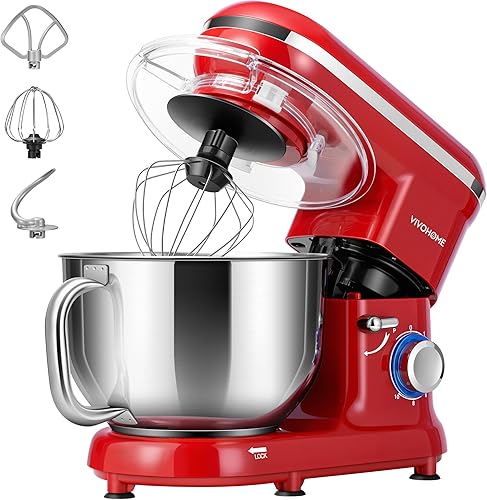

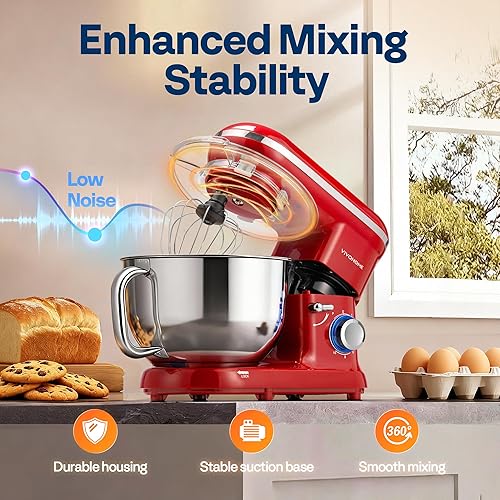
For ordinary home baking, this is the model that feels easiest to justify. A 6-quart bowl is roomy enough for many cookie batches, cake batters, frostings, mashed potatoes, and moderate dough tasks. Ten speeds also give it a little more flexibility than some of the other VIVOHOME mixers, at least on paper.
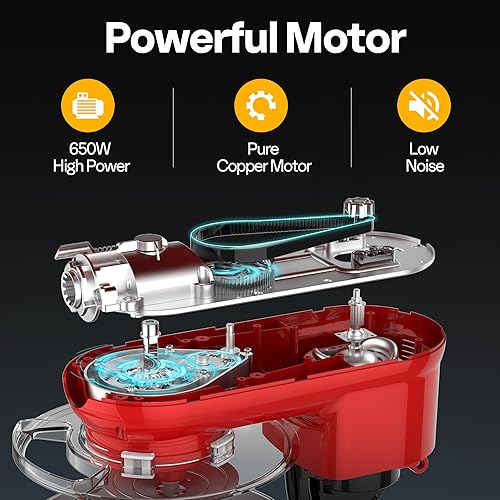
I would still keep my expectations realistic. A budget 660W tilt-head mixer can sound impressive in a listing, but power numbers by themselves do not tell you everything about torque, long-session durability, or how calmly a machine handles dense mixtures. So while this model looks like a sensible choice for casual baking, I would not automatically treat it like a heavy-duty bread machine.
The 7.5-quart model looks tempting, but bigger is not always better
The VIVOHOME 7.5 Quart Stand Mixer is interesting because it gives you more bowl space for slightly less money than the 6-quart 10-speed version. That is the kind of pricing that catches attention fast.
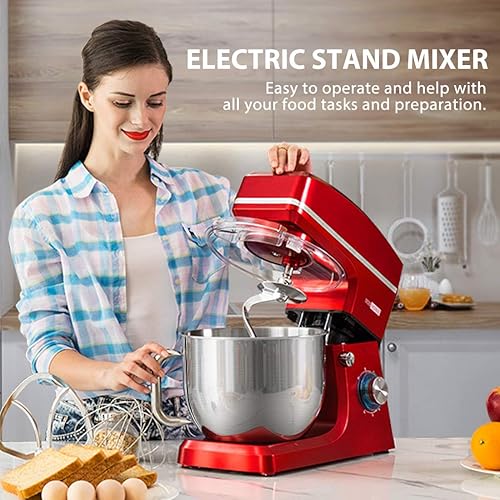


Still, I would not assume it is the better mixer just because the bowl is larger. In practice, a larger bowl can be helpful for batch size, but it does not necessarily mean better mixing quality for smaller amounts, and it certainly does not mean the machine is more robust. This one also drops to six speeds, which makes it feel a little less flexible.
To me, this model makes sense if your priority is capacity on a budget and you mostly want it for medium-to-large batches of batter, dough, or cookie mixes. If you care more about finer speed control and a slightly more balanced spec sheet, the 6-quart 10-speed model still feels like the better bet.
The 4.75-quart model is the practical choice for beginners
I actually think the VIVOHOME 4.75 Quart Stand Mixer has a clearer audience than some of the larger machines. This is the one I would consider for a beginner, a smaller household, or anyone who wants a stand mixer mainly for occasional baking and does not want to spend much.
There is something appealing about a mixer that does not pretend to be more than it is. At this size and price, it feels more honest. You are not buying it because you expect bakery-scale output. You are buying it because you want help with cakes, cookies, whipped cream, frostings, and simple dough work without taking up too much space.
The limitation is obvious too. A 4.75-quart bowl is fine for many daily uses, but it is not the best choice for larger family batches or frequent bread baking. If you know you like to cook in bigger volumes, this one may feel small fairly quickly.
The fermentation model is one of the more interesting newer options
The VIVOHOME Stand Mixer with Fermentation is the model that caught my attention the most from a design standpoint. I like that it tries to do something a little more thoughtful than just adding more bowl size or piling on attachments. Features like one-touch presets and fermentation mode suggest an attempt to make the machine more useful for dough-focused home bakers.
That said, this is also where I get a little cautious. Newer feature-heavy appliances can be intriguing, but interesting does not always mean proven. If someone enjoys experimenting with bread dough and likes the idea of extra guided functions, I can see why this model would stand out. I just would not assume those features automatically translate into better real-world performance than a simpler, more established mixer design.
The 3-in-1, 6-in-1, and 9-in-1 models are where I start getting skeptical
This is probably the part of the VIVOHOME lineup where my opinion becomes more reserved. I understand why multifunction mixers sell. On a product page, they look like a bargain. One machine, one footprint, lots of attachments, and a long feature list that makes the purchase feel efficient.
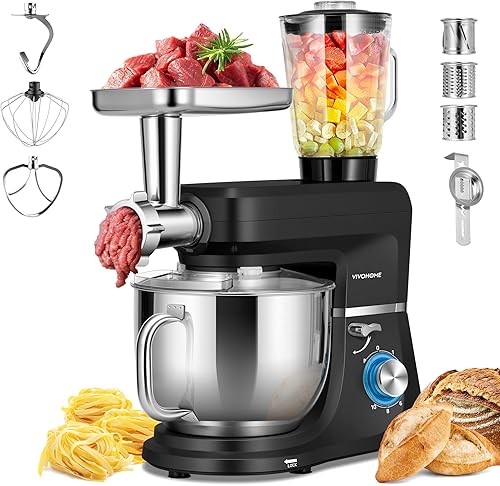
VIVOHOME 6-in-1 Stand Mixer, 8.5 Quart Electric Tilt-Head Kitchen Mixer with Bowl, Multifunctional Food Mixer for Cake, Bread, and Dough, with Meat Grinder, Blender, Pasta Maker Attachments
But from a kitchen-use perspective, I usually prefer a mixer to be a very good mixer first. The 3-in-1, 6-in-1, and especially the 9-in-1 models try to cover a lot of ground. That can work for light, occasional tasks, but it also introduces more compromise.
The 3-in-1 version is the easiest of these to understand. If you genuinely want a basic mixer, a blender, and a meat grinder in one system, it may offer fair value. The 6-in-1 pushes that further with an 8.5-quart bowl and added pasta-making capability. The 9-in-1 goes furthest with fermentation, timer functions, vegetable slicing, pasta and cookie-making accessories, and more.
My hesitation is not that these models are automatically bad. It is that by the time you reach the 9-in-1 at $259.99, the price starts creeping toward territory where I would rather buy a better standalone mixer or choose separate tools based on what I actually use most. A giant feature list is only valuable if those attachments work well and do not become clutter in a cabinet after two weekends.
How the 3-in-1, 6-in-1, and 9-in-1 versions actually differ
One thing that can easily get confusing in the VIVOHOME lineup is that the multifunction mixers are not just slightly different versions of the same machine. They follow the same general idea, but each step up adds more attachments and pushes the product further away from being a simple stand mixer.
The 3-in-1 model is the most basic multifunction option. It keeps things relatively simple by adding just a couple of extra tools beyond the mixer itself, which makes it the easiest of the three to understand. The 6-in-1 version takes that same concept further by adding more accessories and aiming to feel more like an all-in-one kitchen system. Then the 9-in-1 model goes the furthest, combining the mixer with a long list of extras like fermentation, a timer, vegetable slicing, pasta making, and cookie-making tools.
That sounds appealing, but I think this is one of those cases where more features do not automatically mean a better buy. For some people, the 3-in-1 may actually make more sense because it adds a few practical extras without turning the machine into something overly complicated. The 6-in-1 and especially the 9-in-1 are really for buyers who know they will use those attachments often enough to justify paying more for them.
The table below makes the differences much easier to see at a glance.
| Attachment / Feature | VIVOHOME 3-in-1 | VIVOHOME 6-in-1 | VIVOHOME 9-in-1 |
|---|---|---|---|
|
Stand mixer function
Core mixing setup for cake batter, dough, frosting, and everyday baking tasks. |
✓ | ✓ | ✓ |
|
Dough hook / beater / whisk
Basic stand mixer tools included with all three versions. |
✓ | ✓ | ✓ |
|
Blender attachment
Extra blending function for drinks or simple prep tasks. |
✓ | ✓ | ✓ |
|
Meat grinder attachment
Adds basic meat grinding capability to the mixer system. |
✓ | ✓ | ✓ |
|
Pasta maker attachment
Included on the more expanded multifunction versions. |
✗ | ✓ | ✓ |
|
Vegetable slicer
Extra prep attachment for slicing vegetables. |
✗ | ✗ | ✓ |
|
Cookie maker attachment
Specialty attachment only listed on the most feature-heavy version. |
✗ | ✗ | ✓ |
|
Fermentation function
A built-in dough-focused feature rather than a standard attachment. |
✗ | ✗ | ✓ |
|
Timer
Useful convenience feature for more guided mixing. |
✗ | ✗ | ✓ |
|
Overall complexity
How far the machine moves beyond being just a standard stand mixer. |
Low to moderate | Moderate | High |
The 3-in-1 is the simplest multifunction option, the 6-in-1 expands the system with more attachments, and the 9-in-1 is clearly the most ambitious version. The higher you go, the more you are buying into the idea of an all-in-one kitchen machine rather than just a mixer.
Common weaknesses that keep showing up in customer reviews
After reading through customer feedback, the biggest weakness of the VIVOHOME brand does not seem to be just one isolated problem. It is more the pattern that starts to form once you look at enough reviews together. Again and again, the same concerns come up: limited replacement-part support, inconsistent product quality, questions about durability, and customer service that often does not leave buyers feeling well taken care of.
The replacement-parts issue is probably the clearest recurring complaint. Multiple buyers say that when a paddle, whisk, or dough hook broke, they could not simply order a new one and move on. In several cases, customers say they were told the parts were brand-specific, not compatible with other brands, and not sold separately by VIVOHOME either. That creates a frustrating situation where the mixer may still technically work, but becomes almost useless once one key attachment fails. For a stand mixer, that is a serious weakness, because these attachments are not optional extras. They are the core working parts of the machine.
Another problem that appears repeatedly is uneven quality control. Some reviewers describe receiving mixers that arrived dirty, dented, poorly packaged, or looking used right out of the box. Others say the machine was defective immediately, including units that would not even power on during first use. Even when the mixer did start out fine, several reviews suggest that reliability over time can be shaky. Some people describe parts breaking after fairly light use, others mention machines that stopped working after only a handful of uses, and a few say the mixer seemed acceptable at first but failed much sooner than expected.
There are also complaints that raise broader confidence concerns. A few buyers mention strong machine-oil smells, noisy operation, poor mixing reach at the bottom of the bowl, or visible wear on attachments over time. Some reviews go further and describe coatings wearing off, black residue, or parts that no longer seemed food-safe after extended use. Whether every case reflects the same issue or not, that kind of feedback still hurts trust because it suggests the brand may not deliver the same level of consistency that buyers expect from stronger mixer brands.
Customer support is another weak spot in the overall picture. Several reviewers describe getting bounced around between Amazon and the brand, struggling to get clear help, or being offered solutions that felt impractical, like a discount on another machine instead of the replacement part they actually needed. That is really the bigger theme with VIVOHOME: the lower upfront price may look attractive, but once something breaks, the ownership experience can become much less appealing.
So the common brand-level downside here is not simply that VIVOHOME is budget-friendly. It is that the lower price may come with trade-offs in support, parts availability, quality control, and long-term confidence. In other words, this is the kind of brand that can seem like a good value at checkout, but may feel a lot less like a bargain if a key attachment breaks, the machine develops a fault early, or customer service does not give you a practical way forward.
Who may want to skip VIVOHOME?
I do think there is a fairly clear group of buyers who should be careful here. If you bake bread often, especially heavier doughs, I would be hesitant. That is usually where a mixer’s weak points show up fastest, and this is not a lineup I would choose for repeated demanding work if I wanted real peace of mind.
I would also think twice if you use your stand mixer several times a week and expect it to feel dependable year after year. In a busy kitchen, reliability matters more than a long feature list. You want a machine that feels steady, predictable, and easy to live with over time. With VIVOHOME, the lower price is appealing, but I am not sure the long-term confidence is at the same level as brands with a stronger track record in this category.
The multifunction models are another place where I would be selective. A 3-in-1, 6-in-1, or 9-in-1 mixer can look like a smart deal at first, but that only holds up if you will actually use those extra attachments on a regular basis. If not, you may be paying for complexity rather than real usefulness, and that is rarely my favorite kind of value.
And if you are the kind of buyer who would rather purchase one mixer, learn it well, and keep it for many years without second-guessing the decision, I would probably look at stronger alternatives first. To me, VIVOHOME makes more sense as a budget-conscious, practical purchase than as a buy-once-and-be-done-with-it kind of mixer.
Who should buy a VIVOHOME stand mixer?
I think VIVOHOME makes the most sense for buyers who are trying to stay within a reasonable budget but still want something roomier or more feature-packed than the most basic entry-level mixers. That is really where this brand seems to compete. It is not built around prestige or long-term reputation. It is built around giving people a lot of visible value for the money.
It can also make sense for casual home bakers who mostly prepare cookies, cakes, frosting, whipped cream, mashed potatoes, and the occasional batch of dough. For that kind of everyday use, a mixer does not necessarily need to be top-tier to be useful. It just needs to be capable enough, easy enough to use, and priced fairly enough that the purchase feels justified.
I can also see the appeal for someone who wants a lower-cost alternative to more established stand mixer brands but is not expecting the same level of refinement or brand confidence. In that situation, VIVOHOME can be looked at as a practical compromise. You are giving up some long-term reassurance, but gaining affordability and, in some cases, a larger bowl or a longer feature list.
To me, that is the right mindset for this brand. A VIVOHOME stand mixer is best approached as a value buy, not as a premium kitchen investment. If you are comfortable with that trade-off and your needs are fairly moderate, there are buyers who may end up perfectly satisfied with it.
My final verdict on the VIVOHOME stand mixer lineup
After spending time with these VIVOHOME stand mixer reviews, my view is that this brand makes the most sense when you approach it with realistic expectations. There is some honest value here. The prices are attractive, the lineup is broad, and for lighter home baking, a few of these mixers may do the job well enough. But I would not place VIVOHOME in the same trust category as the more established mixer brands that have earned a stronger reputation over time.
If I were choosing from this range, I would stay with the simpler models. The 6-quart 10-speed version still looks like the safest all-around choice to me because it feels the most balanced. The 4.75-quart model makes sense for beginners, smaller kitchens, or anyone who just wants an affordable mixer for occasional baking. The 7.5-quart version is appealing if capacity is your main priority, though I still think bigger does not automatically mean better. The fermentation model is interesting as well, and I can see why it would catch the eye of bread-focused buyers, but it still feels like the kind of product I would approach a little cautiously until it proves itself more clearly.
The multifunction machines are where I become more reserved. The 3-in-1 is probably the easiest of that group to justify, simply because it does not wander too far from the core idea. The 6-in-1 and 9-in-1 versions are more ambitious, but also more likely to tempt buyers with features they may not end up using very much. In my experience, that is often how a product starts to look better on the listing than it does in daily life.
So would I say a VIVOHOME stand mixer is worth buying? Sometimes, yes. If your budget is limited, your expectations are sensible, and you mainly want a mixer for everyday cakes, cookies, frosting, and occasional dough, there are models here that could be perfectly reasonable. I just would not buy into this brand expecting the same long-term confidence, support, or overall refinement that you might hope for from a stronger name. To me, VIVOHOME is a value play, not a category leader.
If you are comparing lesser-known stand mixer brands, my Hauswirt stand mixer review may also be worth reading. Both mixers follow the same basic tilt-head stand mixer concept, but Hauswirt leans more into smart features while VIVOHOME focuses more on capacity and value.
