For decades, KitchenAid stand mixers have been a trusted appliance in both home kitchens and professional bakeries. Their reputation for durability, performance, and versatility has made them one of the most recognizable mixer brands in the world. However, many buyers find themselves confused when choosing between the two main KitchenAid designs: tilt-head mixers and bowl-lift mixers.
The differences between these two styles may seem subtle at first glance, yet they can significantly affect how the mixer performs in your kitchen. The bowl-lift models are typically taller and use side arms to secure and raise the bowl into position, while tilt-head mixers feature a hinged head that lifts upward to provide access to the mixing bowl.
If you are comparing models before making a purchase, it can be helpful to review a broader comparison of the best stand mixer options available today. Understanding how these designs differ will make it easier to select a mixer that matches your cooking habits and kitchen space.

Lowest Price offer today from Dash Stand Mixer: Only $49.99
Tilt-head mixers such as the KitchenAid Artisan or KitchenAid Classic Plus allow the head of the mixer to tilt backward, giving you easy access to the bowl and attachments. Bowl-lift mixers like the KitchenAid Professional 600 or KitchenAid Professional 5 Plus use a lever mechanism that raises the bowl upward to meet the mixing attachment.
Both designs are excellent, but they serve slightly different needs. To help clarify which one may suit your kitchen best, let’s compare tilt-head and bowl-lift stand mixers in more detail.
Bowl-Lift KitchenAid Mixer
- Bowl-lift mixers were originally developed for heavier mixing tasks and larger ingredient batches. These models typically feature stronger motors, ranging from approximately 375 to 975 watts, and bowls with capacities between 6 and 8 quarts.
- Instead of tilting the head, the bowl is lifted upward into the mixing position using a lever mechanism. This design provides excellent stability, particularly when kneading dense bread dough.
- The bowl is secured using a three-point mounting system, which keeps it firmly locked during operation. Because of this design, the attachment must usually be removed before lifting the bowl out.
- Due to their size and power, bowl-lift mixers are generally heavier and taller than tilt-head models. They are often favored by serious home bakers, people who regularly make bread, or users who prepare large batches of ingredients.
- This design also makes it easier to add ingredients gradually while the mixer is running without stopping the machine.
- Today, models like the KitchenAid Professional 600 remain some of the most popular bowl-lift mixers for high-capacity baking.
Tilt-Head KitchenAid Mixer
- Tilt-head mixers are designed primarily for household baking tasks and typically feature motors under 375 watts with bowl capacities between 3 and 5 quarts.
- The hinged head tilts backward, allowing full access to the bowl and attachments. This makes adding ingredients, removing the bowl, and switching attachments extremely convenient.
- Most tilt-head mixers require a simple twist to remove the bowl. Choosing a bowl with a handle can make this process even easier during everyday baking.
- Because tilt-head mixers are shorter than bowl-lift models, they fit comfortably beneath most kitchen cabinets when stored on the countertop.
- These mixers are especially well suited for home cooks who bake occasionally or prepare smaller batches for family meals.
- The KitchenAid Artisan series remains one of the most popular tilt-head mixers for everyday home kitchens.
Who Should Choose a Bowl-Lift or Tilt-Head Stand Mixer?
Both bowl-lift and tilt-head stand mixers are excellent kitchen tools, but they are designed with slightly different users in mind. Understanding how you plan to use your mixer can make the decision much easier.
Choose a Bowl-Lift Mixer If:
- You regularly bake bread or work with dense dough.
- You prepare large batches of cookies, pizza dough, or bread.
- You want a mixer with extra stability during heavy mixing.
- You prefer a model with a larger bowl capacity (6–8 quarts).
Choose a Tilt-Head Mixer If:
- You mainly bake cakes, cookies, and lighter recipes.
- You want easier access to the bowl when adding ingredients.
- You have limited counter space in your kitchen.
- You prefer a lighter mixer that is easier to move and store.
For most households, a tilt-head mixer offers a great balance between convenience and performance. However, serious bakers who frequently prepare bread dough often prefer the additional power and stability of bowl-lift mixers.
If you want to explore more models and compare features in detail, you can also check our guide to the best stand mixer options available for modern home kitchens.
Which Style of Stand Mixer Is Best for Your Kitchen?
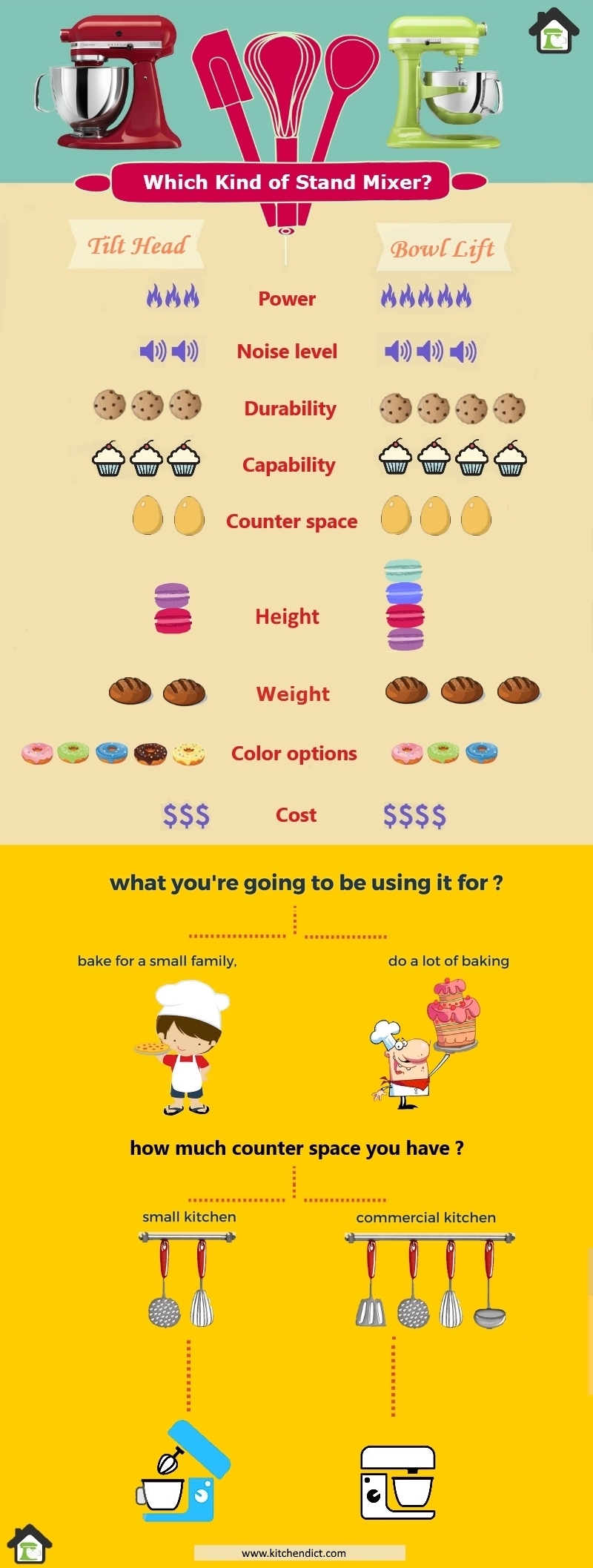
Photo: kitchendict.com
How Your Baking Habits Should Influence Your Choice
Choosing between a bowl-lift and tilt-head stand mixer often comes down to how you actually use your mixer in the kitchen. While both designs are capable and reliable, they tend to perform best in slightly different scenarios.
If your baking routine involves frequent bread dough, pizza dough, or other dense mixtures, a bowl-lift mixer can offer better stability and power. These models are designed to handle heavier loads and larger batches, which makes them especially appealing for serious bakers or anyone who regularly prepares bread at home.
On the other hand, many home cooks prefer tilt-head mixers because they are easier to access and generally more convenient for everyday tasks. Lifting the head allows you to quickly scrape the bowl, add ingredients, or switch attachments without interrupting your workflow. For recipes like cakes, cookies, whipped cream, or frosting, this design often feels simpler and more comfortable to use.
Kitchen space can also influence your decision. Bowl-lift mixers are typically taller and heavier, while tilt-head mixers tend to fit more easily under cabinets and require slightly less counter space.
Ultimately, both styles can perform exceptionally well when matched with the right type of cooking. If you’re still exploring different options, you may also want to compare several models in our guide to the best stand mixer choices for modern home kitchens.
Choosing between a tilt-head mixer and a bowl-lift mixer ultimately depends on how you plan to use the appliance. If you frequently bake bread or prepare large batches of dough, a bowl-lift model may provide the extra power and stability you need. For everyday baking tasks and smaller kitchens, a tilt-head mixer often offers greater convenience and easier access to the bowl.
By considering your cooking habits, kitchen space, and typical recipe sizes, you can select a stand mixer that fits naturally into your routine and delivers reliable performance for years to come.
