If you are new to stand mixers, the stand mixer paddle attachment can be a little confusing at first. Most people recognize the whisk and the dough hook right away. The paddle is the one that tends to feel less obvious, even though it is usually the attachment that gets used the most.
That has always seemed a little funny to me. The paddle attachment is not the most dramatic part of a stand mixer, and it is not usually the feature brands emphasize in product listings, but in everyday baking, it often does more of the real work than anything else. If you bake cookies, cake layers, cupcakes, frostings, or even make mashed potatoes from time to time, this is probably the tool you will reach for again and again.
So if you searched for stand mixer paddle attachment or even paddle attachment stand mixer, you are probably trying to sort out a simple question: what exactly is this thing for, and do you actually need it? The short answer is yes, at least for most home bakers. The longer answer is a little more interesting, because the paddle is useful in some situations, disappointing in others, and easy to misuse if you assume every attachment does basically the same job.

Double Flex Edge Beater – Paddle Attachment for KitchenAid stand mixer
What Is a Stand Mixer Paddle Attachment?
A stand mixer paddle attachment is the flat beater that comes with most standard stand mixers. Some brands call it a flat beater, while many home bakers simply call it the paddle. Either way, it is the general-purpose mixing attachment designed for everyday tasks that need steady, thorough mixing without the heavy kneading of a dough hook or the extra aeration of a whisk.
In practical terms, the paddle is the attachment that handles the middle ground. It is not trying to whip a lot of air into cream or egg whites, and it is not meant to knead dense bread dough for long stretches. Instead, it blends ingredients evenly, creams butter and sugar, works through batters, and handles softer doughs with much better control than a whisk would.
This is also why the paddle tends to be the most useful attachment for ordinary home baking. A lot of recipes live in that middle zone. They are not delicate enough to need a whisk, and they are not heavy enough to justify a dough hook. That is where the paddle earns its keep.
Most paddles have a broad, solid shape with open sections in the middle. That shape helps them push ingredients around the bowl in a balanced way. Some are coated, some are polished metal, and some newer versions include flexible silicone edges that scrape the bowl more effectively as they mix. I will get to those in a bit, because they are worth understanding before you buy a replacement.
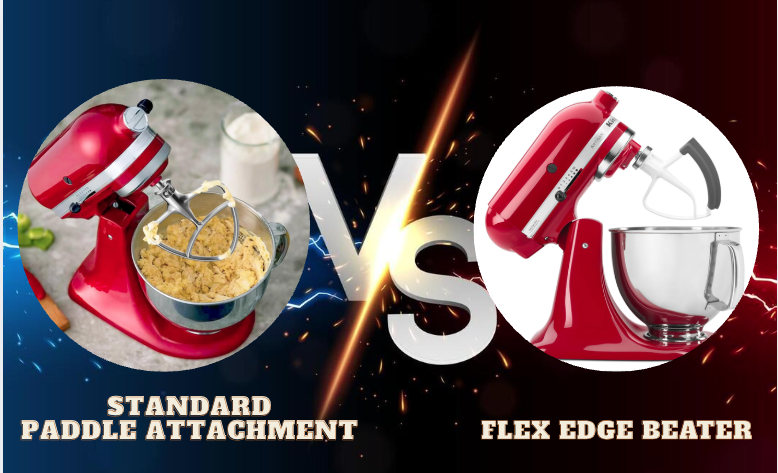
Standard Paddle vs Flex Edge Beater: What’s the Real Difference?
One detail that can confuse newer buyers is that a stand mixer paddle attachment does not always come in just one form. In most cases, there is a standard paddle, and then there is a flex edge version that adds a silicone edge to help scrape the sides of the bowl while mixing.
Both are still paddle attachments, and both are meant for similar everyday tasks like cookie dough, cake batter, and frosting. The difference is mostly about convenience. A standard paddle does the basic mixing job well, while a flex edge beater can reduce how often you need to stop and scrape the bowl by hand.
That said, the flex edge version is not automatically better for every person or every mixer. Some bakers are perfectly happy with a regular paddle, especially if they do not mind scraping the bowl once or twice during mixing. Others find the flex edge design genuinely useful, especially for frostings, butter-and-sugar mixtures, and batters that tend to cling to the sides.
Seeing the two side by side makes the differences much easier to understand. The table below highlights where each style makes the most sense.
| Feature | Standard Paddle | Flex Edge Beater |
|---|---|---|
|
Basic Design
The overall shape and construction of the attachment. |
Classic flat beater without a scraping edge | Flat beater with a silicone edge for bowl scraping |
|
Best For
The kinds of recipes each style handles most naturally. |
General mixing, cookie dough, cake batter, frosting, mashed potatoes | The same everyday mixing tasks, especially recipes that stick to the bowl |
|
Bowl Scraping
How well the attachment helps move ingredients off the sides of the bowl during mixing. |
Usually requires occasional manual scraping | Helps scrape the bowl as the mixer runs |
|
Convenience
How much hands-on interruption is usually needed during mixing. |
Simple and dependable, but may need more stopping and scraping | More convenient for batters and frostings that cling to the bowl |
|
Texture Control
How each one feels in everyday home baking. |
Very predictable and straightforward for most recipes | Also effective, though performance depends a bit more on mixer fit and design |
|
Potential Downsides
The trade-offs buyers should know before choosing one style over the other. |
Less help with bowl scraping | Not every flex edge model fits perfectly, and some are more useful than others |
|
Who It Makes Sense For
The type of user most likely to appreciate each style. |
Anyone who wants the standard, no-fuss version of a paddle attachment | Bakers who want a little more convenience during frequent mixing tasks |
The standard paddle is still the basic default for everyday mixing, but a flex edge beater can be a worthwhile upgrade if you bake often and want less manual bowl scraping.


Which Flex Edge Beater Is Right for Your KitchenAid Mixer?
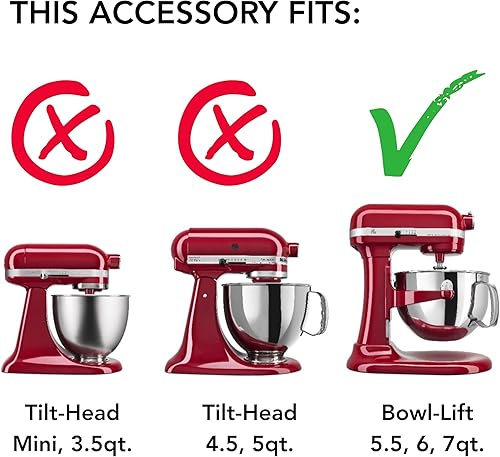
Seeing these flex edge beaters side by side makes it much easier to spot the real difference: compatibility matters more than anything else. Some are made for 4.5- to 5-quart tilt-head mixers, some are for older 6-quart bowl-lift machines, and some are designed for newer KitchenAid bowl-lift models. The table below highlights which one makes the most sense depending on your mixer and your budget.
| Product | Best For | Key Feature | Rating | Check Price |
|---|---|---|---|---|
| KitchenAid KFE5T Tilt-Head Flex Edge Beater | Best OEM for Tilt-Head | Official KitchenAid fit for 4.5- and 5-quart tilt-head mixers | ★★★★★ | Check Price on Amazon |
| KitchenAid KFEW6L Bowl-Lift Flex Edge Beater | Best OEM for Older 6 Qt Bowl-Lift | Official KitchenAid option for select 6-quart bowl-lift mixers | ★★★★★ | Check Price on Amazon |
| KitchenAid Double Flex Edge Beater | Best for New Bowl-Lift Models | Double-sided scraping design for select KSM55, KSM60, and KSM70-style bowl-lift mixers | ★★★★★ | Check Price on Amazon |
| KITCHPOWER 4.5-5 Quart Flex Edge Beater | Best Value for Tilt-Head | Budget-friendly aftermarket option for 4.5- to 5-quart tilt-head mixers | ★★★★☆ | Check Price on Amazon |
| KITCHPOWER 6 Quart Flex Edge Beater | Best Value for 6 Qt Bowl-Lift | Lower-cost aftermarket flex edge beater for compatible 6-quart bowl-lift mixers | ★★★★☆ | Check Price on Amazon |
| Vaxaape Flex Edge Beater | Cheapest Tilt-Head Option | Low-cost flex edge beater for 4.5- to 5-quart tilt-head mixers | ★★★☆☆ | Check Price on Amazon |


Paddle vs Whisk vs Dough Hook: What’s the Difference?
This is really the key comparison, because the paddle only makes sense once you see how it fits between the other attachments. A lot of confusion comes from people assuming the three tools are interchangeable. They are not. They overlap a little, but each one is built around a different kind of movement and a different type of mixture.
Paddle Attachment
The paddle is the all-purpose mixer for medium-weight tasks. It is best for recipes that need ingredients blended thoroughly but do not need a lot of air whipped in. This includes cookie dough, cake batter, buttercream, mashed potatoes, and many frostings. If you are creaming butter and sugar together for a baking recipe, this is usually the right place to start.
The paddle is also usually the easiest attachment to control. It mixes steadily, it is less messy than a whisk, and it feels more forgiving for beginners. That is one reason many home bakers end up using it more than any other stand mixer attachment.
Whisk Attachment
The whisk, sometimes called the wire whip, is designed for aeration. It is there to incorporate air and create volume. That makes it the better choice for whipped cream, egg whites, meringue, mousse-style mixtures, and anything that depends on lightness and lift.
If you use a whisk for cookie dough or buttercream, it usually feels wrong pretty quickly. It does not move dense mixtures as confidently, and it can create a mess or strain the mixer in ways that are unnecessary. People sometimes do it anyway when they are in a hurry, but it is not the right tool for the job.
Dough Hook
The dough hook is built for kneading. Bread dough, pizza dough, and other yeast-based doughs that need prolonged working are what this attachment is for. A dough hook handles resistance differently than a paddle. It stretches and folds dough instead of simply mixing it.
Some very soft enriched doughs may begin with a paddle for the earliest mixing stage, but once real kneading is needed, the dough hook is usually the better choice. If you try to force the paddle to do heavy dough-hook work, that is where frustration starts. It may mix the ingredients together at first, but it is not the attachment I would trust for repeated bread baking.
If I had to reduce the difference to one simple idea, I would put it this way: the paddle mixes, the whisk whips, and the dough hook kneads. That is not a perfect summary, but it is close enough to make the whole system much easier to understand.
What Is a Paddle Attachment Stand Mixer Used For?
If someone searches paddle attachment stand mixer, what they usually want to know is what kinds of recipes this tool actually handles well. That is the most practical question, and it matters more than the technical definition.
In real kitchens, the paddle is best for recipes that need even mixing and moderate force. It does a nice job when ingredients need to be combined thoroughly, but not beaten into something airy or kneaded into something elastic.
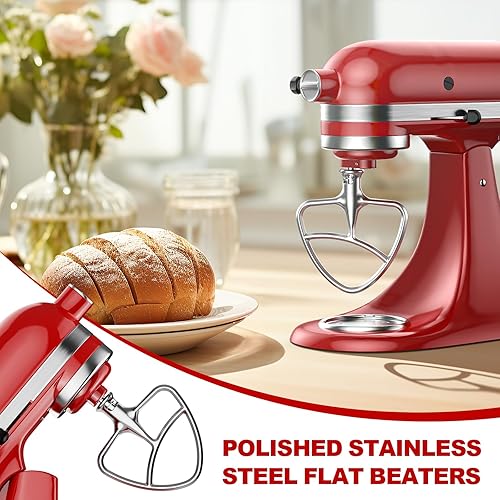
GVODE offers a stainless steel paddle attachment for compatible KitchenAid tilt-head models.
Creaming Butter and Sugar
This is one of the classic paddle jobs. For many cookies and cakes, the recipe starts with butter and sugar being creamed together until lighter and smoother. The paddle handles this well because it presses and blends the ingredients without whipping them too aggressively. A whisk can technically move them around, but it is not as controlled or as practical.
Cookie Dough
Cookie dough is probably one of the best examples of why a stand mixer paddle attachment matters. Most cookie dough is too thick for a whisk and does not need the kneading action of a dough hook. The paddle works through the butter, sugars, eggs, and dry ingredients with the right kind of steady pressure.
That said, there is a limit. Very heavy cookie dough, especially oversized batches or recipes loaded with chips, nuts, or thick add-ins, can still challenge smaller stand mixers. The paddle is the correct attachment, but the mixer itself still needs enough strength to handle the load.
Cake Batter
For many standard cake and cupcake recipes, the paddle is the sensible choice. It mixes the batter evenly and helps avoid some of the unnecessary over-aeration that can happen when people reach for the whisk out of habit. You still need to watch the mixing time, of course, because overmixing cake batter is still possible, but the paddle is generally the right starting point.
Frosting and Buttercream
The paddle is also a strong choice for frostings, especially buttercream. It blends butter, powdered sugar, and flavorings smoothly and consistently. A whisk can introduce more air than you want, which sometimes leaves frosting fluffier than intended or less smooth. The paddle tends to give you better control over texture.
Mashed Potatoes and Other Soft Savory Mixtures
This is one of those uses people discover later. The paddle is not only for sweet baking. It can also work well for mashed potatoes, soft fillings, and similar mixtures that need blending without becoming overworked too quickly. I still would not call it a reason by itself to buy a stand mixer, but if you already have one, it is a genuinely useful extra use case.
When Should You Use a Stand Mixer Paddle Attachment?
As a general rule, use the paddle when the mixture is too thick for a whisk to handle comfortably, but not the kind of dough that needs real kneading. That covers a surprisingly wide range of recipes.
You should usually reach for the paddle when:
- you are creaming butter and sugar
- you are mixing cake batter or cupcake batter
- you are making cookie dough
- you are preparing frosting or buttercream
- you want even mixing without a lot of extra air
- you are working with a soft mixture that needs some body but not kneading
I think this is where beginners sometimes make things harder than necessary. They assume baking is more complicated than it really is, so they overthink the attachments. In practice, for a lot of everyday baking, the paddle is the default. If you are unsure and the recipe is not asking for whipping or kneading, the paddle is often the most reasonable first choice.
That does not mean it is perfect. It still has limitations, and understanding those matters almost as much as understanding its strengths.
When You Should Not Use a Paddle Attachment
The easiest way to misuse a paddle is to treat it as a do-everything tool. It is versatile, but it is not universal.
You usually should not use the paddle for:
- egg whites
- whipped cream
- meringue
- very airy whipped mixtures
- heavy bread dough that needs kneading
- large batches of stiff dough that push the mixer too hard
For egg whites and whipped cream, the issue is simple: the paddle does not create the kind of aeration those mixtures need. You may get some movement, but you will not get the same lift and structure a whisk is designed to produce.
For bread dough, the problem is different. The paddle can sometimes help combine ingredients at the beginning, especially in softer doughs, but it is not really built for sustained kneading. If you bake bread regularly, this is where a dough hook matters much more.
There is also a comfort factor here that gets overlooked. Even if a paddle can technically force its way through a thick mixture, that does not always mean it should. Pushing a mixer too hard is one of the more common ways people end up disappointed in machines that were probably fine for lighter baking tasks.
Does Every Stand Mixer Come With a Paddle Attachment?
Most stand mixers do include a paddle attachment, especially full-size models made for everyday home baking. In many cases, it is one of the three standard attachments that come in the box, along with a whisk and a dough hook.
Even so, paddle attachments are not all the same. Different brands use different shapes, materials, and attachment systems, which means they are not always interchangeable. Two paddles may look fairly similar in product photos and still fit very differently in actual use.
Some mixers come with a basic flat beater, while others include a slightly upgraded version or offer that upgrade separately. Bowl-lift and tilt-head mixers can also use different attachment designs, so these details matter much more once you start looking for a replacement or an aftermarket option.
That is the part many buyers do not realize at first. A paddle is not a universal accessory. If you are buying a replacement, it is important to check the brand, the exact model, and usually the bowl size as well. Something that looks close enough can still fit poorly or fail to scrape the bowl the way it should.
That larger attachment ecosystem can also vary a lot from one brand to another. If you are still comparing stand mixers themselves rather than just replacement beaters, my KitchenAid vs Cuisinart stand mixer comparison goes into more detail on how those broader differences show up in real kitchen use.
Can You Buy a Replacement Paddle Attachment for a Stand Mixer?
Yes, you usually can, and plenty of people do. Paddle attachments get misplaced, coatings wear over time, and some users simply want a better version than the one included with their mixer.
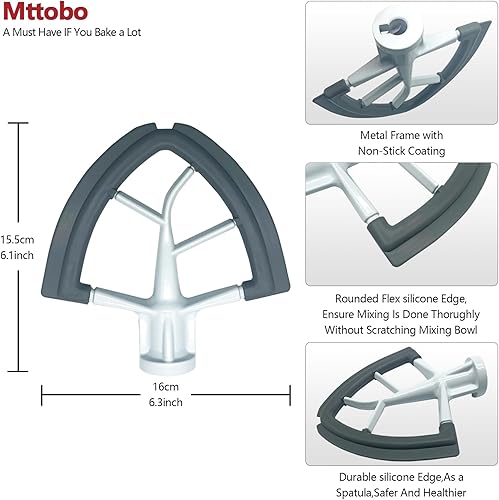
Budget pick from Mttobo for 4.5- to 5-quart KitchenAid tilt-head mixers
Still, this is where a little caution goes a long way. If you are shopping for a replacement stand mixer paddle attachment, check:
- the exact mixer brand
- the model number
- whether the mixer is tilt-head or bowl-lift
- the bowl size
- whether the attachment is an official or third-party part
Third-party replacements can be fine, but they are not all equal. Some fit well and work normally. Others wobble, scrape poorly, or feel lighter than they should. This is one of those areas where saving a little money can be perfectly reasonable, but only if the compatibility is clear and the product has believable feedback behind it.
Is the Stand Mixer Paddle Attachment the One Most People Use Most Often?
For many home bakers, yes, I think it probably is. Not because it is the most exciting attachment, but because it matches the kinds of things people actually make most often.
A lot of home baking is not artisan bread and it is not meringue either. It is cookies for the weekend, birthday cake batter, cupcakes for school events, brownie-style batters, or a quick batch of frosting. That is paddle territory. It is the attachment that fits ordinary use.
This is also why I usually think the paddle deserves more attention than it gets. Buyers often focus on wattage, bowl size, speed count, or brand reputation, and those things do matter. But the real day-to-day experience of using a stand mixer is often shaped by how well the paddle works. If it mixes evenly, clears the bowl well enough, and feels sturdy, the machine becomes easier to enjoy. If it performs poorly, the whole mixer feels more frustrating than it should.
That is not to say the paddle is enough on its own. People who bake bread often should still care deeply about dough-hook performance. People who make whipped desserts should pay attention to the whisk. But for general baking, the paddle is often the attachment that quietly ends up doing the most useful work.
Who Will Get the Most Value From a Paddle Attachment?
The people who benefit most from a paddle attachment stand mixer setup are usually casual to moderate home bakers. If your baking life mostly revolves around cookies, cakes, cupcakes, frostings, and similar everyday recipes, the paddle is likely the attachment you will rely on the most.
It is especially helpful for:
- beginners learning how stand mixer attachments differ
- home bakers who make cookies and cakes regularly
- families that bake for birthdays, holidays, or school events
- users who want one dependable attachment for general mixing tasks
On the other hand, if your kitchen revolves around bread, pizza dough, or frequent whipping tasks, the paddle still matters, but it may not be the attachment that defines your experience. In those cases, the dough hook or whisk can be just as important.
What I Noticed After Using Both Paddle Styles
After using both styles over time, I do think the standard paddle and the flex edge beater each have their place. The regular paddle still feels like the simpler, more classic tool. It is predictable, sturdy, and does exactly what I expect it to do for cookie dough, cake batter, and other basic mixing jobs. If a mixer only came with a standard paddle, I would not feel like I was missing anything essential.
That said, I have come to appreciate the flex edge beater more than I expected to. It does not completely replace the need to stop and scrape the bowl, but it does make everyday mixing feel a little smoother and a little less interrupted. I notice that most with butter and sugar, frostings, and softer batters that tend to cling to the sides.
That is really the best way to think about paddle attachments in general. They are not flashy, but they are often the part of the mixer that makes the machine useful in everyday baking. If your cooking mostly involves cookies, cake batter, and frosting rather than bread dough or whipped egg whites, the paddle will probably be the attachment you use most. And if you bake often enough, the flex edge version can start to feel less like a gimmick and more like a genuinely useful convenience.
Frequently Asked Questions
Is a paddle attachment the same as a flat beater?
Yes, in most cases it is. Many brands use the term flat beater, while many users simply call it the paddle attachment.
Can I use a stand mixer paddle attachment for bread dough?
You can sometimes use it briefly to combine ingredients at the beginning, especially for soft doughs, but a dough hook is usually the better choice for real kneading.
What recipes are best for a paddle attachment stand mixer?
Cookie dough, cake batter, cupcakes, buttercream, frosting, mashed potatoes, and many other medium-texture mixtures are the best fit.
Does every stand mixer include a paddle attachment?
Most standard household stand mixers do, but the exact shape, finish, and compatibility can vary by brand and model.
Should I buy a flex edge paddle attachment?
If you bake often, it can be a worthwhile convenience because it helps scrape the bowl more effectively. Still, the benefit varies depending on the mixer and the quality of the attachment.
