If you’ve been eyeing the KitchenAid Artisan Design Series 5 Quart Stand Mixer with Glass Bowl, you probably already know it’s one of those mixers people tend to keep around for years. Not just because it’s expensive, but because once it settles into your kitchen routine, it kind of earns its spot.
But here’s the part that doesn’t get said as often — not every KitchenAid automatically makes sense for every kitchen. This one does a lot right, no question. Still, it leans pretty heavily on design, aesthetics, and that long-standing brand reputation. And depending on how you actually cook or bake, those things may or may not matter as much as you think.
So instead of going down the usual “iconic mixer” route, it’s probably more useful to talk about what this feels like to live with after the first few weeks. Because that’s where the real differences start to show up.
A quick look at the mixer
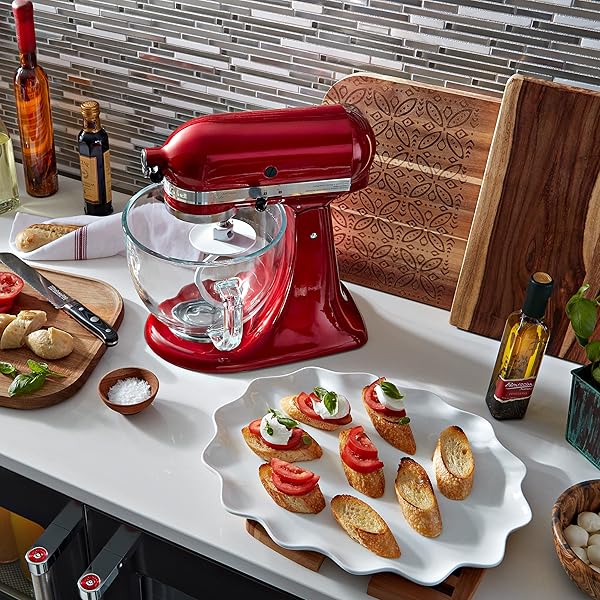
At its core, this is still the familiar 5-quart Artisan mixer. Same tilt-head design. Same attachment system. Same general mixing performance that people already know what to expect from.
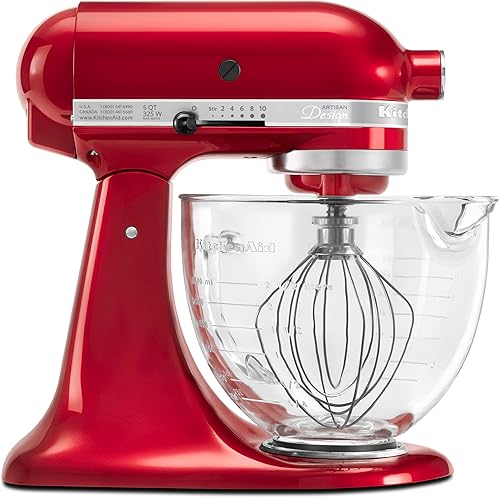
The real difference is the glass bowl. And honestly, that changes the experience more than you might expect — just not always in the ways people assume at first.
Visually, it’s a clear upgrade. The glass bowl makes the whole mixer feel more polished, a bit more “intentional” on the countertop. It doesn’t just look like a tool anymore — it looks like something you chose to keep visible. That matters more than people admit, especially if your kitchen is a space you spend a lot of time in.
Functionally though, it’s a bit more nuanced.
Yes, being able to see the ingredients mix is genuinely nice. You can actually watch the texture change, which helps when you’re trying to get dough or batter just right without constantly stopping the machine. It’s a small thing, but once you get used to it, it’s hard to ignore.
At the same time, glass is heavier. Not dramatically, but enough that you notice it when lifting, washing, or locking it into place. Some people don’t care at all. Others quietly switch back to a metal bowl later just because it’s easier to handle.
If you want a deeper breakdown of how the glass bowl compares to other options, this guide does a good job of laying it out in practical terms: KitchenAid stand mixer bowl comparison.
So in a way, this mixer isn’t really about better or worse. It’s about preference.
You’re not getting a completely different machine here. You’re getting a slightly different version of something already well established — just with a bit more emphasis on visibility, design, and how it feels to use day to day.
What it feels like in real use
This is one of those appliances that quietly becomes part of your routine.
It handles cakes, cookies, frosting, and lighter dough without any drama. You don’t have to babysit it. You don’t have to constantly stop and fix things.
The 10-speed control gives you enough flexibility for most recipes, from gently mixing to whipping cream.
But here’s a more honest take: it’s not a “push it to the limit” kind of mixer. If you’re doing heavy bread dough all the time, you’ll start noticing it working harder.
For everyday baking though? It feels very natural.


KitchenAid Artisan Design vs the Regular Artisan
Seeing these two side by side helps, because they are honestly more similar than different. The Artisan Design Series mostly takes the regular Artisan formula and swaps in a glass bowl for a slightly more polished, more display-friendly look. The motor setup, 5-quart capacity, tilt-head design, and 10-speed control are very much in the same lane as the standard Artisan, so this is not one of those comparisons where one mixer clearly outclasses the other. It is more about what kind of user experience you prefer. The regular Artisan keeps things simple with a stainless steel bowl, while the Design version leans more visual and a little more “special occasion gift” in feel. KitchenAid’s current Artisan 5-quart model includes a stainless steel bowl, 10 speeds, and the usual tilt-head format, while the Design version in the original product brief centers its glass bowl as the standout difference.
|
Design
A quick visual look at each mixer’s overall size, shape, and layout. |
 |
 |
| Feature | KitchenAid Artisan Design Series 5 Quart | KitchenAid Artisan Series 5 Quart Regular Version |
|---|---|---|
|
Bowl Style
The part most buyers will notice first, and probably the thing that decides the purchase for a lot of people. |
5-quart glass bowl with a more decorative, more premium-looking feel | 5-quart stainless steel bowl that feels more straightforward and practical for everyday use |
|
Core Mixing Performance
How different they really feel once you start making cookie dough, cake batter, or whipped cream. |
Very similar in real-world use for most home baking jobs | Very similar in real-world use for most home baking jobs |
|
Speed Settings
Control range for mixing, whipping, and kneading. |
10 speeds | 10 speeds |
|
Tilt-Head Design
Useful for swapping attachments, scraping the bowl, and adding ingredients without fuss. |
Yes | Yes |
|
Everyday Practicality
Which one feels easier to live with if you bake often and do not care much about aesthetics. |
Nice to use, but the glass bowl is a little more about style than convenience | Usually the easier, more no-nonsense choice for regular baking |
|
Visual Appeal
How much the mixer feels like part of the kitchen décor rather than just another appliance. |
Looks more distinctive on the counter and lets you see the mixing process | Classic KitchenAid look, but a bit more utilitarian |
|
Best Fit
The kind of buyer each version makes the most sense for. |
People who want the Artisan experience but care more about presentation and the glass-bowl look | People who want the classic Artisan without paying extra for design-focused details |
|
Main Trade-Off
What you are really choosing between. |
Prettier presentation, but not a major performance upgrade | Less visually special, but arguably the more sensible buy for most kitchens |
If you are choosing purely on performance, the regular Artisan is probably the smarter pick. If you already know you love the glass bowl look and want a mixer that feels a little more polished sitting on the counter, the Artisan Design version makes more sense. That is really the split here.
The glass bowl — looks great, but not for everyone
This is the main reason people pick this version.
You can actually see the ingredients mixing. That sounds small, but it’s oddly satisfying. It also helps a bit when you’re trying to judge texture without stopping the mixer.
The bowl also has measurement markings and a pouring spout, which are genuinely useful.
But I’ll be honest — it’s not a must-have upgrade.
Glass is heavier. Slightly more fragile. And it doesn’t improve mixing performance at all.
If you love the look, great. If not, you’re not missing anything critical.
Mixing performance (the part that actually matters)
KitchenAid mixers use planetary mixing, which just means the beater moves around the bowl instead of spinning in place.
In real life, that translates to fewer unmixed spots and less scraping.
It’s not perfect — you’ll still scrape the bowl sometimes — but it’s consistent. And honestly, consistency matters more than raw power in most home kitchens.
The slow start feature also helps more than you’d think. It cuts down on mess when you’re adding flour or sugar.
Capacity — good for most homes
The 5-quart size is kind of the sweet spot.
You can do big batches of cookies, standard bread recipes, or a full cake without feeling cramped.
KitchenAid even claims it can handle large batches like multiple dozens of cookies, which feels about right in practice.
But again — not a commercial machine. If you’re baking in bulk constantly, you’ll probably want something bigger.
Build quality — still one of its biggest strengths
This is where KitchenAid earns its reputation.
The mixer feels heavy, stable, and planted on the counter. It doesn’t slide around. It doesn’t feel cheap.
That’s a big deal because a lot of cheaper mixers look fine… until you actually use them.
This one feels like it’s built to stick around for years, which is honestly part of why people are willing to pay more.
Small things that make it easier to use
- Tilt-head design makes it easy to swap attachments
- Pouring shield helps reduce mess
- Multiple color options (if aesthetics matter to you)
- Attachment hub lets you expand it later (pasta maker, grinder, etc.)
None of these are flashy. But together, they make the mixer feel easier to live with long-term.
Where it’s not perfect
No mixer is, and this one has a few trade-offs.
- The glass bowl is nice but not essential
- Not ideal for constant heavy dough use
- Price is higher than many alternatives
- Warranty isn’t especially long for the price
None of these are deal-breakers, but they’re worth thinking about before buying.
Who this mixer actually makes sense for
This is a great fit if you:
- bake regularly (not just once in a while)
- want something reliable long-term
- care a bit about how your kitchen looks
It’s less ideal if you:
- only bake occasionally
- need something for heavy-duty bread all the time
- just want the cheapest option that works
What Real Owners Seem to Notice After Living With It
Reading through customer reviews on this mixer, the interesting part is not that people like it. That part is almost expected. The more useful takeaway is why they like it, and what starts to annoy them after the honeymoon phase wears off.
A lot of owners describe the same first reaction: it feels solid, heavy, and surprisingly easy to work into everyday baking. People mention using it for cheesecakes, cookies, cinnamon rolls, pie crust, pizza dough, whipped cream, mashed potatoes, even shredded chicken and meat mixing. That is worth paying attention to, because it suggests this is not just a “holiday baking” mixer for most buyers. It often ends up becoming the regular, default mixer that stays on the counter because it gets used often enough to justify the space.
That pattern matters more than a spec sheet. A stand mixer can look impressive online and still become something you drag out twice a year. This one seems to avoid that fate for a lot of people. Owners keep coming back to the same idea: it makes baking feel easier, faster, and honestly a little more fun.
The glass bowl gets praise, but it is not a perfect upgrade
The glass bowl is one of the most talked-about parts of this model, and the reviews are actually pretty helpful here. People really do like being able to see the mixture as it comes together. The measurement markings and pouring spout get mentioned in a practical way too, not just as decorative extras.
But the positive comments come with a small reality check. Quite a few owners also point out that the bowl is heavy. Not unusably heavy, just heavy enough that you notice it when washing it, lifting it full, or locking it in and out of place. For some buyers that is a minor trade-off. For others, especially if they deal with hand or wrist pain, it is the kind of thing that can slowly become irritating.
So the glass bowl really is a plus, but mostly for visibility and looks. It is not automatically the more practical option for every kitchen.
What people seem happiest with
- Low-noise, steady mixing: Many owners say it feels quieter than older hand mixers and does not sound overly strained during normal baking jobs.
- Countertop stability: People repeatedly describe it as heavy in a good way. It tends to stay planted instead of walking across the counter.
- Everyday versatility: Reviews mention cakes, cookies, bread, pizza dough, frostings, whipped mixtures, and general meal prep tasks rather than just one niche use.
- Looks that people genuinely care about: This sounds superficial until you notice how often it comes up. Many buyers leave it out on the counter because they like seeing it there.
That last point may sound less important than power or speed, but in real kitchens it actually matters. Appliances that look good and feel easy to use tend to get used more. And that seems to be part of this mixer’s appeal.
The complaints are not random either
The negative feedback is useful because it follows a few clear themes instead of being all over the place.
One recurring complaint is that some units seem to have a slightly loose or bobbing tilt head, even when locked. That does not appear to be the norm, but it comes up often enough that I would not ignore it. There are also scattered complaints about machines arriving with defects, motors struggling more than expected, or bowls arriving chipped.
Another very common frustration has less to do with the mixer itself and more to do with the ecosystem around it. Buyers repeatedly mention that KitchenAid accessories can be weirdly confusing to shop for, especially with the glass bowl version. Some accessories that people assume will fit do not actually fit this bowl. That is the kind of annoying, real-world issue you only discover after purchase.
There is also a practical warning that shows up over and over again: the coated attachments are not something you want to casually toss in the dishwasher. Several owners learned that the hard way.
What the reviews suggest in plain English
If you read enough owner feedback, the picture becomes pretty clear. When this mixer arrives in good shape and everything is aligned properly, people tend to love it. They use it a lot. They keep it for years. They talk about it like a kitchen upgrade they wish they had made earlier.
But the reviews also suggest that this is not a totally effortless, zero-quirk purchase. The glass bowl is attractive but heavier. The accessory situation takes more research than it should. And while many owners describe the mixer as durable and dependable, there are still enough complaints about wobble, chipped bowls, and occasional bad units that I would treat quality control as “usually very good, but not flawless.”
That is probably the most honest summary of customer sentiment: people love using it more than they love owning it on paper. And that is actually a pretty strong sign. It means the value of this mixer shows up most clearly once it is in a real kitchen, doing real work, week after week.
It’s getting harder to find, but there’s an easy workaround
One small thing worth mentioning here: this KitchenAid Artisan Design version with the glass bowl is getting a bit harder to find than the regular Artisan.
It still pops up from time to time, but not as consistently as the standard version. That is pretty common with the more design-focused KitchenAid models. They tend to stick around for a while, then suddenly become annoyingly hard to track down in the exact color or configuration you wanted.
The good news is that this is not really a dealbreaker.
If what you actually like most about this model is the glass bowl, you do not necessarily need to hunt down the full mixer. You can just buy the bowl separately and use it with a regular 4.5- or 5-quart tilt-head KitchenAid mixer.
You can buy the glass bowl separately
That is honestly the simpler route for a lot of people. You get the easier-to-find regular Artisan, then add the glass bowl if that is the part you really wanted in the first place.
Check the KitchenAid Glass Bowl on Amazon
This workaround makes the whole decision feel a lot less restrictive. Instead of waiting around for the Design Series to show up again, you can build almost the same setup yourself.
Honestly, that may be the more practical choice anyway. The regular Artisan is usually easier to find, and having the option to add the glass bowl separately gives you a bit more flexibility without changing the actual mixing experience very much.

Why This Mixer Still Makes Sense for the Right Kitchen
The KitchenAid Artisan Design Series 5 Quart Stand Mixer with Glass Bowl is not the kind of mixer that wins people over with some dramatic, never-seen-before feature. That is honestly part of its appeal.
It is familiar. It is steady. It does the work you expect it to do, and for a lot of home bakers, that matters more than anything flashy.
This is the kind of appliance that starts out feeling like a “nice kitchen upgrade,” then slowly turns into the mixer you keep reaching for without really thinking about it. Birthday cakes, cookie dough, whipped cream, weekend cinnamon rolls, a batch of brownies when you are too tired to mix by hand — it fits into that kind of everyday baking life very naturally.
The glass bowl is definitely part of the charm. It makes the whole mixer feel a little more polished, a little less purely functional. You can see what is happening as the batter comes together, which is not essential, but it is nice. It also makes the mixer feel more gift-worthy, if that makes sense. A little prettier. A little less industrial.
At the same time, I would not pretend the glass bowl changes everything. It does not. The real reason to buy this mixer is still the same basic reason people buy KitchenAid stand mixers in the first place: it is dependable, versatile, and easy to live with if you bake often enough to justify giving it permanent counter space.
That probably sounds almost too simple, but simple is kind of the point here. A lot of kitchen appliances make huge promises and then end up being annoying in small daily ways. This mixer does not really have that personality. It is more like, “Yes, I will handle the cookie dough. Yes, I will whip the frosting. Yes, I will be here again next weekend.”
It is not perfect, though, and it is better to say that plainly than to oversell it. It is still expensive for a home mixer. The Design version can also be harder to find than the regular Artisan, which makes it feel a little more niche than it probably needs to be. And if somebody is hoping for a machine that will power through dense dough every other day without ever feeling strained, this would not be my most aggressive recommendation.
But for the right kitchen, those downsides usually stop feeling like dealbreakers and start feeling more like trade-offs. You are paying for a mixer that feels established, not trendy. One that fits into normal home baking instead of demanding that you build your whole kitchen routine around it.
If you want to point readers to the official KitchenAid page as part of the article, you can naturally link it here: View the Artisan Design Series on KitchenAid.com.
So maybe the fairest way to put it is this: the KitchenAid Artisan Design Series 5 Quart Stand Mixer with Glass Bowl is not exciting in a loud way. It is satisfying in a long-term way. And for people who bake regularly, that is usually the better kind of appliance anyway.
