If you’ve been comparing larger stand mixers, the KitchenAid 8 qt mixer probably stands out for one simple reason: it doesn’t really behave like a typical home mixer.
It may carry the KitchenAid name, but this model sits much closer to the line between serious home baking and light commercial use. It’s bigger, heavier, and more purpose-built than the mixers most people see in roundups like our best stand mixer guide.
That also makes it a little harder to judge at a glance.
For the right kitchen, this mixer can feel like a major step up—especially if you bake often, mix dense dough, or need something that feels more stable under repeated use. But if your everyday cooking leans smaller and simpler, this much machine can start to feel excessive pretty fast.
So the real question here isn’t just whether the KitchenAid Commercial Series is good. It’s whether this is the kind of mixer your kitchen will actually benefit from.
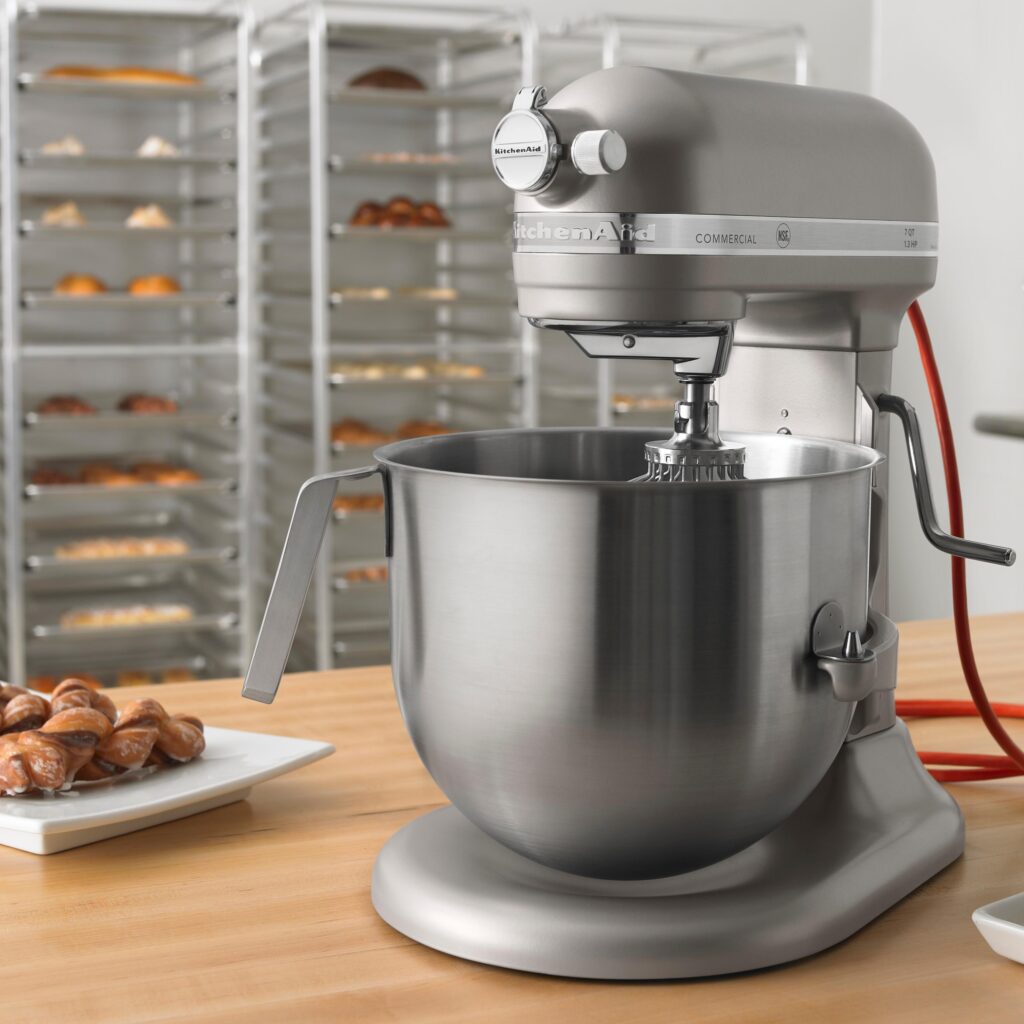
KitchenAid 8 qt stand mixer – NSF Certified® Commercial Series 8 Quart Bowl-Lift Stand Mixer
What Makes the KitchenAid 8 Quart Stand Mixer Different?
The biggest mistake people make with the KitchenAid 8 qt stand mixer is assuming it’s just a larger version of the mixers they already know.
It really isn’t.
Once you put your hands on it, the difference is obvious. The bowl-lift frame feels more rigid, the body feels more planted, and the whole machine gives off less of an “appliance” feel and more of an “equipment” feel. That shift matters, because it changes what this mixer is actually good at.
At the center of that difference is the gear-driven motor and bowl-lift design. In practical use, that means better stability when the bowl is full, less flex when the dough gets heavy, and a machine that feels more composed during longer mixing sessions.
It’s also NSF certified, which won’t mean much to every home baker, but in kitchen terms, it tells you this model was built with durability and repeated use in mind—not just countertop appeal.
Compared to smaller KitchenAid models, the changes are easy to feel:
- A deeper 8-quart stainless steel bowl built for larger batches
- A stronger, steadier feel when mixing dense dough
- A heavier base that stays put better under load
- A more stripped-down, work-focused design
It doesn’t have the charm of the smaller tilt-head mixers, and I don’t think it’s trying to. This machine is built to do the kind of work that usually exposes the limits of lighter models.
Real-World Performance (Where It Really Shines)
This is where the KitchenAid 8 qt stand mixer starts to make sense.
On paper, the specs look impressive. In actual use, what stands out more is how calm the machine feels once the work gets heavier. That’s usually the difference between a mixer that looks powerful and one that actually earns its size.
In testing, the biggest advantage showed up with denser mixtures—especially bread dough, pizza dough, and batches that would make smaller mixers sound strained or feel unstable.
Handling Heavy Dough
This is the part of the job where the mixer feels most at home.
When I worked through heavier doughs, the machine stayed controlled and steady. It didn’t lurch, it didn’t feel like it was fighting the bowl, and it didn’t give off that high-stress sound smaller mixers often make once the dough tightens up.
That’s why this model makes sense for anyone who regularly bakes bread. If your routine includes multiple loaves, stiffer dough, or weekly baking that actually puts stress on a machine, this is where the mixer handles large batches of dough in a way that feels noticeably more confident than standard home models.
It doesn’t mean it’s invincible. But it does mean you spend less time worrying about whether the mixer is reaching its limit.
Large Batch Mixing
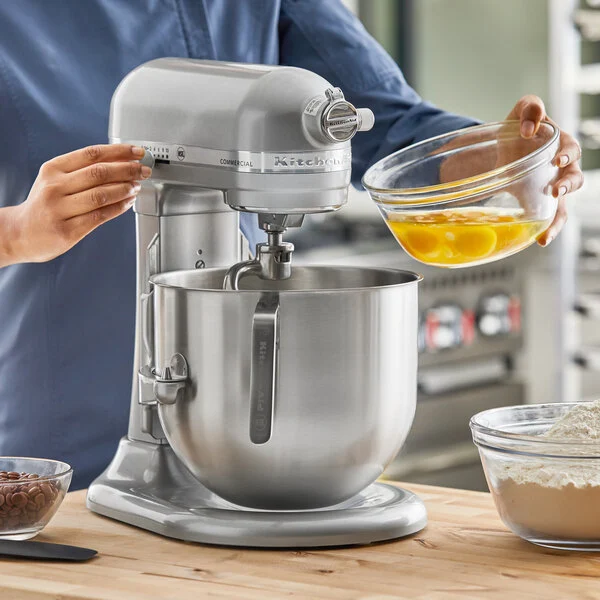
The 8-quart bowl changes your workflow more than you might expect.
It gives you room to work without crowding the bowl, which matters when you’re doubling cookie dough, mixing large cake batters, or prepping for holidays and gatherings.
- Double or triple recipes without splitting them up
- Mix heavier batters with less mess
- Handle larger prep sessions with fewer interruptions
That extra space is useful—but only if you actually cook that way. If you mostly make smaller everyday batches, the bowl can feel like more mixer than the task really calls for.
Consistency Over Time
What impressed me more than the capacity was the consistency.
Some mixers do fine for the first few minutes, then start sounding hot, strained, or unsettled once the workload builds. This one stays more even over time, especially during longer mixing sessions or repeated batches.
That reliability matters in a real kitchen. Not because it sounds impressive, but because it lets you work with less interruption. You’re not hovering over the mixer wondering if it’s about to overheat or start walking across the counter.
For serious home bakers, cottage bakers, or anyone who mixes often enough to care about how a machine holds up over time, that kind of steadiness is more valuable than flashy specs.
Build Quality and Design
The KitchenAid NSF Certified Commercial Series has a noticeably more industrial feel than standard KitchenAid models.
Instead of polished curves and decorative finishes, you get a solid, heavy machine that feels like it was designed for function first.
What Feels Different
- All-metal construction gives it serious weight and stability
- Bowl-lift mechanism feels sturdy but less convenient than tilt-head
- Fewer aesthetic flourishes—this is not a “display piece” mixer
Some people love that no-nonsense feel. Others miss the charm of the classic KitchenAid look.
Noise Level
This is one of the more honest downsides.
It’s louder than smaller mixers. Not unbearably loud, but definitely noticeable—especially when working with thick dough.
If you’re used to quieter countertop mixers, this can feel like a step up in intensity.
What It Felt Like Using This Mixer in a Real Kitchen
When I test a mixer like this, I’m not thinking about specs—I’m thinking about workflow.
How it fits into actual prep. How it behaves when you’re juggling multiple things. And whether it helps or slows you down once ingredients hit the bowl.
With the KitchenAid 8 qt stand mixer, I ran it the same way I would during a heavy prep session—multiple doughs, back-to-back batches, and no babysitting unless the machine forced me to.
The First Thing You Notice
It feels planted.
Once it’s on the counter, it doesn’t move. Even when I pushed it with heavier dough, it stayed exactly where it was. That alone already puts it ahead of most home mixers I’ve used.
The motor doesn’t jump or surge either. It ramps up slowly, and once it gets going, it holds a steady rhythm. That’s something you don’t fully appreciate until you’ve worked with mixers that constantly fight themselves.
Working Through Dough
I started with a standard bread dough, then moved into something heavier—whole wheat with a tighter hydration.
This is usually where you see the difference between “looks powerful” and actually is.
The mixer didn’t stall, but I could feel where the resistance was. It wasn’t struggling, but it also wasn’t effortless in the way a true commercial floor mixer would be.
It stayed controlled, though—and that matters more in a home setup. I never felt like I had to intervene or stop the machine.
Back-to-Back Use
One thing I pay attention to is how a machine behaves after it’s already been working.
I ran multiple batches without giving it much of a break—dough, then batter, then another dough.
The mixer stayed consistent. The sound didn’t change much, and it didn’t develop that strained tone you get when a motor is getting tired.
That’s usually a sign the machine is built for repeat use, not just occasional baking.
Where It Feels Less Natural
The size shows up in ways you don’t expect at first.
For smaller batches, you’re working against the bowl more than with it. I had to stop and scrape more often than I would on a smaller mixer, and lighter mixtures took longer to come together cleanly.
Adding ingredients mid-mix also isn’t as smooth. The bowl sits deep, so you’re either reaching in or lowering it, which breaks your flow a bit.
The Real Takeaway
After a few sessions with it, the pattern becomes clear.
This mixer feels best when you’re actually putting it to work. Larger batches, denser mixes, longer sessions—that’s where it settles in.
When you try to use it like a smaller everyday mixer, it starts to feel oversized and slightly inefficient.
From a chef’s perspective, I’d describe it like this:
It’s not a true commercial machine—but it behaves like one when you use it the right way.
And if your workflow matches that, it makes a lot more sense than trying to force a smaller mixer to do the same job.
Where It Can Feel Like Too Much
For all its strengths, the KitchenAid 8 qt mixer isn’t universally practical.
Too Large for Small Tasks
One of the most common complaints is that it’s not great for small batches.
Mixing a single batch of cookies or whipping a small amount of cream can feel awkward in such a large bowl. The attachments don’t always reach as efficiently as they do in smaller models.
Counter Space and Weight
This is not a mixer you casually move around.
It’s heavy, bulky, and takes up a noticeable amount of counter space. If your kitchen is tight, that alone can be a dealbreaker.
Learning Curve
The bowl-lift design is sturdy, but it’s not as intuitive as tilt-head mixers. Adjusting the bowl height and locking everything into place takes a bit of getting used to.
How I Tested It Against Other High-Capacity Mixers
In a professional kitchen, you don’t really evaluate equipment in isolation. You compare it side by side, under the same workload, and see which one actually holds up.
For this part of testing, I ran the KitchenAid 8 qt stand mixer alongside two other machines in a similar category: the Zacme 8.4QT Commercial Stand Mixer (800W) and the Hamilton Beach Commercial CPM800 8 Quart Stand Mixer.
I used the same recipes across all three—cookie dough, cake batter, and multiple bread dough batches—so the differences weren’t theoretical. They showed up pretty quickly once everything was running.
What I Focused On
- Motor consistency under load
- How evenly ingredients were incorporated
- Stability during heavy mixing
- Ease of handling and workflow
Each mixer had its own personality, and honestly, they don’t compete in exactly the same way—even though they look similar on paper.
| Feature | KitchenAid 8 Qt Commercial Series Model Reviewed | Zacme 8.4QT Commercial Mixer | Hamilton Beach Commercial CPM800 8 Quart Stand Mixer |
|---|---|---|---|
|
Design
A quick visual look at each mixer’s overall size, shape, and layout. |
 |
 |
 |
|
Design
Overall build and mixing approach |
Gear-driven, bowl-lift, commercial build | Budget commercial-style tilt-head | Die-cast aluminum body, commercial-style planetary mixer |
|
Power Feel
How the motor behaves under real workload |
Consistent, steady under heavy dough | Strong on paper, but less refined under load | Steady and work-focused, though less polished in feel |
|
Heavy Dough Handling
Performance with bread and dense mixtures |
Handles large batches without strain | Can handle dough, but stability varies | Built for demanding mixes and repeated batch work |
|
Ease of Use
Day-to-day workflow and handling |
More rigid, built for stability | More familiar tilt-head feel | Functional and durable, but more equipment-like to use |
|
Main Trade-Off
What you give up |
Too large for small tasks | Build quality feels less consistent | Feels more utilitarian than home-friendly |
What Actually Stood Out During Testing
The KitchenAid Commercial Series felt the most stable and predictable under pressure. When working with dense dough, it never felt like it was reaching its limit.
The Zacme, on the other hand, looks strong on paper with its higher wattage, but in practice, it felt a bit less refined. It handled dough, but there were moments where the movement and sound suggested it was working harder than it should.
The Hamilton Beach took a different approach. It felt more like straightforward kitchen equipment than a polished countertop appliance. It handled demanding mixing jobs with a solid, work-focused feel, but it didn’t feel as refined or as versatile in everyday home use as the KitchenAid.
How I’d Break It Down as a Chef
If I’m thinking in terms of real kitchen use:
- The KitchenAid is the most dependable for repeated, heavy workloads
- The Zacme is more of a budget entry into larger mixers, but not as consistent
- The Hamilton Beach feels closer to true commercial equipment, but less comfortable for casual home baking
That difference becomes very clear once you run them side by side. It’s not just about specs—it’s about how the machine behaves when you actually rely on it.
Attachments and Compatibility
One nice thing is that the KitchenAid 8 qt stand mixer still works with standard KitchenAid attachments through the power hub.
That means you can expand it into a multi-purpose tool—pasta maker, grinder, slicer, and more.
Just keep in mind that the scale of the mixer doesn’t always match the scale of those tasks. For small prep work, it can feel like using a sledgehammer for a light tap.
Common Complaints Worth Knowing
Looking through long-term user feedback, a few themes come up repeatedly:
- It’s heavier than expected
- Noise level is higher than smaller models
- Not ideal for small or delicate mixing jobs
- Price feels steep if you don’t fully use its capacity
None of these are dealbreakers on their own—but they matter depending on how you plan to use the mixer.
Is the KitchenAid 8 Quart Stand Mixer Actually Worth It?
After working with the KitchenAid 8 qt stand mixer in real prep situations, I don’t really see it as an upgrade in the traditional sense. It’s not just a “bigger KitchenAid.” It’s a different type of tool altogether.
This is a machine that makes the most sense when your workflow actually demands it.
If you’re regularly mixing bread dough, running multiple batches back to back, or working with heavier, more resistant mixtures, the difference shows up pretty quickly. The motor stays controlled, the machine doesn’t shift around, and you don’t feel like you’re pushing it to its limit every time you use it.
That kind of reliability is what you’re really paying for here—not just capacity, but consistency under load.
But that same design starts to feel like a trade-off the moment you scale things down.
For smaller batches—cookies, lighter batters, quick mixes—you’re working with more machine than you need. The bowl feels oversized, the mixing action isn’t as efficient at lower volumes, and simple tasks take a bit more effort than they should.
In that kind of kitchen, something like the KitchenAid 7 quart bowl lift stand mixer often ends up being the more practical choice. It still handles heavier work, but it’s easier to live with day to day.
That’s really the dividing line.
The 8 quart isn’t trying to be flexible—it’s built to handle volume and resistance without hesitation. And when you use it that way, it feels solid, predictable, and dependable in a way smaller mixers usually don’t.
But if your cooking doesn’t consistently push into that range, the size and weight start to work against you instead of for you.
From a chef’s perspective, I’d put it simply:
You don’t buy this mixer because you want more capacity. You buy it because you’re tired of hitting the limits of smaller machines.
And if you’re not hitting those limits yet, you’ll notice that every time you reach for it.
