Years ago, choosing a stand mixer was relatively straightforward. Most models performed a single job—mixing ingredients—and usually came with only a couple of basic attachments such as a wire whisk or simple beater. Once you brought the mixer home, you could immediately begin using it for common baking tasks.
Modern stand mixers, however, have evolved into far more versatile kitchen appliances. Today’s models often support a wide range of attachments that expand their capabilities well beyond simple mixing. From kneading dough and whipping cream to shredding vegetables or even making fresh pasta, a stand mixer can function as a multi-purpose kitchen tool rather than just a baking device.
If you are still comparing different mixers before choosing one, you may find it helpful to read our guide to the best stand mixers, where we break down the most reliable models for home kitchens and explain how their attachments and performance differ.
Most stand mixers include several standard attachments that handle the majority of everyday cooking and baking tasks. Understanding how each one works will help you get the most value from your mixer and improve your results in the kitchen.
Flat Beater
The flat beater is one of the most commonly used attachments in a stand mixer. It is designed for mixing ingredients thoroughly without adding excessive air. Because of its sturdy design and consistent mixing action, it works well for medium to heavy mixtures that need to be blended evenly.
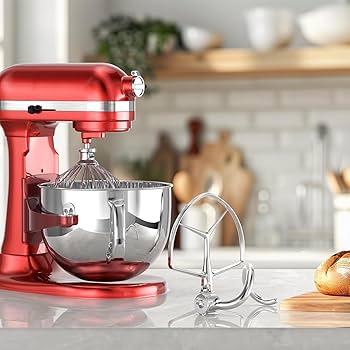
This attachment is typically used for recipes such as:
- Cake batter
- Cookie dough
- Brownies
- Mashed potatoes
- Meatloaf mixtures
- Candy and frosting
For many home cooks, the flat beater quickly becomes the attachment used most often, since it handles a wide range of everyday mixing tasks.
Wire Whisk
The wire whisk attachment is designed specifically for incorporating air into ingredients. This makes it ideal for recipes that require a light, fluffy texture. The whisk rotates quickly to trap air in the mixture, which is essential for creating certain baked goods and desserts.
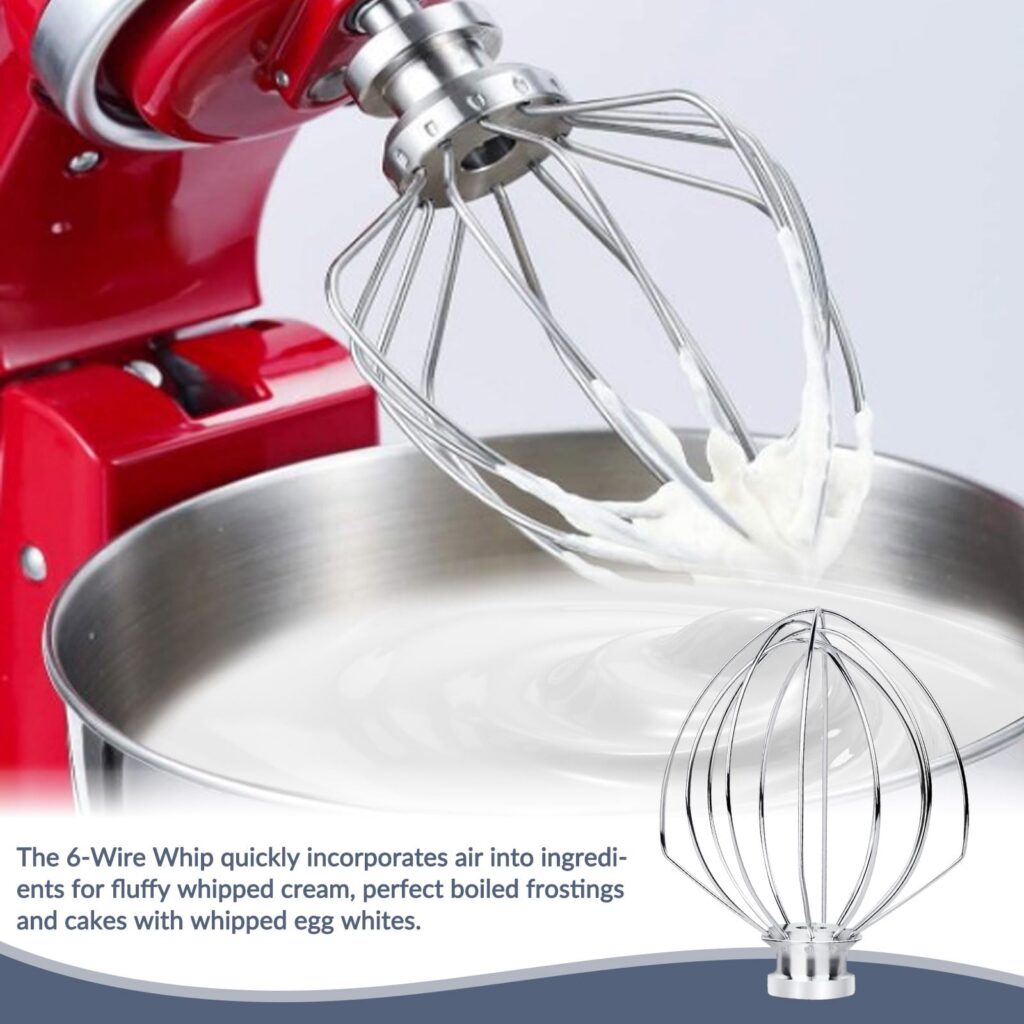
Typical uses for the wire whisk include:
- Whipping cream
- Beating egg whites
- Preparing meringue
- Angel food cake batter
- Sponge cake mixtures
- Homemade mayonnaise
Because it focuses on aeration rather than heavy mixing, the wire whisk works best with lighter ingredients.
Dough Hook
The dough hook is specifically designed for kneading yeast dough. Instead of mixing ingredients like a beater or whisk, it slowly stretches and folds the dough, which helps develop gluten and improves the structure of baked bread.
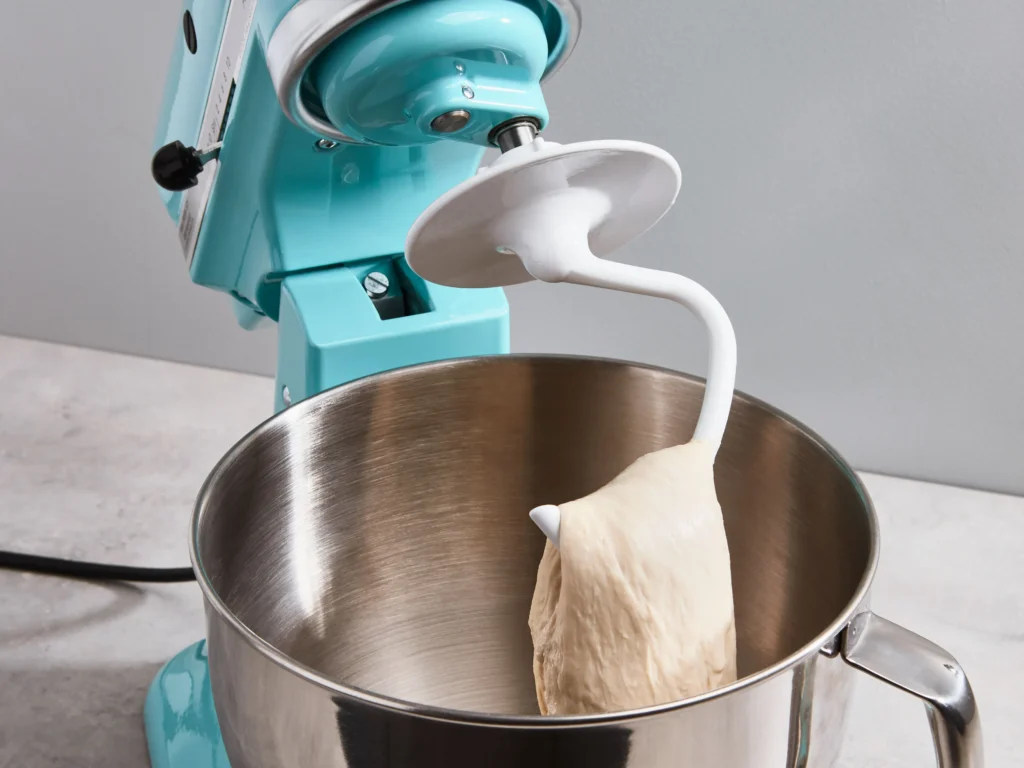
This attachment is commonly used when preparing:
- Bread dough
- Pizza dough
- Dinner rolls
- Buns
- Coffee cakes
Dough hooks typically come in either a spiral design or a traditional “C-shaped” hook. Both versions are designed to keep the dough moving around the bowl while gently kneading it into a smooth, elastic texture.
Common Mistakes When Using Stand Mixer Attachments
Even though stand mixer attachments are designed to simplify cooking and baking, many users do not always use them in the most effective way. Choosing the wrong attachment for a recipe or running the mixer at the wrong speed can affect the final texture of your food.
One common mistake is using the wire whisk for mixtures that are too thick. The whisk works best when incorporating air into light ingredients such as egg whites or cream. For heavier mixtures like cookie dough or mashed potatoes, the flat beater usually produces better results.
Another mistake is running the mixer too fast when kneading dough. Bread dough typically performs best when mixed at lower speeds, allowing the dough hook to stretch and develop gluten gradually.
Understanding the purpose of each attachment can help you achieve better results and extend the lifespan of your stand mixer.
Cleaning and Maintaining Stand Mixer Attachments
Proper cleaning and maintenance are important for keeping your stand mixer attachments in good condition. Most attachments can be washed easily with warm water and mild dish soap after use.
Some modern attachments are dishwasher-safe, but it is always best to check the manufacturer’s instructions before placing them in the dishwasher. Certain coated attachments, especially those used for dough or heavy mixtures, may last longer if washed by hand.
It is also helpful to dry attachments thoroughly before storing them. Keeping them clean and dry helps prevent corrosion and ensures they remain ready for the next cooking or baking session.
Final Thoughts
Most stand mixers include at least these three core attachments—the flat beater, wire whisk, and dough hook. Many modern mixers also support additional accessories that can expand their functionality even further. Optional attachments may include pasta rollers, meat grinders, vegetable slicers, juicers, and even devices like the KitchenAid ice cream maker attachment.
Learning how to use these attachments correctly can significantly improve your cooking and baking experience. With the right stand mixer and accessories, many kitchen tasks become faster, easier, and far more consistent.
