Hamilton Beach vs KitchenAid Classic is one of the most common stand mixer comparisons for home bakers who want to balance price, performance, and long-term value. If you spend any time researching stand mixers, sooner or later you’ll run into these two models in buying guides, Reddit threads, YouTube reviews, and pretty much anywhere people talk about baking gear.
I actually ended up looking at these two for the exact same reason a lot of people do. I wanted a stand mixer for home baking — nothing fancy, just something that could handle cookies, cake batter, and maybe pizza dough or bread once in a while. But the price difference between them immediately stood out. One is clearly in the budget range, while the other costs several times more. Naturally, that raises the question: are you really getting that much more mixer for the extra money?
On paper, they do not look dramatically different. Both are tilt-head stand mixers, and both come with the basic attachments most people expect: a dough hook, a flat beater, and a whisk. Both are designed to help with everyday recipes like cookies, brownies, cake batter, frosting, and similar baking tasks.
If you are only browsing specs or scrolling through product pages, it is easy to assume they are fairly similar machines sold at very different price points. In fact, a lot of people looking for the best stand mixer for home baking end up debating between something affordable like Hamilton Beach and something more established like KitchenAid.
But once you start digging a little deeper — reading user reviews, watching long-term tests, and paying attention to how people actually use these mixers — the differences become much clearer. The Hamilton Beach sits firmly in the budget category. It is built to make stand mixers accessible without spending hundreds of dollars. The KitchenAid Classic, on the other hand, belongs to a mixer lineup that has been a familiar part of home kitchens for decades.

Another thing I noticed while researching is that these two mixers tend to attract very different types of buyers. People looking at Hamilton Beach are usually trying to get into baking without a big upfront cost. Meanwhile, people considering a KitchenAid are often thinking longer term — something that might stay in their kitchen for years.
So the real question most people are trying to answer isn’t just which mixer is “better.” It’s whether the cheaper one is actually good enough for everyday baking, or if spending more upfront saves you frustration later.
I spent quite a bit of time reading through real user feedback, complaints, and long-term ownership experiences to figure out where each mixer really stands. Here’s what stood out to me.
Quick Overview of the Two Mixers
Hamilton Beach vs KitchenAid Classic: Quick Comparison
These two mixers often come up when people want a stand mixer but aren’t sure whether to go with a budget option or spend more on a long-term machine.
| Feature | Hamilton Beach 7-Speed Stand Mixer | KitchenAid Classic Series Stand Mixer |
|---|---|---|
|
Typical Price Range
What most buyers usually pay online |
$80–$120 | $250–$330 |
|
Bowl Capacity
Total mixing capacity |
4 Quart stainless steel bowl | 4.5 Quart stainless steel bowl |
|
Motor Strength
General mixing performance |
About 300W motor | 275W motor with stronger torque design |
|
Speed Settings
Control over mixing tasks |
7 speeds | 10 speeds |
|
Construction
Materials used in the body |
Mostly plastic exterior | Die-cast metal construction |
|
Weight & Stability
How stable the mixer feels on the counter |
About 12–13 lbs | About 22 lbs (more stable) |
|
Attachments Included
Tools in the box |
Beater, dough hook, whisk, splash guard | Beater, dough hook, wire whip |
|
Attachment Ecosystem
Extra accessories available |
Very limited | Large KitchenAid attachment system |
|
Best For
Who each mixer suits best |
Occasional baking, cakes, cookies | Frequent baking and heavier mixing |
|
Long-Term Durability
What users report after years of use |
Good for light use | Generally lasts much longer |
|
Overall Value
General takeaway |
Best budget option | Best long-term investment |
Quick takeaway: If you mainly bake cakes, cookies, or frosting once in a while, the Hamilton Beach mixer usually does the job and saves a lot of money. But if you bake often or plan to keep a mixer for many years, the KitchenAid Classic tends to feel like the more durable and stable option.
Build Quality and Feel
This is honestly one of the biggest differences between these two mixers, and it’s something that comes up constantly in user reviews.
The KitchenAid Classic just feels like a heavier, more serious machine. It weighs quite a bit more, and most of the body is made from metal rather than plastic. When it’s sitting on the counter, it has that solid, planted feeling. A lot of owners mention that even when mixing thicker dough or running at higher speeds, it doesn’t move around much.
One thing I noticed while reading through long-term reviews is how many people say they’ve owned a KitchenAid for years, sometimes even a decade or more. That doesn’t mean they never have issues, but overall the brand has a reputation for lasting a long time if you take care of it.
The Hamilton Beach stand mixer feels different right away. It’s noticeably lighter, and there’s more plastic in the outer body and components. That’s part of the reason the price is lower, but it also affects how the mixer feels during use.
Some owners say the machine can wobble a little when mixing thicker doughs, especially bread dough. A few people also mention that the head can shake slightly at higher speeds. It’s not that the mixer falls apart or anything like that, but it definitely doesn’t feel as solid as the KitchenAid.
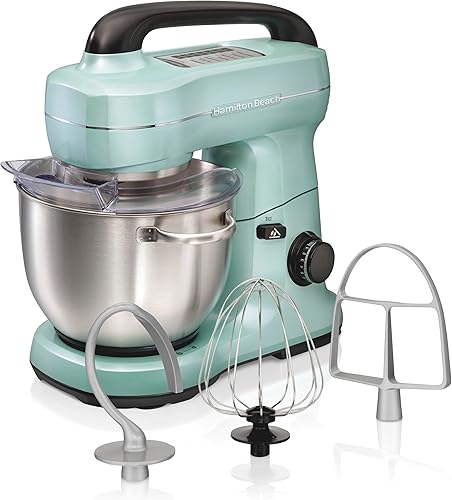

From what I’ve seen, the Hamilton Beach tends to be perfectly fine for lighter mixing tasks. Cake batter, pancake batter, whipped cream, frosting, and most cookie dough recipes are usually no problem. A lot of people buy it specifically for those kinds of jobs and seem pretty happy with it.
Where the difference shows up is when you start pushing the mixer harder. Bread dough, thick bagel dough, or large batches of heavy cookie dough are where some users say the Hamilton Beach begins to struggle a bit. The machine might rock slightly on the counter, and the motor can sound like it’s working pretty hard.
The KitchenAid Classic isn’t some indestructible commercial mixer either. It still has limits, and if you make dense bread dough every week you might eventually want a stronger KitchenAid model. But compared with most budget mixers, it generally handles heavier mixing more comfortably.
So the way I see it, the difference in build quality really comes down to how often you bake and what you usually make. If your baking is mostly cakes, cupcakes, frosting, and the occasional batch of cookies, the lighter construction of the Hamilton Beach might not bother you at all. But if you want something that feels sturdier and more stable for years of regular use, the KitchenAid is pretty clearly built with that in mind.
For a broader look at how KitchenAid compares with another well-known alternative in this category, my full KitchenAid vs Cuisinart stand mixer comparison is worth reading next.
Mixing Performance
This is where the differences start to matter depending on what you bake.
For Cakes, Cookies, and Light Batters
Both mixers seem to do pretty well here. A lot of home bakers who use the Hamilton Beach for basic recipes say it handles cake batter and cookie dough without much trouble.
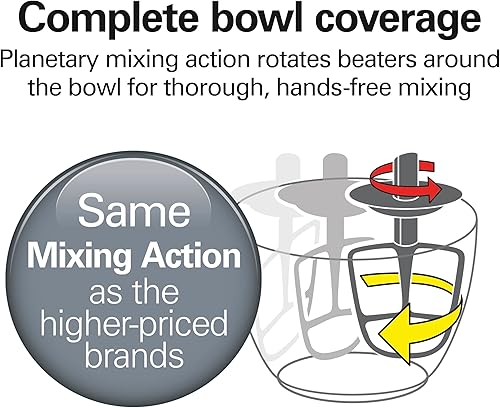
One thing I noticed in user comments is that the planetary mixing action on the Hamilton Beach actually helps it reach around the bowl fairly well, which prevents ingredients from sitting untouched on the sides.
For Bread Dough
This is where some limitations show up.
From what I’ve seen, the Hamilton Beach can handle small batches of dough, but it’s not really built for frequent bread baking. Some people mention the motor struggling or the machine moving around on the counter.
The KitchenAid Classic isn’t a heavy-duty bread machine either, but it does seem to manage dough more comfortably thanks to its stronger motor and heavier build.
Bowl Size and Capacity
The difference here isn’t huge, but it’s worth mentioning.
- Hamilton Beach: 4-quart bowl
- KitchenAid Classic: 4.5-quart bowl
In everyday baking, that extra half quart mostly means you can mix slightly larger batches. For example, a bigger batch of cookie dough or cake batter.
For most casual home bakers, both sizes are honestly fine.
Price Difference (And What You’re Paying For)
The biggest reason people consider Hamilton Beach is simple: the price.
It’s often significantly cheaper than the KitchenAid Classic. For someone who bakes occasionally, that’s pretty tempting.


The KitchenAid, on the other hand, costs more upfront. What you’re paying for is mainly:
- Stronger build quality
- Better long-term durability
- A larger ecosystem of attachments
- A brand that’s been around in kitchens for decades
Some people keep their KitchenAid mixers for 10–15 years or more. That kind of longevity is part of the appeal.
Common Complaints I Saw in Reviews
No appliance is perfect, and both mixers have a few recurring complaints.
Hamilton Beach
- Can move or wobble during heavier mixing
- Motor struggles with dense dough
- Feels less durable compared to premium mixers
KitchenAid Classic
- Higher price
- Not the most powerful KitchenAid model
- Still struggles with very large bread dough batches
So even the KitchenAid Classic isn’t flawless. It’s just generally more solid overall.
Who Each Mixer Might Be Best For
After digging through a lot of user experiences, the choice between these two mixers usually comes down to how often you bake and what kinds of recipes you make. They’re not really competing for the exact same type of user, even though they look similar on paper.
Hamilton Beach Might Make Sense If:
- You bake once in a while. If baking is more of a weekend hobby or something you do a few times a month, the Hamilton Beach mixer can honestly be enough. A lot of people buy it for occasional cakes, birthday cupcakes, or cookie batches and seem pretty satisfied.
- Most of your recipes are light mixing tasks. Things like cake batter, brownie mix, whipped cream, frosting, and typical cookie dough are where this mixer tends to do just fine. From what I’ve seen in reviews, many users say it handles those jobs without much trouble.
- You’re not sure how much you’ll actually use a stand mixer. Some people buy their first mixer just to try baking more at home. In that case, spending a few hundred dollars right away might feel like a gamble. The Hamilton Beach can be a lower-risk way to see if a stand mixer really becomes part of your routine.
- You mainly care about saving money. The price difference between these two mixers is pretty noticeable. For many buyers, that alone is enough reason to try the budget option first.
- You don’t plan to expand into attachments. KitchenAid has a whole ecosystem of attachments like pasta rollers, meat grinders, and spiralizers. Hamilton Beach doesn’t really have that same system, so if you just want a basic mixer and nothing more, that may not matter to you.
KitchenAid Classic Might Be Better If:
- You bake regularly. If you’re using a mixer every week — maybe cookies, bread, pizza dough, or larger batches — the sturdier build of the KitchenAid tends to make a difference. Many owners say it just feels more stable and consistent over time.
- You want something that can last years. One thing that stood out to me while reading reviews is how often people mention keeping their KitchenAid for a long time. It’s not unusual to see owners say they’ve used the same machine for a decade or more.
- You occasionally make heavier dough. Bread dough, bagel dough, or thick cookie dough can be harder on mixers. The Classic isn’t the most powerful KitchenAid model, but it generally handles heavier mixing better than most budget mixers.
- You like the idea of future attachments. This is a big reason people buy KitchenAid. Over time you can add pasta rollers, food grinders, or other tools that connect to the mixer. Some people basically turn it into a small kitchen system.
- You prefer a machine that feels more solid. The heavier metal construction and extra weight give it a more stable feel on the counter. That doesn’t matter to everyone, but some bakers really notice the difference.
Final Thoughts
After reading a lot of user feedback and comparisons, my takeaway is pretty straightforward.
The Hamilton Beach stand mixer isn’t trying to compete directly with higher-end mixers. It’s more of an entry-level option for people who want the convenience of a stand mixer without spending a lot. For basic baking tasks, plenty of people seem happy with it.
But it also has its limits. It’s lighter, not as sturdy, and it’s not really built for frequent heavy mixing. If you push it too hard with dense doughs or large batches, you’ll probably notice the difference.
The KitchenAid Classic feels more like a long-term kitchen tool. It’s heavier, more stable, and generally better suited for people who bake often. It still isn’t the most powerful mixer KitchenAid makes, but compared with most budget mixers it tends to hold up better over time.
If you want to see the kind of recipes people often make with stand mixers, browsing a few classic baking recipes can be surprisingly helpful. Collections like the ones on New York Times Cooking include some of the most widely shared cookie, cake, and bread recipes online, many of which are commonly prepared using stand mixers.
So the real question isn’t just which mixer is “better.” It’s more about how you actually bake.
If baking is something you do once in a while and mostly for simple recipes, the Hamilton Beach might honestly be all you need. But if baking is becoming a regular habit, or you want a mixer that could still be on your counter years from now, the KitchenAid Classic usually starts to feel like the safer long-term choice.
