Finding the best stand mixer for cookie dough is not quite as simple as picking the most popular model and calling it a day. Cookie dough can be surprisingly demanding, and not every mixer handles it with the same ease. A machine that does perfectly well with a soft sugar cookie dough may feel far less comfortable once you move into thicker chocolate chip dough, heavier mix-ins, or larger holiday batches. In my experience, that is where the real differences start to show. The right choice depends less on brand hype and more on the kind of baking you actually do in your own kitchen.
After looking closely at the main options in this category, I kept returning to one familiar conclusion. For most home bakers, the KitchenAid Artisan 5 Quart remains the most balanced choice. It offers enough capacity for regular cookie baking, feels manageable in everyday use, and gives good control when working through doughs that are thick but not excessively heavy. That combination is a large part of why it continues to make sense for so many people.
Still, the Artisan is not automatically the right mixer for everyone. If you often mix large batches or denser doughs, a bowl-lift model is usually the more capable tool. If you only bake from time to time, a lower-priced mixer may be all you really need. And in smaller kitchens, the size and weight of the machine can matter just as much as the mixing performance. A stand mixer may look impressive on paper, but if it feels awkward to store or inconvenient to use, that tends to matter over time.
Seeing the differences side by side makes this much easier to sort through. The table below gives a quick overview of the mixers that stand out most before we look at each one more closely.

Which is the best stand mixer for cookie dough
| Product | Best For | Key Feature | Rating | Check Price |
|---|---|---|---|---|
| KitchenAid Artisan Series 5 Quart Tilt-Head Stand Mixer | Best Overall | Balanced 5-quart size with 10-speed control | ★★★★★ | Check Price on Amazon |
| Cuisinart SM-50 Precision Master Stand Mixer | Best for Small Kitchens | 5.5-quart bowl with compact tilt-head design | ★★★★☆ | Check Price on Amazon |
| KitchenAid 7 Quart Bowl-Lift Stand Mixer | Best for Large Batches | Heavy-duty bowl-lift design for dense doughs | ★★★★★ | Check Price on Amazon |
| Smeg 50’s Retro 5 Qt. Stand Mixer | Best Premium Alternative | 600W motor with strong style appeal | ★★★★☆ | Check Price on Amazon |
| NutriMill Artiste Kitchen Electric Stand Mixer | Best Value Alternative | 6.5-quart bowl with roomy everyday capacity | ★★★★☆ | Check Price on Amazon |
What actually matters in a stand mixer for cookie dough?
Cookie dough puts different demands on a mixer than whipped cream or cake batter. Thick dough can push the motor harder, especially once you add chocolate chips, nuts, oats, or dried fruit. That is one reason bowl size and mixer stability matter so much here. KitchenAid’s own buying guide notes that tilt-head models are usually best for everyday use and smaller to mid-range capacities, while bowl-lift models are better for larger batches and heavier mixtures.
For most cookie bakers, I would focus on these things first:
- Capacity: A 5-quart bowl is usually enough for regular home baking, while 6 to 7 quarts starts to make more sense for batch baking or heavier doughs.
- Mixer style: Tilt-head machines are easier to access when adding ingredients. Bowl-lift mixers are usually steadier for heavy work.
- Beater design: A flex-edge beater can be genuinely useful for cookie dough because it scrapes the bowl as it mixes, reducing how often you need to stop and scrape manually. KitchenAid says its flex-edge beater is designed to mix and scrape the bowl at the same time.
- Speed control: Good low and medium control matters more for cookies than flashy top-end speed.
- Weight and stability: Dense dough is where cheaper mixers often reveal their weak points.
Best overall: KitchenAid Artisan Series 5 Quart Tilt-Head Stand Mixer
If I were choosing one stand mixer for the average home baker, this is the model I would feel most comfortable recommending. The KitchenAid Artisan tends to sit in that practical middle ground that many mixers never quite reach. It is roomy enough for everyday cookie baking, yet not so large or heavy that it becomes inconvenient to keep around. For many kitchens, that balance matters more than people expect.

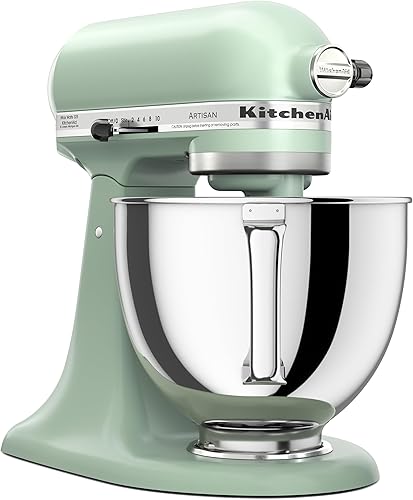
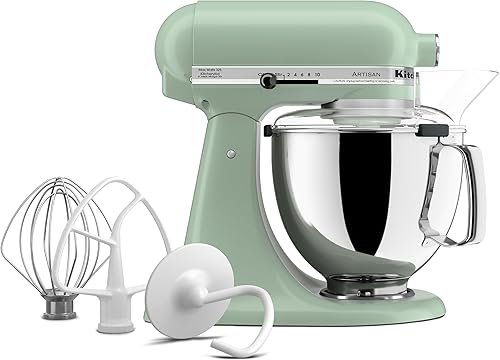
What makes the Artisan appealing for cookie dough is not that it is the strongest machine in the category or the most affordable. It is that it feels well judged. The 5-quart bowl is generous enough for standard home batches, and the mixer itself does not feel oversized for ordinary use. For chocolate chip cookies, oatmeal dough, shortbread, and most drop-cookie recipes, it has the kind of capacity and control that suit real everyday baking rather well.
I also think the tilt-head design works in its favor for this kind of baking. Cookie dough often involves adding ingredients in stages, stopping to scrape the bowl, or folding in chocolate chunks and nuts at the end. A tilt-head mixer makes those small tasks easier and less awkward. In daily use, that convenience has real value. A machine can be powerful on paper, but if it feels cumbersome every time you need to work with the bowl, that tends to wear on you.
Another reason this model remains so popular is that it does not ask the home baker to make unnecessary compromises. It feels sturdy enough for regular use, capable enough for most cookie recipes, and familiar enough that it is not difficult to live with. For many readers, that is exactly the kind of mixer that makes the most sense.
What to Consider Before Buying
The Artisan is not without limits, and I do think those are worth mentioning plainly. If you regularly make very stiff cookie dough, double batches, or recipes packed with heavy mix-ins, you may begin to feel the edge of what this mixer is most comfortable handling. In that situation, a larger bowl-lift model is often the better tool. Price is also part of the conversation. This is a well-regarded mixer, but it is still an investment, and occasional bakers may decide that they do not need to spend this much for the kind of use they have in mind.
Best for Small Kitchens: Cuisinart SM-50 Precision Master Stand Mixer
The Cuisinart SM-50 is a sensible choice for bakers who want a real stand mixer without giving up too much counter space. That is part of its appeal. It offers enough capacity to feel useful for everyday baking, but it does not have the heavier, more imposing presence that some larger mixers bring into a small kitchen. For many home bakers, that alone makes it easier to live with.


What makes this mixer worth considering for cookie dough is the balance between bowl size and everyday practicality. The 5.5-quart bowl gives you enough room for standard batches without making the machine feel oversized for lighter kitchen work. If you are the kind of baker who wants one mixer for cookies, cakes, frostings, and the occasional weekend baking project, that versatility is easy to appreciate.
I also think this model makes sense for people looking for the best stand mixer for small batch cookies without dropping all the way down to a compact specialty mixer. It still feels like a proper stand mixer, but one that is less intimidating than a large bowl-lift machine. For smaller households or kitchens where space is limited, that more approachable size can be a real advantage.
In daily use, the tilt-back head is another point in its favor. Cookie baking often means pausing to add ingredients, scraping the bowl, or folding in mix-ins once the dough has mostly come together. A design that gives you easier access to the bowl tends to make those small steps less awkward. That may sound minor, but those details shape how pleasant a mixer feels over time.
For a more detailed breakdown of its performance, features, and overall value, you can read my full Cuisinart Precision Master SM-50 review here.
What to Consider Before Buying
This is not the mixer I would choose for someone who regularly makes extra-thick cookie dough in large batches or plans to do a lot of bread baking alongside it. While it seems well suited to ordinary home use, it does not strike me as the first choice for repeated heavy-duty mixing. If your baking leans more toward dense doughs and bigger quantities, a stronger bowl-lift model would likely be the better long-term fit. But for typical cookie baking in a smaller kitchen, the SM-50 comes across as a practical and well-sized middle-ground option.
Best for Large Batches: KitchenAid 7 Quart Bowl-Lift Stand Mixer
For bakers who make cookie dough in serious volume, this is the mixer that begins to make real sense. The KitchenAid 7 Quart Bowl-Lift is not designed for occasional baking or the kind of small batch you throw together on a quiet afternoon. It is built for heavier work, larger quantities, and the kind of dough that can quickly expose the limits of a lighter machine.
That is what makes it stand out in this group. The larger bowl gives you far more room to work, but just as important, the bowl-lift design gives the mixer a steadier, more grounded feel once the dough becomes dense. Thick chocolate chip dough, heavy oatmeal mixtures, and recipes packed with nuts or other mix-ins are exactly the kinds of jobs where this style of mixer starts to justify its size. It feels less strained, less crowded, and better suited to the workload.
If your baking tends to revolve around holidays, large family batches, school events, or preparing several trays of cookies in one session, this is the kind of machine that can save both time and frustration. It gives you more capacity than most home bakers truly need, but for the right person, that extra capacity is precisely the point. You are not constantly wondering whether the bowl is too full or whether the dough is asking too much of the mixer.


I would especially look at this model if you want the best stand mixer for thick cookie dough rather than simply a good all-purpose mixer. This is the one that feels most prepared for heavier, more demanding recipes. In a home kitchen, that may be more machine than some people need, but for bakers who regularly work at a larger scale, that added strength and stability can be very worthwhile.
What to Consider Before Buying
The trade-off is fairly obvious. This mixer is large, heavy, and expensive enough that casual bakers may find it unnecessary. If you only make a batch of cookies now and then, a smaller tilt-head model will usually feel easier to store, easier to move, and more practical in everyday use. The 7-quart model makes the most sense when your baking habits genuinely call for that extra capacity. Otherwise, you may end up paying for power and size that you rarely use.
Best Premium Alternative: Smeg 50’s Retro 5 Qt. Stand Mixer
The Smeg stand mixer is the kind of machine that appeals to bakers who want more than simple utility. It is clearly designed to bring a certain visual character to the kitchen, but it would be unfair to dismiss it as style alone. Beneath the retro look is a well-built stand mixer with a 5-quart bowl, a solid body, and enough capacity for the kind of cookie baking most home kitchens actually do.

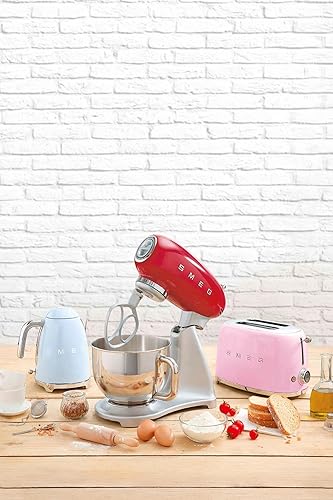

For cookie dough, I would describe it as a strong everyday mixer with a more design-forward personality than most of its competitors. It has enough room for regular batches, and for standard home baking, it should feel comfortably capable. Sugar cookies, chocolate chip dough, butter cookies, and other familiar recipes are well within the range of what a mixer like this is meant to handle. In that sense, it is not difficult to see why some bakers are drawn to it.
What sets it apart, of course, is the fact that it does not try to disappear into the background. A stand mixer often stays on the counter, and for some buyers, that matters. They want a machine that works well but also contributes something to the look of the kitchen. I can understand that. There is nothing wrong with wanting an appliance that feels enjoyable to own, especially when it is something you use often.
Still, I would be careful about how I frame its value. This is not the model I would point to first for a buyer who is focused strictly on performance for the money. The appeal here is partly practical and partly aesthetic, and that balance will make sense to some people more than others. If you love the design and bake often enough to appreciate having it out on display, it can be a satisfying choice. If your priorities are strictly about getting the most mixing strength and utility for the price, other options may make more sense.
What to Consider Before Buying
The main thing to keep in mind is that some of the price is tied to the overall design appeal, not just raw mixing value. That does not make it a poor mixer, but it does mean practical shoppers may hesitate if they are comparing performance more than appearance. I would also look elsewhere if your main concern is frequent heavy-duty mixing or large volumes of dense cookie dough. The Smeg feels more at home as a premium everyday mixer than as the most workhorse-like choice in the group.
Alternative Pick: NutriMill Artiste Kitchen Electric Stand Mixer
The NutriMill Artiste is an interesting choice for bakers who want a stand mixer with generous bowl space but do not necessarily want the usual heavy, premium-priced machine. On paper, the combination sounds appealing: a 500-watt motor, a 6.5-quart bowl, and the basic attachments most home bakers are likely to use. But what makes this mixer worth looking at is not simply the size. It is the fact that it seems aimed at people who want solid everyday dough mixing without stepping into the cost of more established high-end models.


For cookie dough, I can see the appeal. The larger bowl gives you room for family-size batches, and that extra space can be especially useful if your recipes include a good amount of chocolate chips, oats, nuts, or other mix-ins. Some mixers look roomy until the dough actually starts climbing the beater. A bowl with a little breathing room tends to feel much more practical once the ingredients come together. For bakers who regularly make more than a modest batch, that added capacity is not a small detail.
What also stands out is that the Artiste feels positioned as a practical working mixer rather than a decorative one. That usually appeals to a certain kind of buyer. If your concern is how the machine handles dough, how stable it feels on the counter, and whether it can manage regular baking without becoming a nuisance, a mixer like this has a clearer purpose than some of the more style-driven alternatives.
I would place it somewhere in the middle of the conversation. It looks more capable than many low-cost entry models, especially for people who want more bowl capacity, but it does not strike me as the kind of mixer I would choose purely for refinement or long-term heavy-duty confidence over the strongest established workhorses. In other words, it may make sense for the baker who wants roomier capacity and solid day-to-day usefulness without jumping all the way into premium pricing.
What to Consider Before Buying
The main thing I would keep in mind is that a larger bowl does not automatically mean the mixer feels equally strong in every demanding situation. If your baking is centered around very stiff doughs, constant large-batch mixing, or frequent bread work in addition to cookies, you may still prefer a more proven heavy-duty machine. I would also think about the overall feel of ownership. Some mixers win people over with polish, attachment ecosystem, or a stronger long-term reputation, and that is part of the value conversation too. The NutriMill Artiste makes more sense as a practical alternative for everyday bakers than as the obvious first choice for someone who wants the most premium or most established mixer in the category.
Bonus – Best budget stand mixer for cookies: Aucma 6.5QT Stand Mixer
If you want the best budget stand mixer for cookies, the Aucma 6.5QT is the one I would look at first. TechGearLab described it as a budget-friendly alternative that performs quite well, especially considering the price, while also noting weaker whipping performance and some limitations with heavy kneading. Amazon listings for the Aucma also describe a 6.5-quart bowl, 660W motor, 6 speeds, tilt-head design, and included basic attachments.
What makes it attractive is easy to see. You get a lot of bowl space for the money, and for ordinary cookies, cakes, and lighter dough work, it seems to cover the basics well enough. We even noted it handled a cookie recipe with substantial mix-ins effectively, which is encouraging for a lower-cost machine.
Still, this is also where I would keep expectations realistic. Budget mixers often look strong on paper because the wattage is high and the bowl is large, but that does not always translate to the same long-term refinement, attachment quality, or consistency you get from better-known premium brands.
So yes, I think it is a reasonable entry-level pick. No, I would not expect it to feel like a KitchenAid in use or durability.
Tilt-Head vs. Bowl-Lift for Cookie Dough
For cookie dough, the difference between a tilt-head and a bowl-lift mixer is more than just design. In practical use, they feel quite different once the dough starts getting thick.
A tilt-head mixer is usually the easier choice for everyday baking. It gives you quicker access to the bowl, which is helpful when you need to scrape the sides, add flour in stages, or mix in chocolate chips at the end. For standard home batches, that convenience matters. A mixer that feels easy to open and work with often gets used more often, and for many home bakers, that alone makes a tilt-head model the more comfortable option.
Where things change is with heavier dough. Once you start making dense cookie doughs, larger batches, or recipes loaded with oats, nuts, or other mix-ins, a tilt-head mixer can begin to feel closer to its working limit. It may still get through the job, but it does not always feel as calm or as steady when the mixture becomes stiff. That is often the point where the difference between the two styles becomes noticeable.
A bowl-lift mixer is generally the better tool for that kind of work. Because the head stays fixed and the bowl is locked into a more supported position, the whole machine tends to feel more stable under strain. In real use, that extra steadiness is especially useful for thick chocolate chip cookie dough, holiday baking, or any situation where you are mixing more than a basic batch. It feels less like the mixer is being pushed and more like it was built with heavier mixing in mind.
So for most casual home bakers, a tilt-head mixer is still the friendlier and more practical choice. But if you regularly make stiff cookie dough or larger batches, a bowl-lift model is often the better long-term investment. It is not simply a matter of style. It is a matter of how comfortably the mixer handles the kind of dough you actually make.
Who Should Buy Which Mixer?
Not every good stand mixer is good for the same kind of baker. That is especially true with cookie dough. Some people want a mixer that feels easy to use a few times a month. Others need one that can handle dense dough and larger batches without feeling strained. The better choice usually comes down to how you actually bake, not which model looks best on a feature list.
Choose the KitchenAid Artisan if:
- You want the most well-rounded option for everyday cookie baking
- You usually make regular family-size batches rather than oversized ones
- You want a mixer that feels easy to use, easy to access, and comfortable to keep in daily rotation
Choose the Cuisinart SM-50 if:
- You want a capable tilt-head mixer that feels practical in a smaller kitchen
- You like the idea of a little extra bowl room without moving up to a heavier bowl-lift machine
- Your baking is mostly cookies, cakes, frostings, and other standard home recipes rather than very stiff doughs
Choose the KitchenAid 7 Quart Bowl-Lift if:
- You bake in large batches often enough to justify a bigger, heavier machine
- You regularly make thick cookie dough with lots of mix-ins or heavier textures
- You want a mixer that feels more comfortable under strain and gives you room to grow into bigger baking projects
Choose the Smeg if:
- You want a premium mixer that looks beautiful on the counter and still handles everyday baking well
- You care about design, finish, and the overall feel of the appliance as much as basic performance
- You are comfortable paying more for a mixer that brings both function and visual appeal to the kitchen
Choose the NutriMill Artiste if:
- You want a roomy bowl and solid cookie-making capacity without stepping straight into the highest price tier
- You often bake for family or gatherings and want more space for dough without buying an oversized commercial-feeling machine
- You are looking for a practical value alternative and can accept that it may not feel as refined as the most established premium models
Choose the Aucma if:
- You want an affordable first stand mixer
- You bake occasionally and do not want to spend KitchenAid money
- You can accept some trade-offs in refinement and heavy-duty performance
Final thoughts
If I were choosing one mixer for most readers searching for the best stand mixer for cookie dough, I would still go with the KitchenAid Artisan 5 Quart. It is not the cheapest option, but it gets the fundamentals right. The size makes sense, the tilt-head design is easy to use, and it feels like the most natural fit for the way most people actually bake cookies at home.
If your baking is heavier than average, the KitchenAid 7 Quart Bowl-Lift is the better tool. And if your budget is tight, the Aucma 6.5QT is a fair place to start as long as you go in with realistic expectations.
That is really the heart of it. The best stand mixer for cookies is not always the most expensive one. It is the one that matches the kind of dough you actually make.
FAQ
Is a tilt-head or bowl-lift mixer better for cookie dough?
For regular home baking, a tilt-head mixer is usually enough and is easier to use day to day. For heavy or extra-large batches, a bowl-lift mixer is the better choice because it is more stable and better suited to dense mixtures.
Do I need a flex-edge beater for cookies?
You do not absolutely need one, but it is genuinely helpful. A flex-edge beater scrapes the bowl while mixing, which cuts down on stopping to scrape by hand. KitchenAid specifically says its flex-edge beater reduces mixing time and the need to scrape ingredients down the side of the bowl.
What size stand mixer is best for small batch cookies?
For small batch cookies, a smaller tilt-head model is usually more practical than a large bowl-lift machine. A 5 to 5.5-quart mixer is often the sweet spot because it still works for regular baking but does not feel oversized for everyday use.
