If you are shopping for the best stand mixer for beginners, the hardest part usually is not finding options. It is figuring out what a beginner actually needs, and that is not always the same thing an experienced baker wants.
I have noticed that a lot of first-time buyers start by looking at wattage, bowl size, or how many speeds a mixer has. Those things do matter, but they are not the first things I would focus on for a beginner. What usually matters more is whether the mixer feels easy to live with. Is it simple to understand? Does it handle basic baking jobs without drama? Is it small enough that you will actually keep it on the counter or pull it out without dreading it?
For most beginners, the ideal stand mixer is not the biggest or the most powerful one. It is the one that makes cookies, cake batter, whipped cream, frosting, and occasional bread dough feel approachable. A beginner usually benefits more from a mixer that is stable, straightforward, and reasonably sized than from a machine built for constant heavy dough work.
That is why I looked at these four mixers through a beginner lens rather than a “serious baking enthusiast” lens. I paid most attention to ease of use, bowl size, everyday practicality, and whether the machine feels like a realistic first purchase instead of an overcommitment.
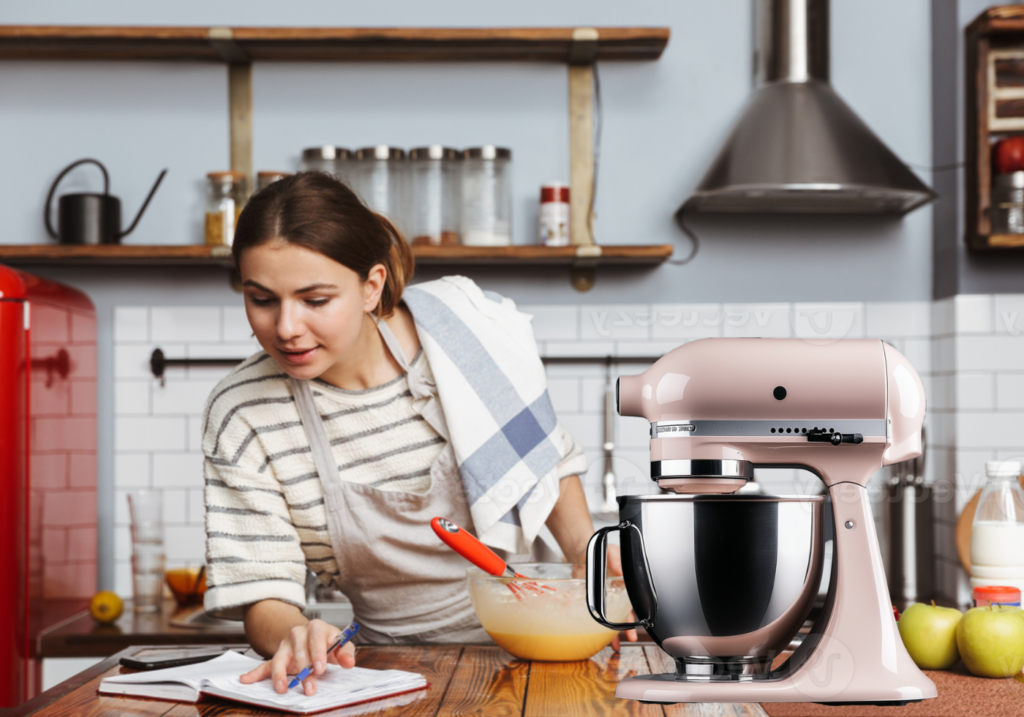
What beginners should think about before buying a stand mixer
If you are shopping for your first stand mixer, it helps to slow down a little before choosing the biggest or most expensive model you can afford. A lot of beginners assume buying a premium mixer right away is the safest choice, but honestly, that is not always the smartest move. If you are still figuring out whether you truly enjoy baking cakes, cookies, bread, or pizza dough on a regular basis, spending a lot of money upfront can be hard to justify.
I tend to think beginners should buy for their actual habits, not for an imaginary version of themselves. A stand mixer can be a great kitchen tool, but it is still an investment, and it only makes sense if it fits the way you really cook at home.
Price matters more than most beginners think
One of the biggest things to consider is price. If you are just starting out, you probably do not need to jump straight to a high-end stand mixer. A more affordable model often makes more sense because it lets you learn the basics without putting too much money into something you may not use often.
That is especially true if you are still unsure how much baking will actually become part of your routine. There is a big difference between liking the idea of baking and actually making bread or desserts every week. If a mixer ends up being used once or twice a year, an expensive model may feel less like a good investment and more like an appliance that mostly takes up counter or cabinet space.
You do not need to buy the most expensive mixer right away
For most beginners, I would not recommend starting with the priciest option unless you already know you bake often and plan to keep doing it. A premium mixer can absolutely be worth it for serious home bakers, but beginners usually benefit more from something simpler and easier to live with.
There is also the question of value. Is it really worth spending a premium price on a machine that might only get used once every few months? For a lot of people, the answer is no. It is usually better to start with a model that covers the basics well, then upgrade later if baking becomes a real hobby.
Ease of use is a big deal when you are new
If you are a beginner, the mixer should feel approachable. That means simple controls, easy speed changes, attachments that are not frustrating to install, and a bowl that is easy to lock into place. You should not have to fight with the machine every time you want to make cookie dough.
This is one reason beginner-friendly mixers often make more sense than heavy-duty models. A machine can be powerful, but if it feels awkward or intimidating to use, new bakers may end up avoiding it. A first stand mixer should make baking feel easier, not more complicated.
Quick comparison of the best stand mixers for beginners
Seeing the key differences side by side can make it much easier to decide which mixer actually fits your needs. The table below highlights the most important differences for first-time buyers.
| Product | Current Price | Best For | Key Feature | Rating | Check Price |
|---|---|---|---|---|---|
| Hamilton Beach Electric Stand Mixer, 4 Quarts | $151 | Best Overall for Beginners | Balanced 4-quart size with splash guard and familiar control layout | ★★★★★ | Check Price on Amazon |
| Kitchen in the Box Stand Mixer, 3.2Qt | $69 | Best Value Pick | Compact, lightweight design that feels less intimidating for first kitchens | ★★★★☆ | Check Price on Amazon |
| CUSIMAX Stand Mixer, 5-Quart 650W | $92 | Best for Growing Into Baking | Stronger motor with timer and a roomier bowl for larger batches | ★★★★☆ | Check Price on Amazon |
| Honinst Stand Mixer, 6.5QT 10-Speed | $129 | Best for Big Family Batches | Large 6.5-quart bowl and higher capacity for people who want extra room | ★★★☆☆ | Check Price on Amazon |
What beginners usually need from a stand mixer
Bowl size should match the kind of baking you actually do
It is easy to assume that a larger bowl is always better, but that is not necessarily true for beginners. If you usually make small batches of cookies, cake batter, whipped cream, or frosting, a very large mixer may feel like overkill. Smaller or mid-size bowls are often more practical for everyday home use.
That said, if you already know you want to make bread dough often or bake in bigger batches for family gatherings, a little more capacity can be helpful. The main thing is to buy for your real kitchen habits rather than the biggest possible workload.
Weight and storage can affect how often you use it
This is something many first-time buyers overlook. If a stand mixer is too heavy, too bulky, or annoying to move, there is a good chance it will stay tucked away most of the time. And if you have to drag it out of a cabinet every single time, you may end up baking less often simply because it feels like a chore.
For beginners, a mixer that is easy to store and not too cumbersome can actually be the better choice. Convenience matters. The easier it is to pull out and use, the more likely you are to build the habit of baking.
Think about what you really want to make

Best Stand Mixer for Beginners
Not every beginner needs a mixer for the same reasons. Some people want to make birthday cakes and cupcakes. Others want to try sandwich bread, cinnamon rolls, or pizza dough. Those are different jobs, and they do not all require the same kind of machine.
If your main goal is light everyday baking, you may not need a very powerful or heavy-duty mixer. But if bread dough is one of the main reasons you are shopping, then motor strength, bowl stability, and dough performance matter more.
Attachments are nice, but they should not be the main reason you buy
Beginners sometimes get pulled in by extra attachments and long feature lists. Those extras can be useful, but they should not distract from the basics. A mixer should first be good at mixing, beating, whipping, and handling basic dough tasks. Fancy add-ons do not mean much if the core performance is only average.
I usually think it is better for beginners to focus on the essentials first: good mixing results, simple controls, decent stability, and solid everyday reliability. Attachments are a bonus, not the main event.
Durability still matters, even for a beginner
Buying cheap does not mean buying carelessly. Even if you are not ready for an expensive mixer, it still makes sense to choose one that feels reasonably sturdy and has a reputation for decent reliability. A beginner model should not feel disposable.
The goal is not necessarily to buy the fanciest machine. It is to buy something good enough that you can learn, use it regularly, and decide later whether baking is becoming a bigger part of your life.
The best beginner mixer is usually the one you will actually use
That may sound obvious, but it is probably the most important point. The best stand mixer for beginners is not always the strongest, largest, or most premium one. It is the one that feels easy to use, fits your budget, handles the recipes you actually want to make, and does not leave you feeling like you overspent on a hobby you are still exploring.
For most first-time buyers, a practical mid-range or budget-friendly stand mixer makes more sense than jumping straight into a premium model. If you end up loving baking and using the mixer every week, you can always upgrade later with much more confidence.
After reading through product details, comparing designs, and thinking about how these machines fit into real home kitchens, I think beginners usually need five things more than anything else.
- A manageable bowl size. Bigger is not always better. Many first-time bakers make small to medium batches, so an oversized bowl can feel awkward rather than helpful.
- Simple controls. A mixer should be easy to understand the first time you use it. If the controls feel fussy, beginners tend to use the machine less.
- Enough power for normal baking. Most beginners are making cookies, cakes, muffins, buttercream, mashed potatoes, and maybe pizza dough once in a while. They usually do not need commercial-style strength.
- Good stability. A light mixer is convenient, but if it slides or bounces too much, that can make the whole experience feel cheap and frustrating.
- A reasonable price. Beginners often do not yet know how often they will bake, so the first mixer should feel like a smart entry point, not a huge financial leap.
That last point matters more than people sometimes admit. A beginner mixer does not need to be perfect. It needs to be helpful enough that you keep baking.
Detailed Comparison: Which Stand Mixer Is Actually Best for Beginners?
If you are still deciding which beginner stand mixer makes the most sense, a deeper side-by-side comparison can help a lot. The table below looks beyond just price and bowl size. It highlights the differences that matter most to first-time buyers, including beginner-friendliness, small-batch usefulness, storage practicality, and how much room each mixer gives you to grow. That way, you can see not just which model looks good on paper, but which one actually fits the way a beginner is likely to bake.
| Feature | Hamilton Beach 4 Qt | Kitchen in the Box 3.2Qt | CUSIMAX 5 Qt | Honinst 6.5QT |
|---|---|---|---|---|
|
Current Price
Useful for beginners who are trying not to overspend on a first mixer. |
$151 | $69 | $92 | $129 |
|
Best For
The type of beginner each mixer makes the most sense for. |
Most balanced beginner pick | Small kitchens and low-budget buyers | Beginners planning to bake more often | Large families and bigger batches |
|
Bowl Capacity
Smaller bowls are easier for small batches. Larger bowls are better for family-size baking. |
4 quarts | 3.2 quarts | 5 quarts | 6.5 quarts |
|
Beginner Friendliness
How approachable the mixer feels for a first-time user. |
Very easy to start with | Very easy and unintimidating | Good, but slightly more advanced | Okay, but larger than most beginners need |
|
Counter Space Fit
Important if the mixer will stay out on the counter or needs to be stored away. |
Moderate footprint | Best for small kitchens | Moderate to slightly bulky | Largest footprint here |
|
Small Batch Performance
How comfortable the mixer seems for lighter everyday baking tasks like frosting, cake batter, or small cookie batches. |
Very good | Best fit for small batches | Good | Less ideal for very small batches |
|
Larger Batch Flexibility
Helpful if you bake for family gatherings, holidays, or meal prep. |
Good for moderate batches | Limited | Very good | Best capacity for larger batches |
|
Power / Mixing Headroom
Shows how much room you have if you move beyond basic cakes and cookies. |
Enough for normal beginner baking | Best for lighter tasks | Strongest value for growing into baking | Good on paper for bigger jobs |
|
Bread Dough Potential
Relevant for beginners who think they may start making pizza dough or bread occasionally. |
Okay for occasional dough | Best kept to lighter dough tasks | Better fit for occasional to moderate dough work | Capable, though not the most beginner-efficient choice |
|
Ease of Storage
A lighter, smaller mixer is usually easier to move in and out of cabinets. |
Reasonably manageable | Easiest to store and move | Manageable, but larger | Hardest to store comfortably |
|
Value for Money
Looks at what beginners get for the price, not just the lowest cost. |
Best overall value balance | Lowest-cost entry point | Very good value for features | Decent if you truly need the large bowl |
|
Main Trade-Off
The limitation that is most worth knowing before buying. |
Costs more than basic budget picks | Can be outgrown quickly | Not as simple or compact as true starter models | More capacity than many beginners actually need |
|
Best Choice If…
A quick way to match the mixer to real beginner needs. |
You want the safest all-around first mixer | You want the cheapest and easiest way to start | You expect baking to become a regular hobby | You already know you need a big bowl |
For most first-time buyers, the Hamilton Beach is the most balanced beginner pick, the Kitchen in the Box is the easiest low-cost entry point, the CUSIMAX is the smartest step-up option, and the Honinst only really makes the most sense if large-batch capacity is already a priority.
My top pick: Hamilton Beach 4-Quart Stand Mixer
For most people starting out, I think the Hamilton Beach 4-Quart Stand Mixer is the easiest one to recommend.
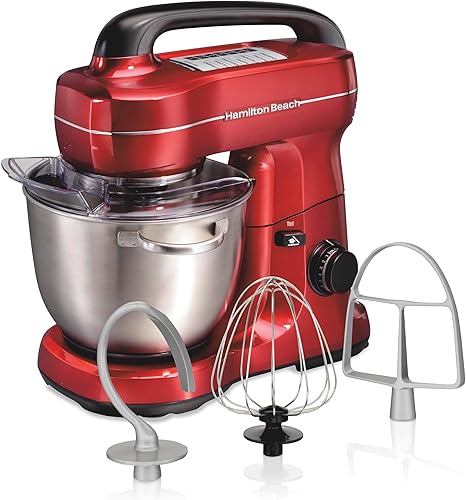

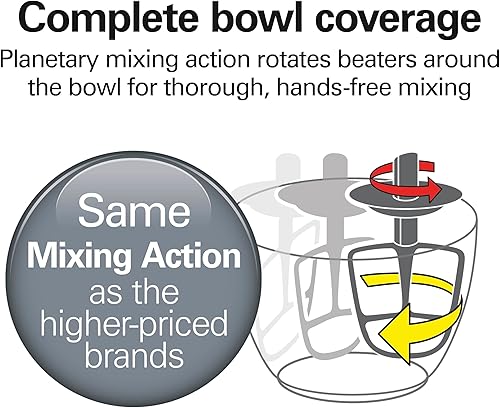
What I like about it is that it feels appropriately sized for a beginner. A 4-quart bowl is usually enough for the kind of baking most first-time users actually do. It is not tiny, but it also does not push you into the oversized-mixer category. That makes it a nice middle ground for cookie dough, cake batter, whipped cream, buttercream, and occasional bread dough.
I also think Hamilton Beach made some practical beginner-friendly decisions here. The machine includes the attachments most people need, and the splash guard is one of those small things that matters more than it sounds. New bakers make messes. Honestly, experienced bakers do too. Anything that helps reduce flour clouds and splatter makes the mixer feel less stressful to use.
Another detail I like is the general simplicity of the machine. Nothing about it sounds overly ambitious. That may not sound exciting, but for a first mixer, that is often exactly what you want. Beginners usually do better with a product that feels clear and predictable than one packed with extra features they may never use.
Its main limitation is that it is still an entry-level mixer. If you get deeply into bread baking and start making very dense doughs often, you may eventually want something heavier-duty. But for normal beginner baking, I think this one hits the sweet spot better than the others. If you want a closer look at how it performs in everyday use, you can read my full review of the Hamilton Beach Electric Stand Mixer.
Best budget choice: Kitchen in the Box 3.2Qt Stand Mixer
The Kitchen in the Box 3.2Qt Stand Mixer makes a lot of sense for a very specific type of beginner: someone with a small kitchen, a small household, or a small budget.

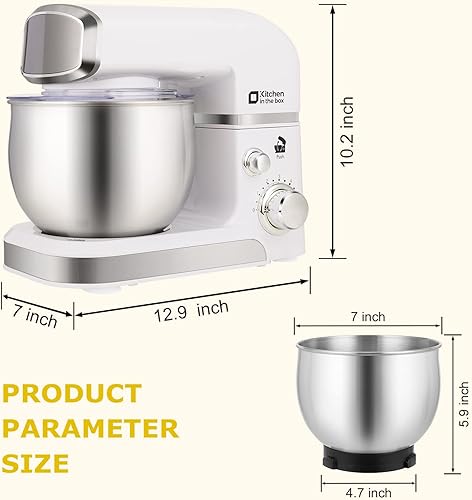

I actually think there is something appealing about a compact first mixer. Large stand mixers can feel like a commitment. This one feels closer to an easy entry point. If you mainly want help with cake batter, frosting, whipped cream, brownies, pancakes, and smaller cookie batches, a compact model can be enough.
The lightweight design also makes it easier to move around, which matters in apartments or kitchens where appliances cannot live on the counter full-time. A lot of people buy a mixer and then slowly stop using it because it is annoying to drag out. A smaller machine avoids some of that friction.
That said, the smaller bowl is both the biggest advantage and the biggest limitation. It is beginner-friendly in the sense that it feels less bulky and less wasteful for small batches, but it also means you will outgrow it faster if you really get into baking. I would not choose this one if you already know you want to bake bread regularly or make larger family-size batches.
Still, for around this price range, I can see why it would appeal to first-time buyers who want something affordable and unintimidating. It looks like the kind of mixer that helps a beginner start baking instead of overthinking the purchase.
If you want a more detailed look at its strengths, limitations, and everyday performance, you can read my full Kitchen in the Box stand mixer review.
Best if you think you will bake more seriously soon: CUSIMAX 5-Quart Stand Mixer
The CUSIMAX 5-Quart Stand Mixer is the one I would look at if you are still technically a beginner, but you already suspect this hobby may stick.
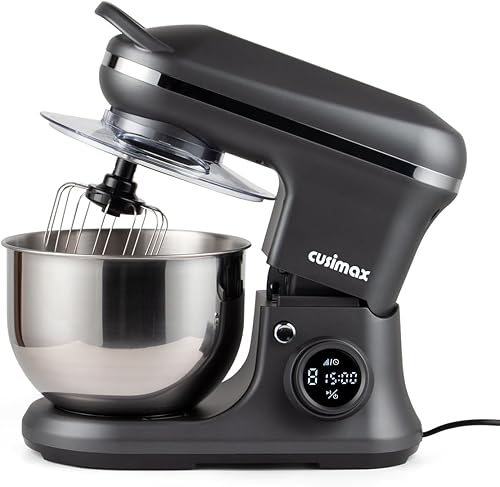
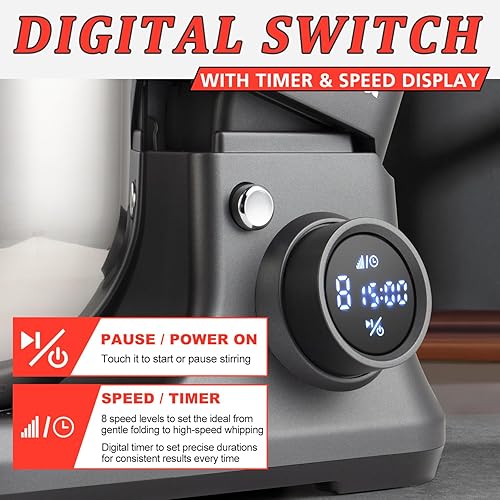
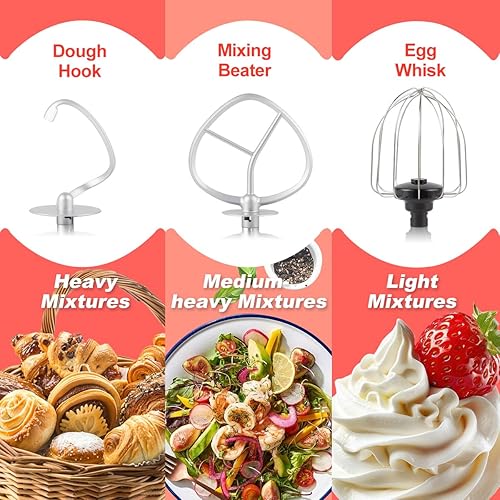
Compared with the more basic beginner options, this one gives you a bit more headroom. The 5-quart bowl is more flexible for batch size, and the stronger motor suggests it is aiming for people who want more than the absolute basics. The timer is also an interesting touch. Not everyone will care about that, but it can be genuinely useful for beginners who like a little structure while they are learning.
This is the kind of mixer that sits between “starter machine” and “enthusiast purchase.” I do not think it is the easiest recommendation for every beginner, because some first-time buyers do better with something simpler and lighter. But if you already know you enjoy baking and want a mixer that you might not outgrow quite so quickly, this one makes sense.
The trade-off is that once you move up slightly in size and power, expectations also go up. A beginner who only bakes once every month or two may not actually need this much mixer. In that case, spending less on a simpler model may be the smarter decision.
So I would call this the best pick for a motivated beginner, not necessarily the most casual one.
Best only for a certain kind of beginner: Honinst 6.5QT Stand Mixer
The Honinst 6.5QT Stand Mixer is the biggest mixer in this group, and that immediately changes who it makes sense for.
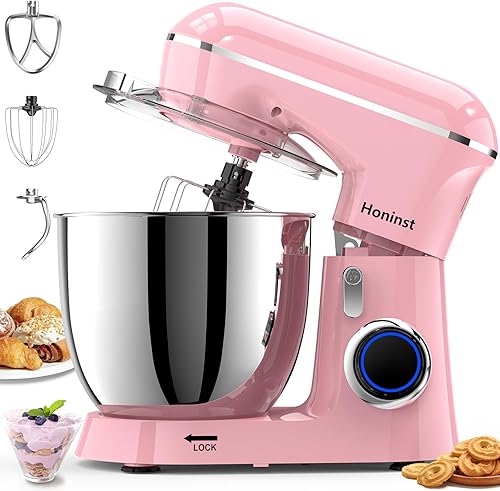
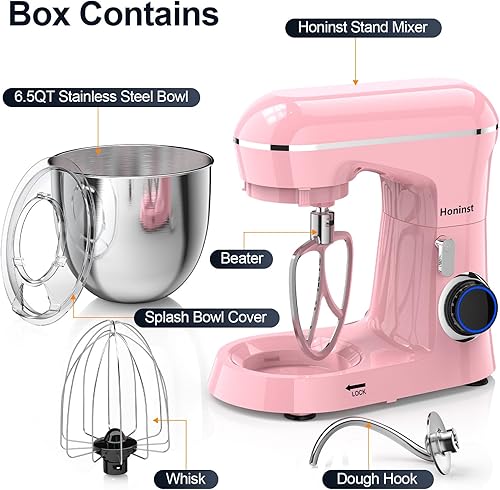

There are definitely beginners who will like it. If you cook for a larger household, make double batches, or already know you want a roomy bowl from the start, the capacity can be appealing. Some people hate working in small bowls, and I understand that. A large bowl gives you space and flexibility.
But if I am being honest, I do not think a 6.5-quart mixer is the best fit for the average beginner. For one thing, many beginners do not need that much capacity. For another, large budget mixers can sometimes sound better on paper than they feel in daily use. A big bowl and a long feature list are nice, but they are not automatically the same thing as refinement.
This is one of those products where I would pause and ask what kind of beginner you are. If you are learning to bake one batch of cookies at a time, this may be more machine than you need. If you are feeding a family, meal-prepping, or jumping right into breads and bigger batches, then it becomes more reasonable.
I would not call it the most beginner-friendly choice here, but I also would not dismiss it outright. It just makes the most sense for beginners who already know they want size.
What beginner buyers often get wrong
One pattern I see a lot is beginners assuming that the biggest mixer is the safest buy because it leaves room to “grow.” Sometimes that is true. But sometimes it just means you spend more money on a machine that takes up more space and feels less pleasant for everyday use.
Another common mistake is focusing too much on maximum power without thinking about normal use. If your real baking life is cupcakes, banana bread, birthday cakes, whipped cream, muffins, and holiday cookies, you do not necessarily need a heavy-duty mixer. What you need is a mixer that handles those jobs comfortably and does not make the process feel complicated.
I also think beginners benefit from being realistic about how often they bake bread. A lot of us imagine we are about to become very ambitious bread people. Some of us do. Many of us, frankly, do not. If bread will only be an occasional project, you probably do not need to shop like a dedicated bread baker.
If you’re building your first mixer setup, it may also be worth looking at the best flour funnel for KitchenAid stand mixer if you want a simple way to make ingredient adding a little cleaner.
Who should buy which mixer?
Choose the Hamilton Beach 4-Quart if:
- You want the most balanced first stand mixer
- You mainly bake cookies, cakes, frosting, and occasional dough
- You want a machine that feels easy to understand right away
Choose the Kitchen in the Box 3.2Qt if:
- You have a small kitchen or limited storage
- You bake in small batches
- You want the lowest-risk, lowest-cost entry point
Choose the CUSIMAX 5-Quart if:
- You are a beginner but already fairly committed to baking
- You want a little more bowl space and power
- You would rather buy once and grow into the mixer
Choose the Honinst 6.5QT if:
- You have a bigger household
- You expect to make larger batches often
- You specifically want extra bowl capacity from the start
My final thoughts on the best stand mixer for beginners
If I were recommending just one best stand mixer for beginners to the average first-time buyer, I would choose the Hamilton Beach 4-Quart. It feels like the most sensible middle-ground option. It is large enough to be useful, simple enough to be approachable, and practical enough for the kinds of recipes most beginners actually make.
The Kitchen in the Box 3.2Qt is the better choice if price, storage space, and small-batch baking matter most. The CUSIMAX 5-Quart makes more sense for someone who already feels serious about baking and wants a little room to grow. And the Honinst 6.5QT is really more of a niche beginner pick for people who specifically need the larger capacity.
Personally, I think beginners do best when they buy a mixer that matches their real habits, not their aspirational ones. A first stand mixer should make baking feel easier and more inviting. If it does that, it is already doing its job well.
