Beautiful by Drew Barrymore stand mixer is the kind of appliance that makes you pause for a second—not because of what it does, but because of how it looks sitting on a counter.
That’s not a small thing. Most stand mixers feel like equipment. This one feels like part of the kitchen.
But that also creates a slightly uncomfortable question: once you get past the design, is there enough substance behind it to justify keeping it around?
I wanted to look at this from a real-use perspective. Not what it promises. Not what it looks like online. Just what it feels like to live with—day after day, recipe after recipe.
And the answer is a bit more nuanced than you might expect.
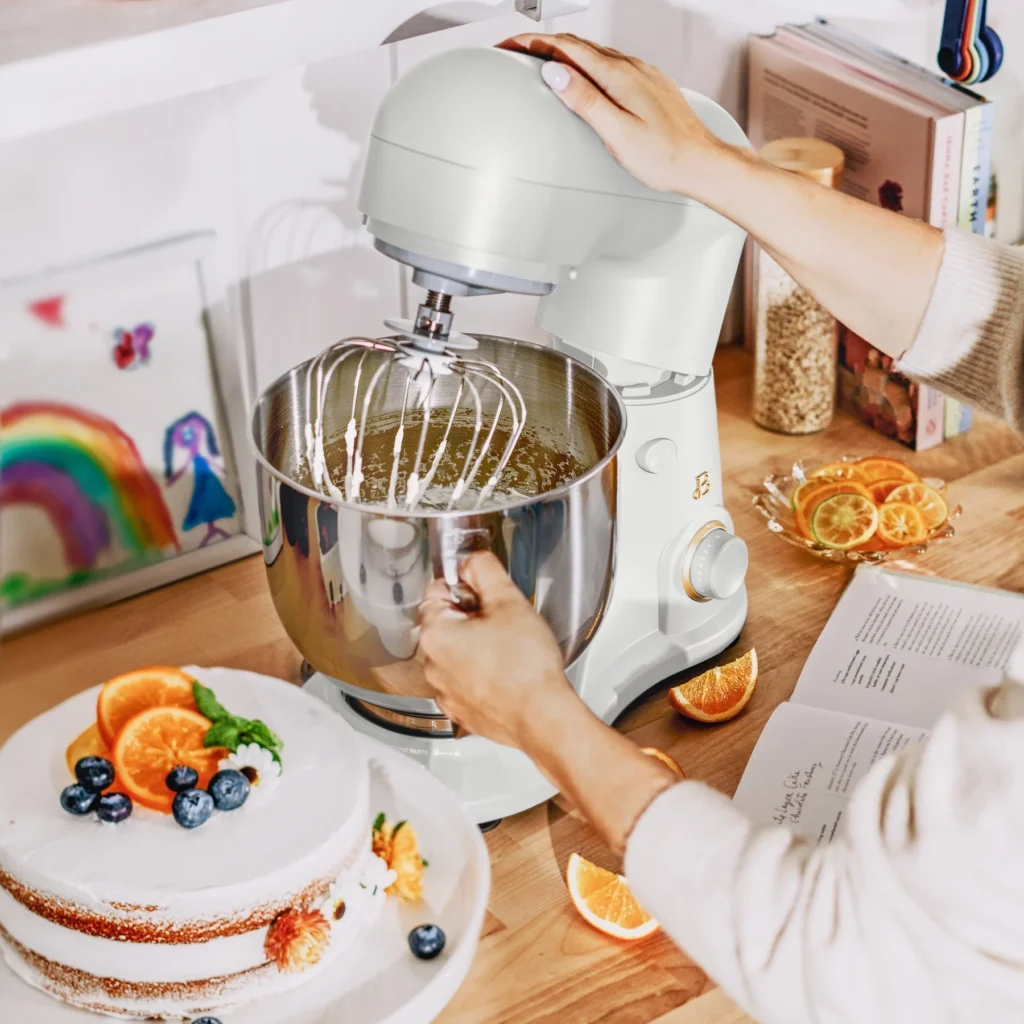
5.3QT Tilt-Head Beautiful by Drew Barrymore Stand Mixer
First Use: It Feels Easier Than Most Mixers
The first thing that stands out isn’t the color. It’s how unintimidating the whole thing feels.
The tilt-head opens smoothly. The bowl locks in without fuss. The controls are simple. Nothing about it feels mechanical or heavy.
That might sound minor, but it actually changes how you approach it. With bigger mixers, there’s always a moment of commitment—pull it out, set it up, deal with the weight. Here, you just start.
A few users described it as a mixer they actually use more often than expected, and that makes sense. It lowers the barrier to doing small things—quick batters, frosting, random mixing tasks you’d normally do by hand.
That’s not something spec sheets capture, but it shows up quickly in real use.
Mixing Performance: Good, but You Notice the Edges
For everyday tasks, it works well. Cake batter comes together smoothly. Cookie dough feels consistent. Whipped cream is quick and stable.
Nothing about it feels underpowered in these situations. It behaves like a normal, capable stand mixer.
But then you start pushing it slightly—thicker dough, longer mixing times, bigger batches—and you notice something shift.
It doesn’t fail. It just feels… closer to its limit.
The motor doesn’t have that extra margin you feel in heavier mixers. It’s doing the job, but you’re aware of it working. And that awareness sticks with you.
Some users mentioned needing to pause during longer mixes or being more careful with dense dough. That lines up pretty well with the overall feel: it’s capable, but not forgiving.
The Bowl Size Feels Right… Until It Doesn’t
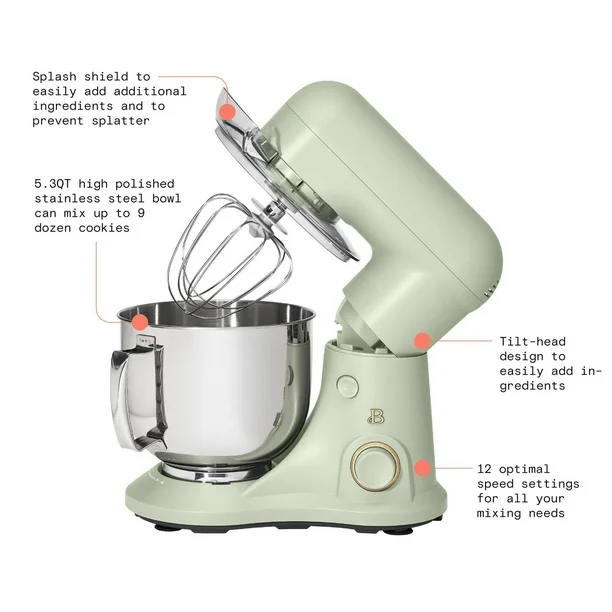 On paper, the 5.3-quart bowl sounds like the comfortable middle ground most home bakers are looking for. It is clearly larger than the compact 3.5-quart version, and at first glance it looks like it should be roomy enough for nearly anything a normal household would make.
And honestly, for a lot of recipes, that is true. A standard cake batter, a batch of buttercream, weekend cookies, mashed potatoes for dinner, even a moderate amount of brownie batter—those all fit the bowl without making the mixer feel cramped or awkward. In that kind of everyday use, the size makes sense. It feels approachable. It does not have the oversized, slightly intimidating feel of a larger bowl-lift machine, and that is part of the appeal.
Where things get more interesting is when you move from “normal batch” to “slightly ambitious batch.” That is usually the point where capacity starts feeling different in real life than it did in your head.
There is a subtle but important difference between a bowl being technically large enough and a bowl feeling comfortable while ingredients are actually moving around inside it. Those are not always the same thing. A recipe may fit by volume, but once the mixer is running—especially with flour-heavy doughs, cookie dough, or anything that climbs up the beater a bit—the usable space starts to shrink fast.
That is the part people do not always think about before buying. Capacity is not just about whether ingredients can physically sit in the bowl. It is also about whether the mixer still feels relaxed while handling them. With the 5.3-quart Beautiful mixer, I think that comfort zone is more limited than some buyers may expect if they are coming from the idea that anything over 5 quarts automatically counts as spacious.
For example, if you are someone who often doubles cookie recipes around the holidays, makes large birthday cake batches, or likes to prep bigger quantities in one go just to save time, you may start noticing that the bowl reaches its “I’d rather not push this further” point a little earlier than you expected. Not necessarily because it cannot do the job, but because you become aware that you are working close to the edge of what feels tidy and manageable.
That usually leads to a few practical adjustments:
- you mix in stages instead of all at once
- you stop earlier to scrape more carefully
- you become more selective about which recipes feel worth making in this mixer
None of that is dramatic, and for many people it will not matter much. But it does shape the ownership experience. Over time, you stop thinking of the bowl as “big enough for anything” and start thinking of it as “a good everyday size, as long as I stay realistic.”
And to be fair, that may still be perfectly fine for the kind of baking a lot of households actually do. If your kitchen life is mostly cakes, cookies, cupcakes, frosting, and occasional weekend baking, the size is probably going to feel pretty reasonable. If you lean into larger batches, denser doughs, or frequent holiday-style baking, you may notice the bowl’s limits sooner—and more often.
So I would not call the 5.3-quart bowl too small. I just would not call it especially generous either. It lands in that middle area where it works well most of the time, but asks for more awareness than the number alone suggests.
What It’s Like to Clean (This Matters More Than It Should)
Cleaning a stand mixer is one of those things people tend to underestimate when they are shopping. It sounds boring compared with motor power or bowl size, but it ends up affecting how often the mixer gets used more than most buyers realize.
If a mixer is annoying to clean, you start making small excuses not to pull it out. You mix by hand instead. You postpone the frosting. You decide whipped cream is not really necessary after all. That is why cleanup matters. It is not just about convenience after the recipe is done. It quietly affects whether the mixer feels easy to live with over time.
The good news here is that the Beautiful mixer is relatively painless to clean. The bowl itself rinses out without much trouble after normal baking projects, and the standard attachments do not seem unusually frustrating compared with most mixers in this category. Batter, frosting, whipped mixtures, and softer doughs come off without turning cleanup into a second job.
The tilt-head design also helps more than people sometimes admit. Being able to lift the head up and see what you are doing makes wiping things down simpler, especially around the mixing area where splatters and flour dust tend to collect. It is a very ordinary feature, but it makes the machine feel less fussy.
That said, “easy enough to clean” is probably the fairest description. I would not oversell it as effortless.
If you leave batter to dry, it is still dried batter. If cookie dough gets packed onto an attachment, you still have to deal with it. If you are making something buttery or sticky, you are still going to need a proper wash rather than a quick rinse and optimistic attitude. So no, it does not magically solve mixer cleanup. It just avoids being one of those appliances that feels more tedious than it should.
And that is actually valuable. A mixer does not need to be perfect here. It just needs to stay out of your way.
I also think this connects to the brand’s whole appeal in a useful way. The Beautiful stand mixer is clearly trying to be approachable, pleasant to use, and easy to keep around in a normal kitchen. If it had been awkward to clean, that would have undercut the entire product concept. Fortunately, it mostly avoids that problem.
More importantly, easy cleanup changes behavior. People are much more willing to use a mixer for small tasks when they do not dread washing everything afterward. That is a real quality-of-life benefit, and it tends to matter more over time than the big dramatic claims brands like to put in product descriptions.
So while cleanup is not exactly the glamorous part of stand mixer ownership, it is one of the reasons a mixer either becomes part of your routine or slowly turns into something you only use when a recipe feels “worth the trouble.” This one, at least, leans more toward regular use than reluctant use—and that probably matters more than it sounds.
Key Features at a Glance
| Feature | Beautiful by Drew Barrymore Stand Mixer | What It Means in Real Use |
|---|---|---|
|
Bowl Size
Available sizes depending on model |
3.5 qt / 5.3 qt (most common) | The 5.3 qt works for everyday baking, while 3.5 qt is better for smaller batches and tighter kitchens |
|
Motor Power
Published motor rating |
300 watts | Fine for cakes, cookies, and lighter mixing, but not ideal for heavy bread dough |
|
Speed Settings
Control levels for different tasks |
12 speeds | Gives good control for whipping, mixing, and folding without feeling limited |
|
Mixer Style
Design of the head and access |
Tilt-head design | Easy to use, beginner-friendly, and convenient when adding ingredients mid-mix |
|
Attachments Included
Standard mixing tools |
Flat beater, dough hook, balloon whisk, splash guard | Covers most everyday baking needs without needing extra purchases |
|
Build & Weight
Overall feel and construction |
Lightweight, plastic-heavy body | Easier to move and store, but doesn’t feel as solid as heavier mixers |
|
Design & Finish
Visual style and materials |
Soft matte finish, multiple color options | Made to be left on the counter rather than stored away |
|
Best Use Case
Where it fits best |
Light to moderate home baking | Works well for cakes, cookies, frosting, and occasional use—not heavy-duty mixing |
|
Price Range
Typical retail range |
Mid-range (often under premium brands) | More affordable than KitchenAid, but not a “cheap” budget mixer either |
The specs look solid on paper, but the real difference shows up in how the mixer feels under load. It’s designed for everyday use—not for pushing limits.
The Design Question (And Why It Actually Matters)
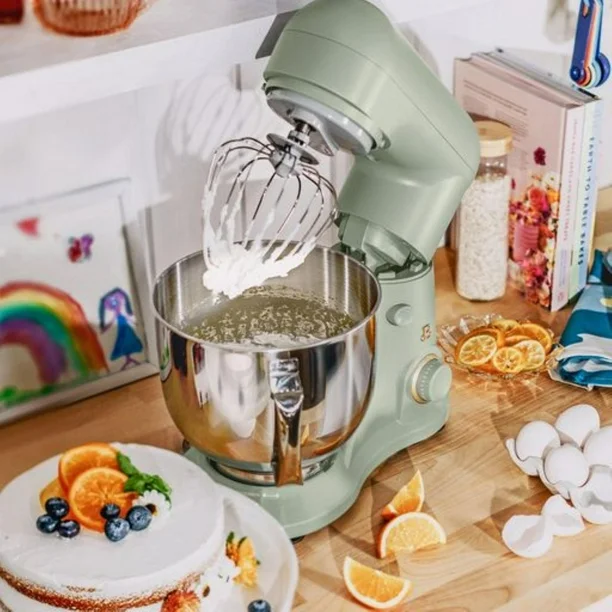
3.5 Qt Beautiful by Drew Barrymore stand mixer with Flat Beater, Dough Hook, Whisk
It’s tempting to treat the design as superficial, but it isn’t.
This mixer is clearly meant to be left out, not stored away. And that changes how often it gets used.
Several users mentioned choosing it specifically because it looked good on their counter—and then realizing they ended up baking more often because of it.
That sounds like a small psychological detail, but it’s real. Tools that feel good to have around tend to get used.
Of course, the flip side is expectation. When something looks this polished, people often assume it performs at a higher level than it actually does. That’s where some of the disappointment comes from.
Where It Starts to Feel Limited
The limits aren’t dramatic, but they’re consistent.
- heavy bread dough feels like a stretch
- long mixing sessions need breaks
- large batches feel crowded faster than expected
None of these are surprising if you look at the category it sits in. But they become more noticeable because the mixer doesn’t look like a “light-duty” machine.
There’s a slight mismatch between appearance and capability. Not huge—but enough that you notice it after a few weeks.
What Changes After a Few Weeks
The most interesting part isn’t the first impression. It’s what happens after you’ve used it for a while.
You start to understand its rhythm.
You don’t overfill the bowl. You don’t push it too hard. You use it for what it does well.
And when you do that, it becomes a pretty reliable part of your routine.
But you also stop expecting it to do everything. That expectation adjustment is the real turning point.
Pros and Cons After Real Use

the Beautiful™ Tilt-Head Stand Mixer with 12 optimal speed settings
What Works Well
- Feels easy and approachable to use
- Great for everyday baking tasks
- Lightweight and less intimidating than larger mixers
- Design encourages leaving it on the counter (and using it more)
- Cleanup is relatively simple
Where It Falls Short
- Limited headroom for heavy or demanding tasks
- Not ideal for frequent bread baking
- Bowl capacity feels tighter in real use than expected
- Performance doesn’t fully match the premium look
Who This Mixer Actually Makes Sense For
This mixer works best for people who bake regularly—but not heavily.
If your routine is:
- cookies, cakes, cupcakes
- frosting and lighter mixtures
- occasional weekend baking
It fits naturally.
If your routine is:
- bread every week
- large batches
- long mixing sessions
You’ll probably start noticing the limits pretty quickly.
The Long-Term Ownership Question No One Should Ignore
One thing that becomes much clearer once you read through more owner feedback is that the biggest concern with the Beautiful by Drew Barrymore stand mixer is not really the first week. It is what happens later.
A lot of people seem genuinely happy with it early on. They like the lighter weight, the look, the colors, and the fact that it feels easier to move than a heavier mixer. That part is easy to understand. But the more revealing comments are the ones from people who have had the mixer long enough to run into a broken whisk, a damaged bowl, clips that fail, attachments that stop working properly, or a mixer that starts shaking more than it should.
What makes that more frustrating is the replacement-parts situation. This comes up over and over again. Multiple owners say the real problem is not just that something broke, but that once it breaks, finding a compatible replacement part is surprisingly difficult or seemingly impossible through normal retail channels. That changes the whole value calculation. A mixer can be merely “okay” and still be worth keeping if you know you can replace a whisk, buy an extra bowl, or swap out a worn attachment. Once that safety net disappears, the mixer starts to feel more disposable than many buyers expected.
To me, that is one of the most useful things a potential buyer can know ahead of time. This is not just a question of whether the mixer works nicely today. It is a question of how comfortable you are buying into a product where long-term part support does not seem especially reassuring right now. If you bake lightly, use it gently, and mainly want something attractive and easy to live with, that risk may feel acceptable. If you are the kind of person who keeps a mixer for ten years and expects to replace a whisk or bowl along the way, it is a much bigger deal.
That does not make the mixer worthless. It just makes it a different kind of purchase. Some appliances feel like long-term tools. This one, at least based on the owner comments above, feels more like a product you should enjoy while it is working well, rather than one you should assume will be easy to maintain indefinitely. And honestly, that distinction is more valuable than another paragraph about color options.
One Last Honest Take
The Beautiful by Drew Barrymore stand mixer is not trying to be the strongest mixer in its category. It’s trying to be the one you actually enjoy having in your kitchen.
And in a lot of cases, that works.
But enjoyment and performance aren’t the same thing. This is a mixer that feels good to use, easy to live with, and visually satisfying—but it asks you to meet it halfway when it comes to expectations.
If you understand that from the start, it can feel like a thoughtful, well-designed everyday tool.
If you don’t, it can feel like something that looks better than it performs.
My experience with the Beautiful stand mixer ended up being more balanced than I expected. It’s easy to like at first, but it also asks you to adjust your expectations once you start using it more regularly. If you want to see a slightly different perspective—especially one that leans more into how the mixer is positioned and what it’s trying to be—this Beautiful stand mixer review is worth reading alongside this one.
And honestly, that balance—that slight tension between design and capability—is what defines this mixer more than anything else.
